

This past week, I stumbled upon a media report noting that tourists are tossing fewer coins into Rome’s iconic Trevi Fountain. The news immediately brought back vivid memories of my own visit to the Baroque masterpiece in the Piazza di Trevi some 15 years ago.
Visitors throw coins into the fountain daily—some just for fun, others to uphold an ancient pagan ritual of making offerings to water gods. The coins are collected regularly and donated to charity. However, the organization that gathers them reported a drop in donations this year after local authorities introduced a two-euro entry ticket in February for visitors from outside Rome.
Popular legend says that throwing a coin with your right hand over your left shoulder guarantees a return trip to the Eternal City someday. A second coin is said to bring romance, while a third leads to marriage.
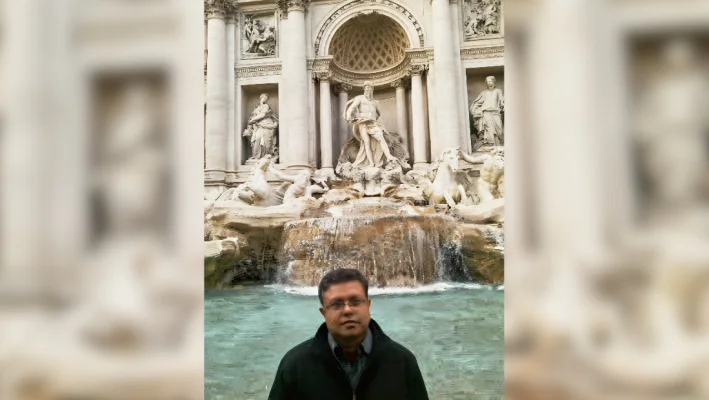
During that first trip a decade and a half ago, I visited the fountain on the sidelines of my business meetings—and skipped the customary coin toss. Instead, I was completely absorbed by the surreal beauty of the 18th-century marble, an 86-foot-high architectural gem set upon travertine stone, and the captivating aura surrounding it.
Looking back now, it’s no wonder I haven’t managed a return visit to Rome!
The week preceding my visit to Italy in February 2010, Rome had experienced a rare, heavy snowfall—its heaviest since 1986. Lingering cold air kept temperatures brisk at the start of the week before warming up just ahead of my business trip. By the time I landed at Fiumicino Leonardo da Vinci International Airport, the city’s weather had already transitioned from chilly highs to mild, late-winter temperatures.
In the dead of night, I took a taxi from Fiumicino to my hotel—Hotel American Palace—in Esposizione Universale Roma (EUR), a prominent residential and business district in southern Rome. Exhausted from the journey, I settled in quickly and slept well, though I remained conscious of the long day ahead of me.
The following morning, the temperature gradually warmed up, and I walked straight across the road only to be met with the morning rush—all heading toward Laurentina, the nearest metro station. Rather than taking the metro, I followed the map my hotel manager gave me and walked for about 15 minutes before finally reaching Via Paolo di Dono, where the International Fund for Agricultural Development (IFAD) headquarters is located. Over the next couple of days, I was busy attending events on the sidelines of the Governing Council meeting for this specialized UN agency. The walk was worth it, as I got to admire the wide boulevards, grand architecture, parks, and modern office buildings of southern Rome along the way.
My Roman sojourn couldn’t be all business and no fun. I managed to steal time between meetings to visit various landmarks, from the Piazza di Trevi and some of the city’s most authentic pizzerias to the Colosseum—the ancient Flavian Amphitheatre where gladiators once fought—and the Vatican. I’ll likely write about all of those experiences someday, but today’s piece is dedicated exclusively to the Fontana di Trevi—the Trevi Fountain—an 18th-century gem designed by Italian architect Nicola Salvi in 1732 and completed by Giuseppe Pannini in 1762. Standing 86 feet high and over 161 feet wide, Trevi is the world’s largest Baroque fountain, crafted from travertine, marble, plaster, stucco, and metal. Baroque architecture is a highly decorative and theatrical style which appeared in Italy in the late 16th century and gradually spread across Europe.
Upon visiting the fountain, my inquisitive mind led me to scroll through the official Fontana di Trevi website to learn a bit of its history. I gathered that the fountain’s name derives from a toponym used in the area since the mid-12th century—Regio Trivii—which literally means a region where three roads meet. Sitting at the junction of these three roads, the fountain marks the terminal point of the modern Acqua Vergine (the ancient Aqua Virgo), one of the aqueducts that supplied water to ancient Rome.
In 1640, at the request of Pope Urban VIII, Gian Lorenzo Bernini—the foremost Italian sculptor and architect of the 17th century, widely credited with creating the Baroque style—designed a new fountain to coincide with the expansion of the square. However, construction was limited to an exedra-shaped base with a basin in front, leaning against the buildings later incorporated into the Palazzo Poli, which serves as the fountain's architectural backdrop.
The construction of the current Trevi Fountain is owed to Pope Clement XII, who announced a design competition in 1732 for the greatest artists of the time. The pontiff chose Nicola Salvi's monumental design, selecting the one "that would least detract from the palace behind it." Structured like a triumphal arch with a deep niche, the exhibition is set against the palace façade with a thoughtful study of proportions. It slopes down to a large basin with a broad rock, enlivened by sculptural plants and a spectacular flow of water.
At the center, the statue of Oceanus—the ancient Greek personification of the great mystical river encircling the earth—dominates the scene. He drives a shell-shaped chariot pulled by an angry horse and a placid horse, both held in check by two tritons. Reliefs alluding to the history of the aqueduct and allegorical figures representing the beneficial effects of water decorate the façade at various levels. Through Salvi's work, history and nature are masterfully fused in a way that reflects the nascent Age of Enlightenment. Construction was finally completed by Giuseppe Pannini, who partially modified the cliff by regularizing the central basins.
Enough of history, though. Coming back to the Rome City Council’s ticketing system, non-residents are now required to buy a two-euro ticket to approach the water's edge and throw coins into the fountain. To be fair to the authorities, this system isn’t meant to discourage visitors—they can still view the monument free of charge from an outer perimeter—but rather to manage overcrowding at one of Rome’s most overwhelmed landmarks.
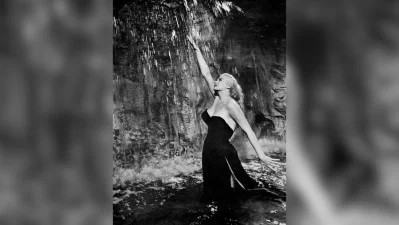
Spending time at the Trevi Fountain—immortalized in films like Roman Holiday (1953), Three Coins in the Fountain (1954), La Dolce Vita (1960), Sabrina Goes to Rome (1998), and The Lizzie McGuire Movie (2003)—was a high point of my trip, though it was far from the only highlight. While touring the area, I walked through cobblestone streets to Piazza Navona, the Spanish Steps, and many other corners of the city that have blurred slightly after a decade and a half. After all, the "Eternal City" is a living museum in its entirety, and a business traveler can only do so much justice to its vast heritage in a few short days.
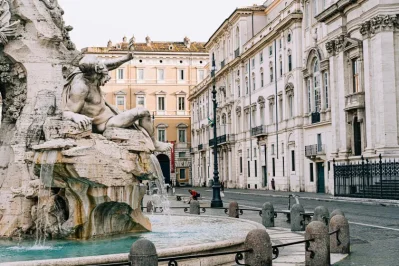
I can’t forget to mention the Piazza di Spagna, where I walked past the famous "Spanish Steps" leading up to the Trinità dei Monti church, just a stone's throw from the luxury shopping street Via dei Condotti. And of course, there is Piazza Navona, arguably one of the most beautiful squares in this city of museums, monuments, obelisks, and fountains. Its main highlights are the 1651 Fountain of the Four Rivers—also designed by Bernini—and the 17th-century Baroque church built on the site of Saint Agnes’ martyrdom, a young Roman Christian executed around 304 AD at age 12 or 13 for refusing to renounce her faith. Beyond its history, Piazza Navona also drew me in with the charm of its lovely local market.