Over a decade before South Asia gained its first underwater expressway—the Karnaphuli Tunnel in our port city of Chittagong—I experienced under-river travel for the very first time during a road trip from Puxi to Pudong in China.
In the early winter of 2012, I left Puxi, the historic urban core of Shanghai on the west bank of the Huangpu River. Crossing the tunnel beneath the water, I landed on the Lujiazui peninsula.
Lujiazui, the prominent financial and commercial district on the eastern bank, immediately greeted me with its strikingly high skyline. I kept looking up, neck bent and chin raised, as the skyscrapers of the Pudong New Area left me awestruck.
Up until then, I had never seen such a dense concentration of tall buildings in a single city. I quickly realized that Pudong was a massive, sprawling district, and Lujiazui was just its crowning jewel—a hyper-modern neighborhood housing the financial hub.
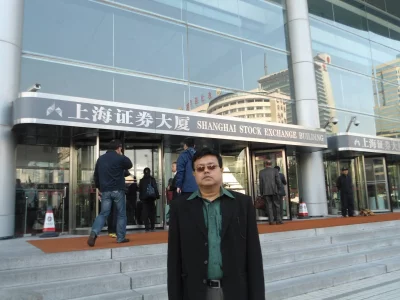
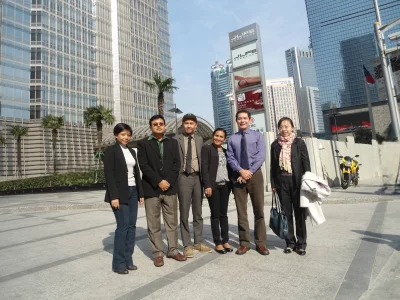
Even after all these years, I vividly remember the sheer scale of the Shanghai Stock Exchange. Dressed in dark sunglasses, a green button-down shirt, and a dark blazer, I stepped onto the trading floor, where millions of Yuan worth of shares must have already changed hands that day. The entrance to this bustling bourse featured large glass-panel facades, heavy structural pillars, revolving doors, and stepped granite stairs where visitors and professionals constantly passed through.
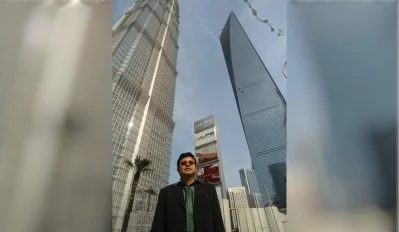
Stepping back out onto the streets from one of the world’s busiest financial hubs, the architecture continued to command my attention. At one point, I stood directly between two of China's most iconic supertall skyscrapers.
On one side rose the 88-story Jin Mao Tower, featuring a traditional Chinese pagoda-inspired tiered design that tapers gently to 1,380 feet. On the other stood an even taller, sleek, dark-blue glass giant—the 1,614-foot Shanghai World Financial Center, famously nicknamed "The Bottle Opener" due to the large trapezoidal aperture at its peak designed to reduce wind pressure.
Reflecting on Shanghai's incredible urban development, I eventually stopped at the base of the iconic Oriental Pearl Tower. Famous for its futuristic design featuring 11 spheres of varying sizes, the 1,535-foot structure was the tallest in China from its completion in 1994 until 2007. Hungry by this point, I caught the fast-moving elevator to dine at the revolving restaurant inside the tower's lower pink-and-silver sphere.
After a delicious lunch and a great dining experience, I walked out onto the famous glass-bottom skywalk of the observation deck. Standing on the outdoor transparent glass module 850 feet in the air, I looked directly down at the plaza and streets below.
From this vantage point, the distinctive pointed roof of the Bank of Shanghai Headquarters and the surrounding skyscrapers were sharply visible, while the Huangpu River snaked through the landscape far below. Before leaving, I also caught a fascinating sneak peek of the Shanghai History Museum situated directly underground.
Remarkably, about five years after witnessing these urban marvels, I had a rare chance to meet one of the masterminds behind Shanghai’s transformation. What made it even more special was that the meeting took place in my own hometown—Dhaka.
In 2017, the World Bank brought Professor Zhu Ruolin, a renowned urban planner and former dean of the Pudong Planning and Design Institute, to Bangladesh. The goal was to leverage his expertise for the future expansion and new town development of Dhaka, which has become one of the world’s most populous, congested, and underserved cities.
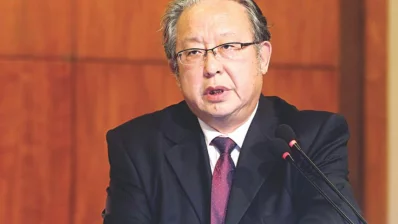
Professor Zhu had been an instrumental figure in the master planning, architectural zoning, and urban development of Pudong, transforming it from a patchwork of paddy fields and farmland in the early 1990s into a global financial hub. Under his leadership at the institute, Shanghai expanded eastward across the Huangpu River, eventually emerging as the world's most populous city.
It was deeply rewarding to speak with this visionary man, who expressed confidence that Dhaka, too, could be transformed into a highly developed city. He explained that Pudong—China's answer to Manhattan—now boasts one of the world's leading stock exchanges, a major international airport, and a futuristic skyline because of an intentional multi-billion-dollar facelift that began during China's economic opening in the 1980s.
In 1990, leaders in Beijing unveiled plans to develop the area east of the river into a Special Economic Zone, and three years later, the "Pudong New Area" was officially born.
Zhu then told me: “In 1992, Pudong was an underdeveloped area. In order to develop the area, we welcomed foreign investment and interest there.” He had said the authority invited five designers to submit their ideas to transform Pudong into a modern city. “We didn't accept or reject any submission. We prepared a fresh design taking all the good points from all five.”
Ever since my visit to Pudong in 2012 and my meeting with Professor Zhu in 2017, I have found myself wondering: how long will it take for us to see a successfully planned urban expansion in Purbachal? Why is it so difficult to transform Dhaka the way they transformed Shanghai?
Professor Zhu's words still echo in my ears today. He emphasized that everything they achieved in Pudong was driven by visionary thinking, well-thought-out plans, effective management, and coordinated efforts.
“A city is like a human body," he told me. "If you don't take care of it, she will get sick.”
Looking at the state of our capital today, I cannot help but ask: isn't Dhaka sick enough yet?