




I have never crossed paths with Bob Dylan, but coincidentally, I have been to a place or two in the American Midwest where he once left his mark.
Some twenty-two summers ago, my second visit to the United States took me to the University of Minnesota in Minneapolis to meet a professor. That very institution is where Bob Dylan enrolled in September 1959, only to drop out in May of the following year to focus entirely on his music career.
After my academic discussion concluded, I left Minneapolis to spend a few days in the beautiful city of Fargo, North Dakota.
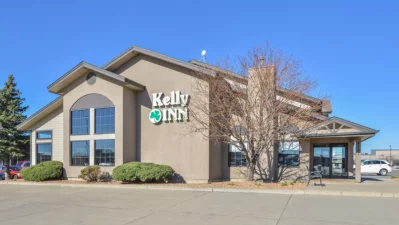
Throughout those days, I roamed all over the area, but I returned each evening to the cozy comfort of my lodge: the Kelly Inn situated right on the northwest corner of 42nd Street and 13th Avenue.
Bob Dylan had spent a portion of his formative musical journey in the late 1950s just a bit further north in downtown Fargo. Then going by the name Robert Zimmerman or "Zimmy," the teenage Dylan moved to Fargo and stayed in the unfinished attic of his summer camp friend, Ron Joelson.
During my weeklong stay, I remember learning about the city neighborhoods where the young musical bard had left his mark. There was The Red Apple Café (later Babb’s Coffee House), where Dylan worked briefly as a busboy and dishwasher; the historic Bison Hotel, where he hung out in the lounge—which today features a massive, two-and-a-half-story Bob Dylan mural; and Sam's Record Land, the music shop where Dylan successfully auditioned to play piano for 1950s’ famous teenage rock 'n' roll band from Fargo – The Shadows.
The music legend and Nobel laureate’s Fargo connection was brief, but it served as a significant stop before he headed to the University of Minnesota that fall, and later to New York in the spring of 1960.
My own time in Fargo was wonderful. The Kelly Inn was ideally located in a bustling city hub. Just next door was my favorite evening escape, the famous Grandma’s Saloon & Grill, and right across the road sat the West Acres Mall, the largest mall in North Dakota.
At the beginning of the 21st century, that specific intersection was at the height of its regional economic dominance. By 2004, the dirt and gravel paths of the mid-to-late 20th century were long gone. The strip had matured into Fargo’s primary commercial artery, densely packed with strip malls, gas stations, and fast-food chains.
Fargo boasts a lively wine and art culture, eclectic shops, cozy cafés, and an abundance of Midwest history. The original colonial settlement began where the Northern Pacific Railroad intersected with the Red River. As an early frontier town with highly fertile farming land, it quickly became a popular destination. In 1876, the population was a mere 600 people. By the time I visited in 2004, it had reached nearly 100,000.
Using the Kelly Inn as my base, I ventured out to far-off places like North Dakota State University, Itasca State Park, and the headwaters of the Mississippi River at Lake Itasca.
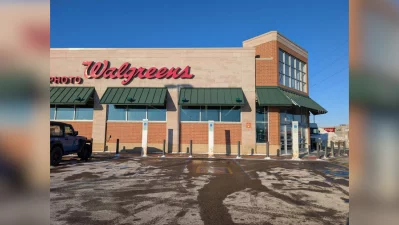
Today, neither the lodge nor the popular restaurant stands at that intersection. They have since been replaced by a Walgreens drugstore. The Kelly Inn was later renamed and relocated, while Grandma’s shut its doors for good.
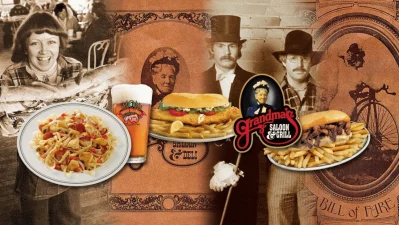
I can still recall the cozy log-cabin aesthetic, the indoor pool, and the family-friendly atmosphere of the Kelly Inn, as well as the finger-licking food served next door. The very first evening I stepped into Grandma’s, the ambiance immediately drew me in. I sat on a raised stool, ordered drinks and snacks, and was soon introduced to Carol Lindvall, a highly reputed registered nurse. We were quickly joined by a couple of local folks at the same table. From that first night until I left Fargo, we gathered at that exact table every evening to eat, drink, and share stories.
Before writing this piece, I checked in with Carol to ask about Grandma's. She told me the restaurant closed in 2007. The property was sold after a fierce real estate bidding war, and the building was demolished to make way for the Walgreens that stands on that northwest corner today.
In its heyday, Grandma’s was arguably the most vibrant casual dining and nightlife spot at the intersection, operating as a high-energy franchise of the famous Duluth, Minnesota-based chain. In 2004, it was the ultimate comfort-food destination. Locals and travelers frequented it for its massive, thick-cut, homemade onion rings served in giant stacks, chicken tortellini, wild rice soup, overstuffed burgers, and potato cheese bacon soup. Because of its proximity to local hotels and the mall, the bar section was packed every weekend.
I completely fell for one of Grandma’s absolute hits: the Buffalo wings. Each evening, the first thing I ordered was a plate of unbreaded chicken wings—deep-fried and coated in a signature sauce of vinegar-based cayenne pepper hot sauce and melted butter. Grandma’s presentation stood out: instead of piling wings on a standard plate with a plastic cup of dressing, they served their plump wings alongside crisp celery and carrot sticks, with the chunky blue cheese dressing poured directly inside the center of one of their giant, homemade onion rings.
Whether you chose the classic vinegary cayenne pepper sauce with a solid kick, the deeper, savory Louisiana-style Southern hot sauce, or Grandma's own Honey BBQ, the wings held the heavy sauces incredibly well without getting soggy. Paired with a cold domestic draft beer during a late-night weekend rush, those Buffalo wings were a definitive staple of my time in Fargo.
