




The 2012 winter season in Beijing, and across the North China Plain, was heralded by a brutal cold snap in early November, setting the stage for cold, freezing conditions for the rest of the month.
By November 15, I stood among a global press corps outside the Great Hall of the People, just west of Tiananmen Square. Despite the biting air, there was a palpable electricity in the crowd; we were about to watch a new chapter of Chinese politics unfold.
When I finally cleared security and stepped inside, I heaved a sigh of relief, escaping the subzero chill for the warmth of the hall. I was fortunate enough to secure a seat near the podium to witness Xi Jinping formally take charge as the newly elected General Secretary of the Communist Party of China (CPC).
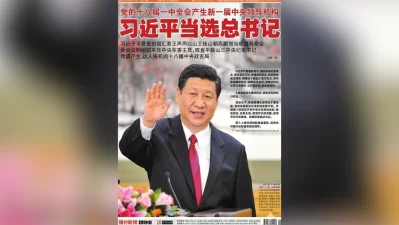
Xi Jinping, who would eventually become first Chinese leader since Mao Zedong to rule beyond two terms, had succeeded Hu Jintao on that day. It was the official start of his rise to power, and I was there to witness it as part of a select group of international journalists covering the 18th Party Congress.
I’ll never forget that day in mid-November when Xi Jinping had us listen to a 90-minute speech in Mandarin. It was all Greek to me, and the Chinese Foreign Office staff didn’t hand out the English translations until after he had finished speaking.
A week later, with my departure approaching, a sense of gloom set in. I hadn't yet made it to the Great Wall. The front desk staff at my hotel offered nothing but "bad news": the weather was deteriorating and snow had blanketed the access points.
Beijing had recently been battered by a historic blizzard between November 3 and 5, which had left the region’s landmarks treacherous. Local reports confirmed the severity of the conditions; just days prior, on November 19, two tourists had tragically perished after becoming stranded in the snow on a section of the Great Wall.
Ultimately, the weather wasn't the deciding factor—regret was. I couldn't bear the thought of traveling all the way to China and leaving without seeing one of the wonders of the world.
The day before my flight to Dhaka, local authorities reported road closures on the way to the popular Badaling section. Desperate for an alternative, I managed to arrange a trip to the Mutianyu section, roughly 70 kilometers from my Beijing hotel.
When I disembarked from the bus, the skies had cleared slightly, but the temperature remained below freezing. A light, intermittent drizzle fell, turning the landscape into a "winter wonderland" that was as treacherous as it was beautiful. The uphill hike was slippery and whipped by a piercing wind.
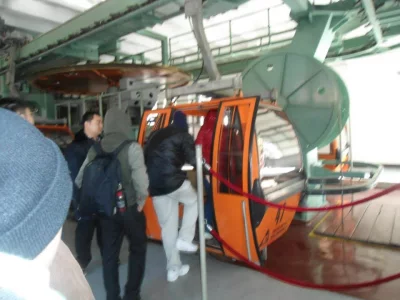
I shared a cable car with five other tourists to reach the upper elevations. From the landing point, I began to climb higher, tiptoeing with extreme caution. Although the path had been cleared of deep snow, I had to navigate patches of black ice on the steep stone steps. A fresh dusting of snow accented the ancient masonry, making the views even more dramatic.
Mutianyu is one of the best-preserved sections of the Ming Dynasty Great Wall. Though originally built during the Northern Qi Dynasty (550–577), it was rebuilt on its original foundations by General Xu Da during the Ming era (1368–1644).
Stretching over 5,400 meters, it is famous for its unique fortifications and numerous watchtowers that crest the overlapping mountain ranges. The walls are primarily constructed from slabs of stone and feature crenellations.
Standing at Watchtower 14 of the Mutianyu Great Wall, peering through arched windows at a frozen mountain range, it was hard to reconcile the silence of the snow with the political thunder I had witnessed just days prior. The tower’s arched windows offered a framed perspective of the Wall as it snaked toward the western ridges of Tower 20.
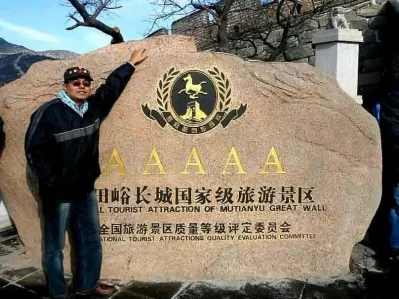
Walking several patches inside the Great Wall at Mutianyu section I stood by the Henkel Memorial Stone. I tried to internalize the reading on the Wall: "Once intended to ward off enemy attacks, today it brings together the peoples of the world. May the Great Wall continue to act as a symbol of friendship for future generations”.
This plaque commemorates the 1988–1989 restoration of this specific part of the Wall, which the German company Henkel supported with both funding and technical expertise. The inscription on the stone, visible in both German and English, reflects on the wall's evolution from a military defense to a cultural landmark.
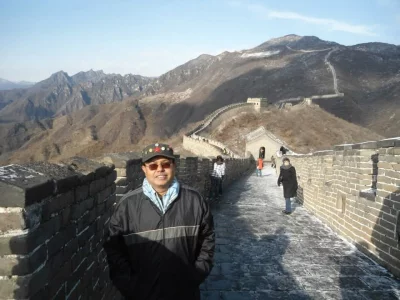
In that moment, looking out over the frozen peaks, the wall’s evolution from a military fortress to a global cultural landmark felt entirely profound.
My journey to the 18th CPC National Congress in Beijing was marked by two constants: the historic rise of Xi Jinping and a relentless November cold wave. From the hushed seats of the Great Hall to the slippery, wind-whipped ramparts of the Ming Dynasty’s greatest defense, 2012 offered a rare, front-row seat to a nation in transition.
