



 “The government succeeded reducing the open defecation from 42% to 1% within only 12 years with the cooperation of NGOs. To increase the WASH services, that is use of soap and water ensuring hygienic sanitation, Bangladesh needs more finance and multi-stakeholders’ involvement including the private sector,” said Alok referring to the study.
According to the study, BWA partners, NGOs and World Bank are working to promote entrepreneurs and market development for sustainable WASH services, while 89 entrepreneurs are active in 33 unions and 2 municipalities in BWA working areas in Bangladesh.
The study says 87% entrepreneurs received loan worth an average of Tk 78,000 from ASA, BRAC and partner NGOs; under 10% to 16% interest rate with a Tk 8,000 monthly payment installment. Every entrepreneur has the capacity to sell products worth Tk 38,000 average per month.
Minister MA Mannan offered thanks to the partner NGOs and donor agencies who initiated to improve WASH services in the country.
He also urged the private companies to play a bigger role to reduce health risks mostly impacting the poor communities in the country.
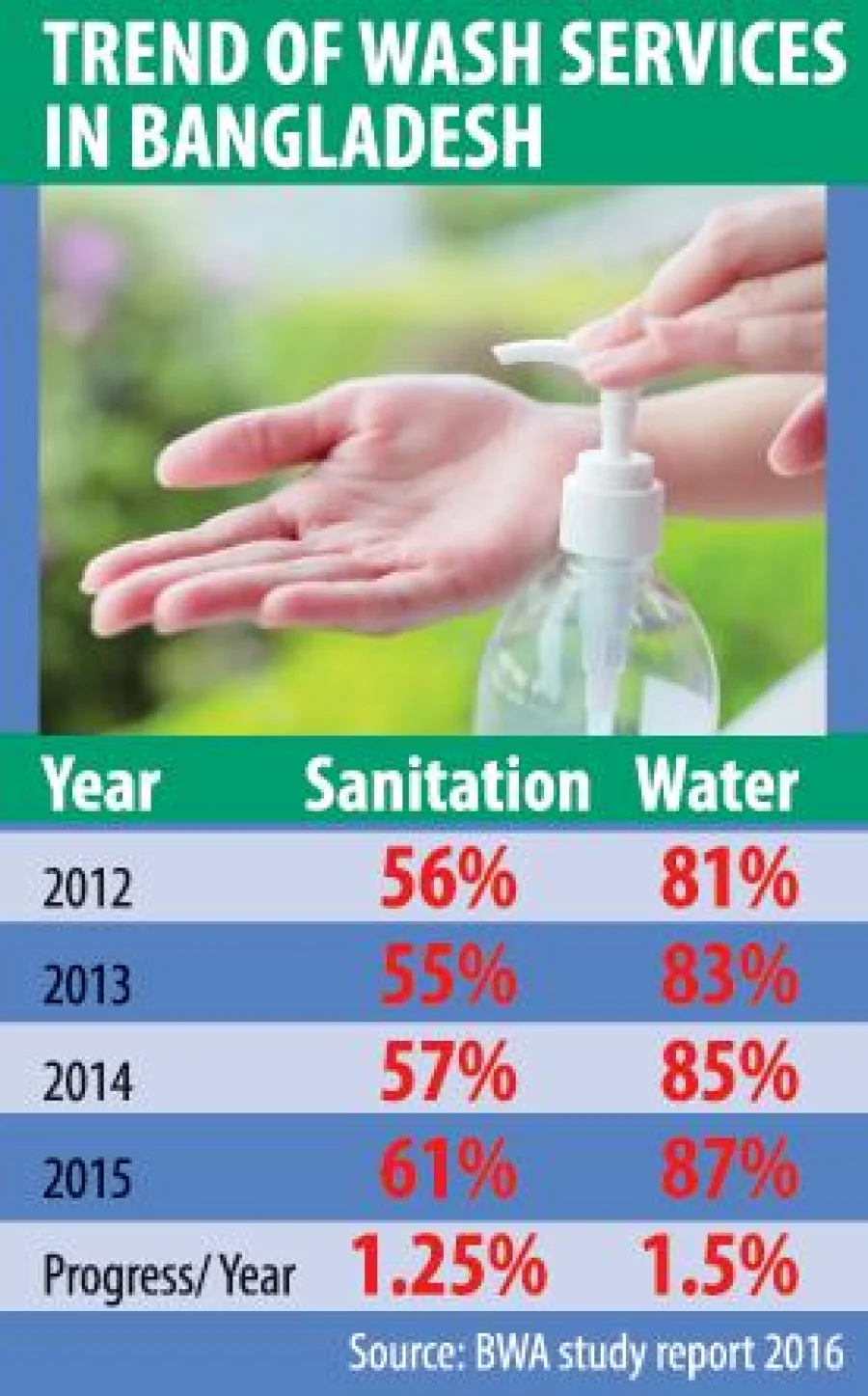
Bangladesh has ensured safe water supply to 87% population and improved sanitation access to 61% while it has successfully decreased the open defecation rate to mere 1%, says a study.
Besides, around 28% of the population are using semi-developed sanitation facilities while around 10% are using unhygienic toilets which are harmful for public health, and a barrier to achieving SDG 6, said WASH Alliance Bangladesh's Country Director Alok Majumder.
“We can overcome the barrier by incorporating increasing number of private entrepreneurs although there are components that act as obstacles to the increase,” he said at the Bishwa Sahitto Kendro in Dhaka where the study was revealed on Thursday.
The survey reports were disclosed at a seminar on the contributions of NGOs for achievement of the Sustainable Development Goal 6, organised by the Water and Sanitation Hygiene (WASH) Alliance with cooperation of Development Organisation of the Rural Poor (DORP).
The study conducted in 2016 by WASH Alliance Bangladesh (BWA), however, points out that about 60 million people in the country are still deprived of the hygienic sanitation facilities and around 20 million have no access to safe drinking water.
Chaired by BWA Chairperson and WaterAid Bangladesh Country Director Dr Md Khairul Islam and attended by State Minister to Ministry of Finance and Planning MA Mannan as the chief guest, the keynote paper of the seminar was presented by BWA Country Director in Bangladesh Alok Majumder.
During the keynote presentation Alok Majumder said, sixty million people do have improved toilet, 85% women and adolescent girls use dirty cloths during menstruation and only 40% households have water and soap for hand washing. “The government succeeded reducing the open defecation from 42% to 1% within only 12 years with the cooperation of NGOs. To increase the WASH services, that is use of soap and water ensuring hygienic sanitation, Bangladesh needs more finance and multi-stakeholders’ involvement including the private sector,” said Alok referring to the study.
According to the study, BWA partners, NGOs and World Bank are working to promote entrepreneurs and market development for sustainable WASH services, while 89 entrepreneurs are active in 33 unions and 2 municipalities in BWA working areas in Bangladesh.
The study says 87% entrepreneurs received loan worth an average of Tk 78,000 from ASA, BRAC and partner NGOs; under 10% to 16% interest rate with a Tk 8,000 monthly payment installment. Every entrepreneur has the capacity to sell products worth Tk 38,000 average per month.
Minister MA Mannan offered thanks to the partner NGOs and donor agencies who initiated to improve WASH services in the country.
He also urged the private companies to play a bigger role to reduce health risks mostly impacting the poor communities in the country.
“The government succeeded reducing the open defecation from 42% to 1% within only 12 years with the cooperation of NGOs. To increase the WASH services, that is use of soap and water ensuring hygienic sanitation, Bangladesh needs more finance and multi-stakeholders’ involvement including the private sector,” said Alok referring to the study.
According to the study, BWA partners, NGOs and World Bank are working to promote entrepreneurs and market development for sustainable WASH services, while 89 entrepreneurs are active in 33 unions and 2 municipalities in BWA working areas in Bangladesh.
The study says 87% entrepreneurs received loan worth an average of Tk 78,000 from ASA, BRAC and partner NGOs; under 10% to 16% interest rate with a Tk 8,000 monthly payment installment. Every entrepreneur has the capacity to sell products worth Tk 38,000 average per month.
Minister MA Mannan offered thanks to the partner NGOs and donor agencies who initiated to improve WASH services in the country.
He also urged the private companies to play a bigger role to reduce health risks mostly impacting the poor communities in the country.