



Bangladesh’s War of Independence in 1971 was not fought in isolation. There were many foreigners and overseas organisations -- the true friends, who directly or indirectly joined or gained support for the struggle for liberation. As we celebrate Independence Day, Dhaka Tribune revisits the outstanding contributions of some of Bangladesh’s many foreign friends 51 years ago.
Indira Gandhi
Indira Priyadarshini Gandhi was the prime minister of India during Bangladesh’s Liberation War in 1971.
The third prime minister of India, Indira Gandhi, was born on November 19, 1917, in then Allahabad and passed away on October 31, 1984.
At a difficult time for the Bangalee nation, the Gandhi government extended official assistance to East Pakistan. Her government opened eastern borders with then East Pakistan, 10 million refugees to take shelter in the country.
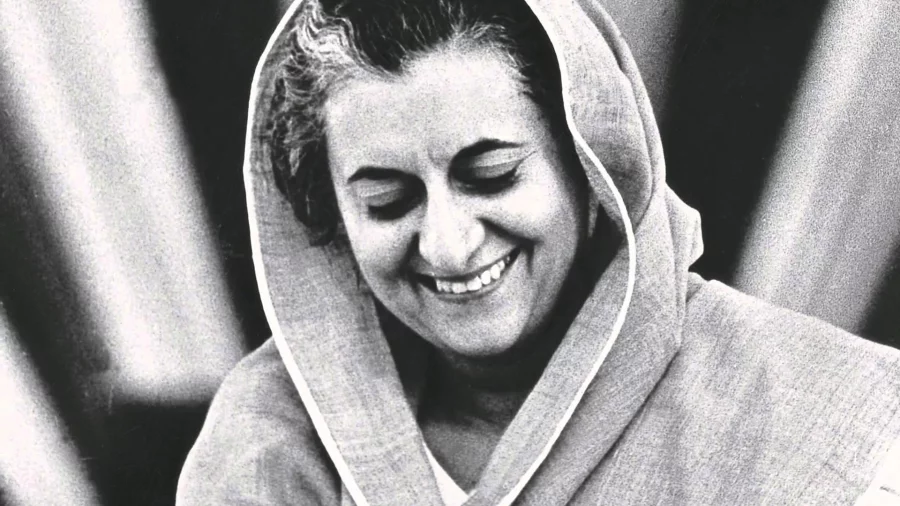 Indira Gandhi CourtesyIndia helped the provisional government to settle and finally got involved in the war — first indirectly and then directly.
The Indian armed forces began supporting attacks alongside the Mukti Bahini (Bengali freedom fighters) on Pakistani border posts from early October of 1971. They provided training and logistic support for the freedom fighters at the same time. Indira Gandhi travelled across the world to mobilize support for the people of Bangladesh and appealed to world leaders to intervene in the war, pressurize Pakistan to stop its brutalities.
In mid-November, Indira Gandhi ordered a further escalation of military action along the borders with East Pakistan. By November 21 that conflict had escalated to a new stage. India formally formed the joint command composed of the Indian Armed Forces and the Bangladesh freedom fighters, also called the Mukti Bahini, and placed it under Lieutenant General Jagjit Singh.
On December 6, 1971, she announced in parliament that India had accorded recognition to the Bangladesh Government.
JFR Jacob
Lieutenant General Jack Farj Rafael Jacob aka JFR Jacob was the chief of staff of the Indian Army’s eastern command during 1971.
General Jacob made Niazi and his 26,000 troops stationed in Dhaka surrender in a historic public capitulation at the Racecourse Ground, as well as providing a guard of honour.
He came up with the “war of movement” plan which was adopted to invade East Pakistan when the war was at its peak. The plan made the Indian Army’s incursion of Dhaka successful in just 15 days.
 JFR jacob Syed Zakir HossainHis plan was to bypass intermediary towns altogether to neutralize Pakistan’s command and communication infrastructure, and use secondary routes to reach Dhaka, which was the geopolitical centre of the region.
Moreover, he played a vital role in the unparalleled contribution of Indian forces to the establishment of camps for the freedom fighters, reconstruction of refugee camps, training, providing arms and logistics that contributed to the desired victory of Bangladesh.
Born in Kolkata in 1923, Jacob pursued his education from Darjeeling and the United States.
He joined Indian Army and took part in the Second World War and the Pakistan-India War in 1965.
He started his political career by joining Bharatiya Janata Party (BJP) and later served as the governor of Goa and Punjab.
JFR Jacob died on January 13, 2016, at the age of 93.
William AS Ouderland
Dutch-Australian William AS Ouderland participated in the Liberation War of Bangladesh actively.
He was called the true friend of Bangladesh for his heroic participation in the war.
Ouderland first came to Dhaka in late 1970 with an assignment as the production manager of Bata Shoe Company. Within a few months of his joining at the post, the war began and Ouderland felt that he needed to participate in it.
 William As Ouderland WikipediaHe discovered in him the ex-soldier facing a new war and started working as a secret intelligence agent initially.
 His task was to communicate the plans and actions of the occupation army to the freedom fighters since he had easier access in the army headquarters as a foreigner. With his experience in the Second World War as a guerilla commando, he became an active member of a guerilla branch of sector 2 in the Liberation War.
He provided regular training to the freedom fighters at different secret camps in Tongi, including the Bata Shoe Factory premises.
Alongside this, he did an excellent job of documenting war days by collecting photographs on the incidence of atrocities and genocide by the occupation army, and sending them to the world news media.
He continued his role at the shoe company in Dhaka as managing director till he retired in 1978.
He died on May 18 in 2001.
Ouderland was the only foreign national to be honored with the fourth highest gallantry award, the Bir Protik, by the Government of Bangladesh.
Born on December 6, 1917 in Amsterdam, Ouderland started his career in the Bata Shoe Company as Shoe-shiner (1934).
Anthony Mascarenhas
Anthony Mascarenhas, a Pakistani journalist, was the one who defied West Pakistan government’s orders to reveal the real scenario of a war-torn country to the world.
He was sent to East Pakistan to promote the oppressor’s propaganda. Instead, he published a 16 column (2-page) report titled “Genocide” in The Sunday Times of London on June 13, 1971 that drew the world’s attention to the South Asian country.
With his passion of telling the truth, the veteran journalist highlighted the brutality of the West Pakistani troops, the asylum of refugees in India, the death of countless people in the famine, the stories of rape of thousands of women, the killing of children in his article.
 Anthony MascarenhasMascarenhas’s subsequent reports in The Sunday Times made him a traitor to West Pakistan and a hero to the Bangalis.
BBC News’s Mark Drummett wrote in Mascarenhas’s memory: “There is little doubt that Mascarenhas’ reportage played its part in ending the war. It helped turn world opinion against Pakistan and encouraged India to play a decisive role.”
Indian Prime Minister Indira Gandhi said that Mascarenhas’ article led her to prepare the ground for India’s armed intervention.
Born on July 10, 1928, this great journalist left the earth forever on December 6, 1986.
Simon Dring
Before the infamous ‘Operation Searchlight’ (the barbaric genocide in Dhaka), Pakistan Army locked up some 200 foreign journalists at the Hotel Intercontinental so that they cannot witness the atrocity. Later they were sent to Karachi.
The only journalist who managed to escape from the army and witness the genocide was Simon Dring.
Dring was a reporter at The Daily Telegraph, when he was assigned to cover the political situation in East Pakistan. He arrived in Dhaka on March 6 and witnessed the historic March 7 speech of Bangabandhu Sheikh Mujibur Rahman at the then racecourse ground. On March 25, 1971, Dring hid himself at the Hotel Intercontinental for more than 32 hours, risking his life only to inform the world about the atrocity.
 Simon Dring FacebookWhen the curfew was lifted two days later, he left the hotel avoiding the military patrol. He traveled the city and collected evidence of the genocide at the Dhaka University area, Rajarbagh Police Line and various parts of old Dhaka.
Later he managed to board a flight to West Pakistan. Until he finally reached Bangkok, the security had stopped him several times but somehow his documentation was unharmed.
Dring penned his famous report ‘Tanks crush revolt in Pakistan’ which was published on the front page of The Daily Telegraph on March 30, 1971.
It is remembered as the first account of the brutal genocide in Bangladesh by the Pakistani occupation forces.
The award-winning British foreign correspondent, television producer, and presenter was born on January 11, 1945, in Norfolk’s Fakenham city in England.
Sir William Mark Tully
Sir William Mark Tully was BBC’s India correspondent in 1971 and his coverage of the Bangladesh Liberation War on BBC radio was the people’s main source of authentic information.
During the war of 1971, when the news media controlled by the then Pakistani junta used to carry out government propaganda, Mark Tully’s coverage of the war on BBC radio was the people’s chief source of authentic information.
He extensively covered the war days for the BBC and had the opportunity to document them from close quarters.
 Sir William Mark Tully TwitterRecounting memories of his first meeting after Bangladesh’s Liberation War, Tully in a recorded message on the occasion of 50 years of Bangladesh’s independence said that Bangabandhu Sheikh Mujibur Rahman was one of the greatest leaders of the past century,
 “The way he treated me . . . the emotion in his voice for his people . . . it can be truly said that ‘Sheikh Saab’ as I knew him, was one of the great leaders of the century,” he said.
The renowned journalist was born in Kolkata on October 24, 1935. He was the former Bureau Chief of BBC, New Delhi, a position he held for 20 years. He worked with the BBC for a total of 30 years before resigning in July 1994.
Andre Malraux
The name Andre Malraux and the struggle for freedom of the people of Bangladesh is inseparable.
Back in 1971, an international convention, entitled “World Meet on Bangladesh,” was organized on September 18 and 20 to make the world community aware of the brutalities perpetrated by the Pakistani military.
Malraux neither attended the convention nor participated in the Liberation War physically, though he passionately wanted to be part of the struggle. Even so, his strong voice in favour of Bangladesh’s liberation helped garner huge international support for Bangladesh.
 Andre MalrauxAt a press conference in Paris on September 18, 1971, Malraux declared his intention to fight along with Bangladesh’s freedom fighters by leading an International Brigade.
“At the age of 70 in September 1971, he was one mighty voice to air on the radio a vehement call for the constitution of a new International Brigade for Bangladesh…,” according to a document acquired from the Alliance Française of Dhaka.
He was given honorary citizenship by Bangabandhu Sheikh Mujibur Rahman, then prime minister of Bangladesh, during his visit in April 1973.
Georges Andre Malraux was born on 3 November 1901 and died on 23 November 1976.
