




The structure of the proposed national budget for the 2022-23 fiscal year is completely against the middle class of the country, said Dr Devapriya Bhattacharya.
He also said that the tax structure of the proposed budget will further deprive the middle class and will just protect the industrialist upper class.
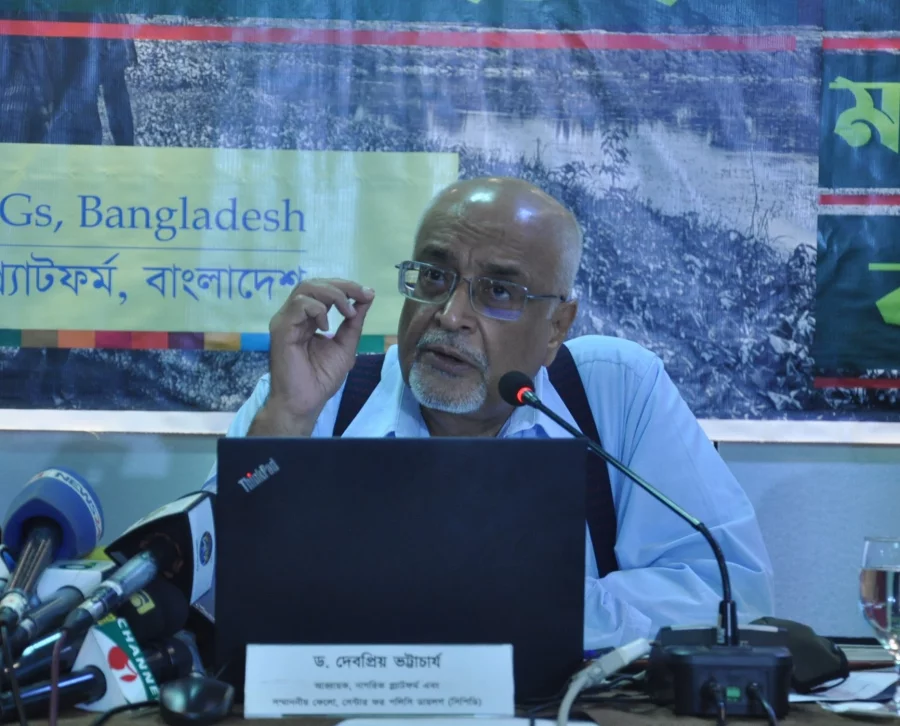
Dr Debapriya Bhattacharya, convenor of Citizen's Platform, and distinguished fellow of the Centre for Policy Dialogue (CPD) was presenting the keynote at a media briefing titled “National Budget 2022-2023: Is there anything for the marginalized?” organized by the Citizen's Platform in the capital on Sunday.
In his presentation, he also said that in the budget target, the contribution of income tax in NBR revenue (40.17%) has historically been set lower than VAT (33.62%) and import duty (15.22%).
“Increased reliance on indirect sources such as VAT unequally reduces the income of the poor and dampens spending on health, education, and social safety net,” he added.
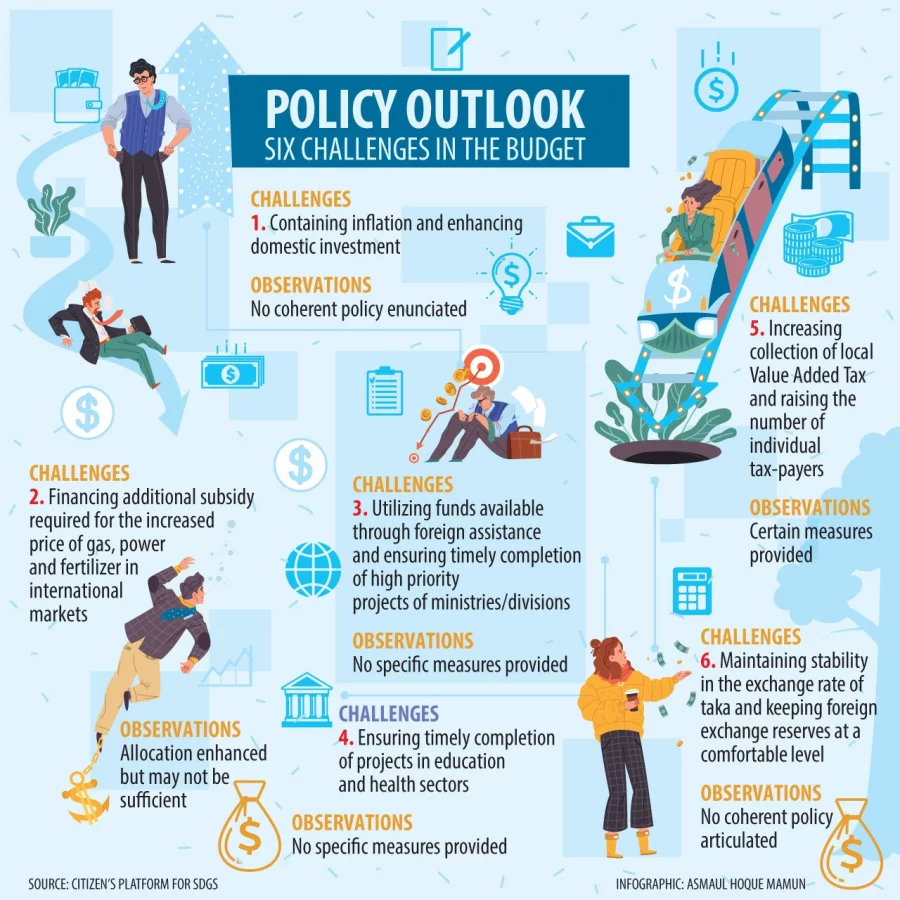
Moreover, macroeconomic stability is currently under high stress due to inflationary pressure, pressure on the exchange rate, global hike in commodity prices, disruptions in the supply chain, and natural calamities.
He also said that another big proof of this year's budget going against the middle class is that four types of corporate taxes have been reduced, at a rate of at least 2.5%.
“But for the benefit of the middle class, their tax-free income limit has not been increased from Tk300,000, even in the current inflationary pressures,” he added.
This clearly shows the point of view of class inequality, which class is being given benefits in the budget, he added.
Moreover, the price of some selected products like laptops, smartphones etc is likely to increase due to tax imposition that would adversely affect the middle-class consumers.
Responding to a question, he said that the budget has been hijacked from the middle-income people for the high-income people. Currently, the middle-income people are under a three-pronged attack: global price hikes, internal economic disparity and natural calamities.
He recommended that the income tax revenue should be raised to expand fiscal space by addressing corruption, and tax evasion, ensuring transparency, and modernizing the tax system.
A paradox of reduced investment target and increased growth target
Bangladesh's budget structure often contains some illusory numbers which create financial confusion.
“Although we often call the budget a big one, it does not increase in proportion to the size of the economy, and more than 80% of the budget is never implemented,” he added.
He also said that the investment situation is a big part of a budget.
“The investment target of this year's proposed budget is 31.5%, which is less than the budget of the last financial year. In the last financial year, the target was 31.68%,” he added.
While the private sector investment has remained stable over the past few years, public investment has increased on the other hand.
But this time, the target of public investment has also been reduced to 6.7% from the 7.62% of last FY, he added.
However, although the investment has not been increased in this year's budget, the growth target has been increased. The growth target has been set at 7.5%, which was 7.25% last FY.
This proves that the budget was not prepared to keep in view the economic indicators.
Entrepreneurs may suffer due to government’s dependency on bank borrowing
The government’s heavy reliance on bank borrowing for financing may impact the loan disbursement to the entrepreneurs.
Private credit growth has already reduced in this fiscal, which will likely fall further with this initiative of the government.
The Macro Position Report of the Finance Ministry expected a 14.8% year-on-year private credit growth in June of 2022 but till March 2022 the rate was only 11.29%.
The increasing deposit rate is essential as this will also ease inflationary pressure. Domestic savings are at a five-year low (21.56%) for this fiscal year, indicating a need for raising the deposit rate.
The current deposit rate is 4.02%, against an inflation rate of 6.3%, leading to a real value erosion of more than 2%.
Debapriya said that if the government borrows heavily from banks, private investment will reduce simultaneously.
Inflation
Food, fuel and fertilizers are the major commodities in the LNOB consumption basket, accounts for nearly 30% of total imports.
Increasing global prices of these commodities, the internal discriminatory economy, and the natural calamities signal the rising cost of these products, which will increase the inflationary pressures.
There is no way to reduce the demand pressure and the adjustment of the customs to control the inflation of these products.
Agriculture
The agricultural sector lacks effective implementation. However, the agricultural sector has the strength of taking pressure. So, the government should provide a cushion for safeguarding both food security and employment.
Subsidy
The economist also said that even if the amount of subsidy is increased to 54% in the budget, the poor and middle class will not be benefitted much as a large part of it goes to the power sector.
Though the allocation for the social safety net was increased from last fiscal, it still decreased compared to the GDP and the budget this fiscal. The poor are also being neglected in the social safety net allocation, he added.
Excluding the pension allocation for government employees, the actual allocation for social security has been reduced by about Tk3,000 crore.
Despite the promise of a universal pension scheme, there is no allocation in this sector. Law is also needed for this purpose. "I did not see any allocation for enacting this law either," said the economist.
Responding to a question, Debapriya said that the good subsidy refers to the subsidy that increases the peoples’ welfare, whereas the bad subsidy refers to the subsidy that promotes unskillfulness.
Amnesty on laundered money
The amnesty on laundered money is unethical and disrespectful to the honest taxpayers.
“The whole world is currently against offshore money and we are going to legalize it. The election is ahead. At this moment, it is totally unethical,” he added.
Responding to a question, Dr Iftekharuzzaman, executive director of the TIB, said that the amnesty on the laundered money will encourage people in laundering money.
The speech of LNOB representatives
Taslima Akter, chair of Garments Sromik Songhoti, said that the export has increased significantly after the pandemic but the life of the RMG workers remained unchanged.
The budget didn’t propose any solution to the garment workers, their health issues, new wage board in accordance with inflation and many more, she added.
Rifat Bin Sattar of the Save the Children presented that there is no dedicated allocation for the children in the budget.
Banani Biswas from Avijan talked about the deprivation of the Dalits community in the budget whereas Kashfia Feroz from Plan International spoke about violence against women among other issues.
