



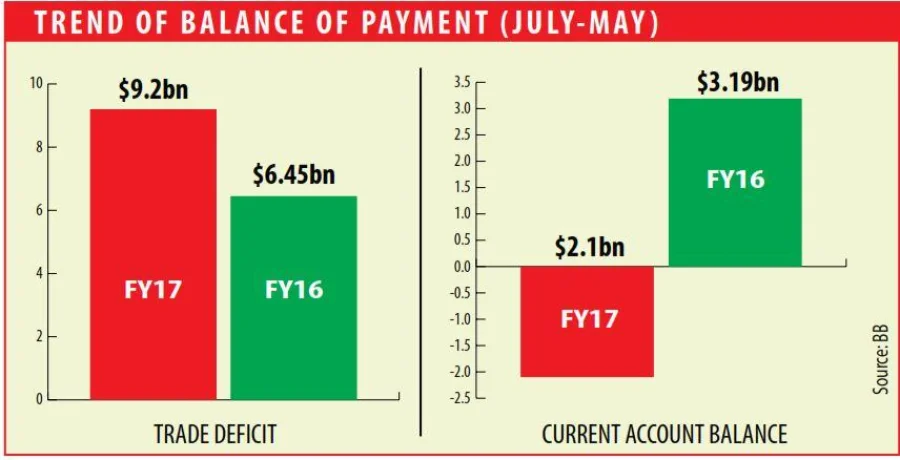
 According to the data, the trade deficit during the July-May period of FY’17 marked $9.2 billion.
Of the total amount, the deficit of trade in services crossed $3 billion mark alone and stood at $3.1 billion in July-May period of the last fiscal year, while it was $2.43 billion in the same period a year ago.
Trade in services refer to non-tangible commercial activities in which service providers and consumers are involved in transactions.
The sector includes travel, telecommunication, financial services, transport and other business and government services.
According to the BB data, service sector export stood at $3.28 billion during the 11 months of FY’17 while it was $3.12 billion during the corresponding period FY’16.
On the other hand, the service sector import marked $6.38 billion in July-May period of the last fiscal year, which was $5.55 billion in the same period of FY’16.
Meanwhile, the shortage in current account balance has occurred due to the slowdown in remittance inflow into the country.
Remittance inflow in FY’17 was the lowest in five years, marking a 14.48% decline year-on-year.
The remittance inflow into Bangladesh dropped to $12.76 billion in the last fiscal year from $14.93 billion in FY’16.FDI up by almost 28%Though there is a shortage in current account balance and trade deficit, Foreign Direct Investment (FDI) inflow into Bangladesh for the July-May period has gone up by almost 28%.
The country received FDI worth $1.62 billion during 11 months of FY’17, which was 27.75% higher to $1.27 billion in the same period a year ago.
A higher FDI inflow into Bangladesh and comparatively less pressure on the foreign debt repayment facilitated the financial account to stay at a comfortable level.
Bangladesh Bank data showed that the portfolio investment jumped by around six times to $324 million during July to May period of FY’17.
The country’s trade deficit increased by 42% in the 11 months from July to May period of the Fiscal Year 2016-17, marking $9.2 billion, while it was $6.45 billion in the corresponding period of Fiscal Year 2015-16.
The amount of trade deficit in July to April of FY’17 was $8.18 billion, which suggests that the deficit increased by $1.01 billion in the month of May alone.
The large amount of trade deficit has left Bangladesh’s current account balance short by $2.1 billion in the July to May period of FY’17, while it was $3.19 billion surplus in the same period a year ago, according to the latest data of the central bank’s Balance of Payment (BoP).
The Bangladesh Bank (BB) data showed that the trade deficit was a result of slower growth of exports compared to higher growth of imports during the period under review.
Bangladesh earned $31.05 billion from exports during the period of July to May of FY’17, while it was $29.91 billion in the corresponding period of FY’16.
The data shows that the year-on-year growth of export earnings was only 3.8% while the growth of import expenditure increased by 10.68%.
The country has spent $42.53 billion on import expenditure during the 11 months of FY’17 while it was $36.73 billion in FY’16. According to the data, the trade deficit during the July-May period of FY’17 marked $9.2 billion.
Of the total amount, the deficit of trade in services crossed $3 billion mark alone and stood at $3.1 billion in July-May period of the last fiscal year, while it was $2.43 billion in the same period a year ago.
Trade in services refer to non-tangible commercial activities in which service providers and consumers are involved in transactions.
The sector includes travel, telecommunication, financial services, transport and other business and government services.
According to the BB data, service sector export stood at $3.28 billion during the 11 months of FY’17 while it was $3.12 billion during the corresponding period FY’16.
On the other hand, the service sector import marked $6.38 billion in July-May period of the last fiscal year, which was $5.55 billion in the same period of FY’16.
Meanwhile, the shortage in current account balance has occurred due to the slowdown in remittance inflow into the country.
Remittance inflow in FY’17 was the lowest in five years, marking a 14.48% decline year-on-year.
The remittance inflow into Bangladesh dropped to $12.76 billion in the last fiscal year from $14.93 billion in FY’16.FDI up by almost 28%Though there is a shortage in current account balance and trade deficit, Foreign Direct Investment (FDI) inflow into Bangladesh for the July-May period has gone up by almost 28%.
The country received FDI worth $1.62 billion during 11 months of FY’17, which was 27.75% higher to $1.27 billion in the same period a year ago.
A higher FDI inflow into Bangladesh and comparatively less pressure on the foreign debt repayment facilitated the financial account to stay at a comfortable level.
Bangladesh Bank data showed that the portfolio investment jumped by around six times to $324 million during July to May period of FY’17.
According to the data, the trade deficit during the July-May period of FY’17 marked $9.2 billion.
Of the total amount, the deficit of trade in services crossed $3 billion mark alone and stood at $3.1 billion in July-May period of the last fiscal year, while it was $2.43 billion in the same period a year ago.
Trade in services refer to non-tangible commercial activities in which service providers and consumers are involved in transactions.
The sector includes travel, telecommunication, financial services, transport and other business and government services.
According to the BB data, service sector export stood at $3.28 billion during the 11 months of FY’17 while it was $3.12 billion during the corresponding period FY’16.
On the other hand, the service sector import marked $6.38 billion in July-May period of the last fiscal year, which was $5.55 billion in the same period of FY’16.
Meanwhile, the shortage in current account balance has occurred due to the slowdown in remittance inflow into the country.
Remittance inflow in FY’17 was the lowest in five years, marking a 14.48% decline year-on-year.
The remittance inflow into Bangladesh dropped to $12.76 billion in the last fiscal year from $14.93 billion in FY’16.FDI up by almost 28%Though there is a shortage in current account balance and trade deficit, Foreign Direct Investment (FDI) inflow into Bangladesh for the July-May period has gone up by almost 28%.
The country received FDI worth $1.62 billion during 11 months of FY’17, which was 27.75% higher to $1.27 billion in the same period a year ago.
A higher FDI inflow into Bangladesh and comparatively less pressure on the foreign debt repayment facilitated the financial account to stay at a comfortable level.
Bangladesh Bank data showed that the portfolio investment jumped by around six times to $324 million during July to May period of FY’17.