Imbalances in the fuel price, physical infrastructure problems and insufficient market analysis are being blamed for the failure of private airlines to make a significant impression on the aviation industry of Bangladesh.
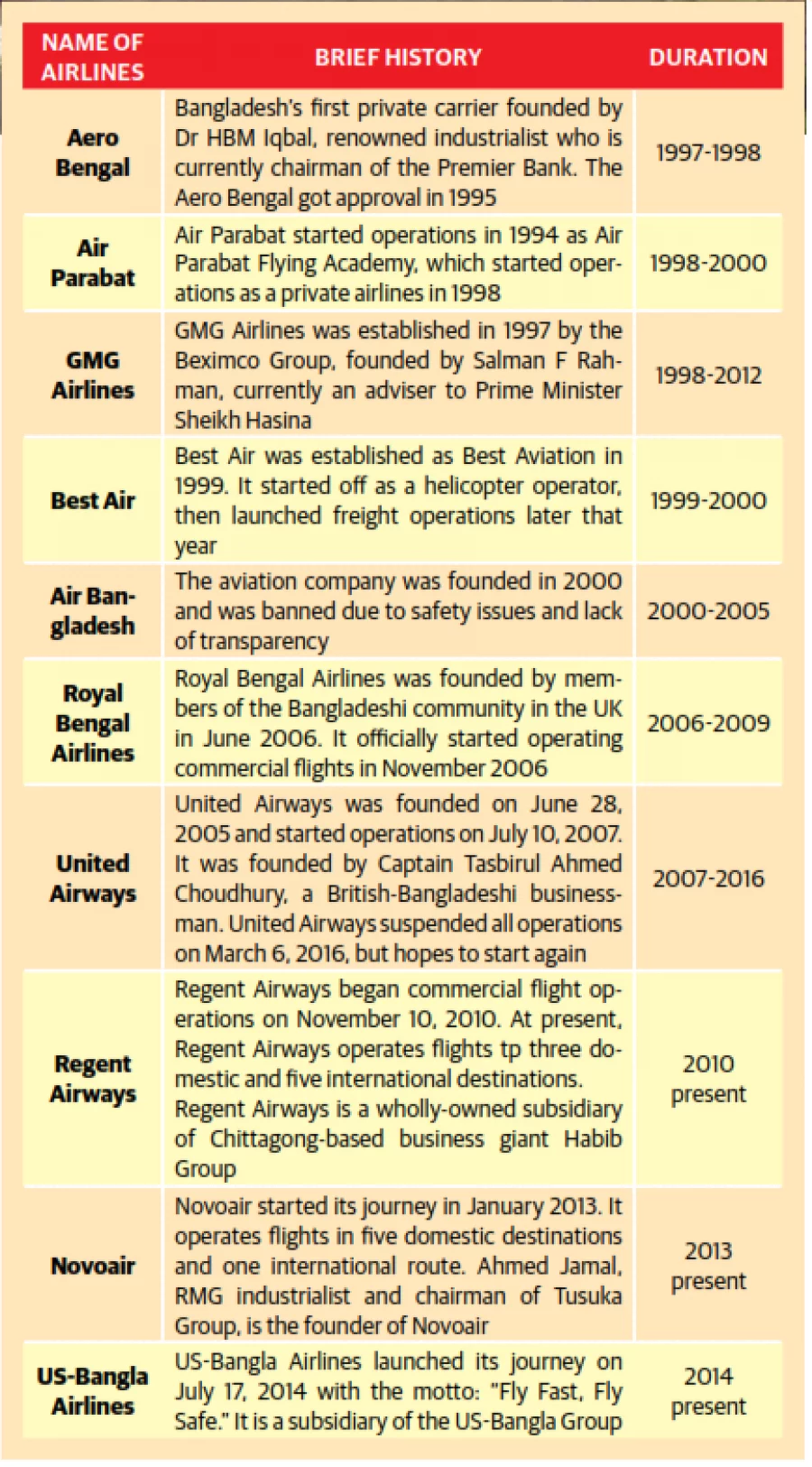
Industry insiders say commercial aviation is considered a “regal” business and a great opportunity. But of the 10 airlines to have operated services since 1994, six private airlines have already been shut down and another one is temporarily suspended.
Aero Bengal was given permission to fly by the Civil Aviation Authority of Bangladesh (CAAB) in 1995, but discontinued operations after just three years.
GMG Airlines also applied for CAAB approval within a year of Aero Bengal’s launch and was able to sustain operations for more than a decade. In that time, however, a few other airlines came and went.
Those airlines that are still in business today are struggling to stay afloat and are facing many challenges.
This is despite all of the private airlines in Bangladesh – even those which went out of business – having been started by businessmen with successful CVs in other ventures.
So why do so many airlines in this country fail?
Discriminatory fuel price
Although the fluctuating global price of aviation fuel contributes around 36-40% to the entire operating costs of a typical airline, it is not a level playing field.
“Foreign airlines are being provided fuel at cheaper prices while local airlines have to purchase it at very high prices,” Mofizur Rahman, managing director of Novoair, told the Dhaka Tribune.
Although Mofizur did not clarify the fuel price difference, the local operators may be facing discrimination because they have to pay in advance to buy fuel.
Moreover, Bangladeshi airlines have been forced to pay 42.62% VAT on fuel for domestic routes. In contrast, the VAT is below 6% both in Myanmar and India.
The price Bangladeshi airlines have to pay to use domestic airports is also high compared to other countries, while there are also restrictions on buying new aircraft.
Operators claim that when they apply to buy more aircraft, the regulator shows different causes to stall them, including space limitations at the country’s few airports.
“We have tried to highlight our challenges on numerous occasions,” said Mofizur.
Lack of proper market analysis
Most of the airlines entering the private sector in Bangladesh fail to analyze the market they are going into.
“Aviation companies mainly fail due to improper planning and actual market analysis,” Kamrul Islam, general manager (marketing support) of US-Bangla Airlines, said.
Sadi Abdullah, managing director of Malaysia-based Air Asia, said newly-launched companies tend to work with a business model that is similar to previous companies in that sector.
“But within a few years of starting operation, it may be that another one or two aviation companies are launched,” he said. “Aviation companies cannot deal with constant changes in industry variables. This creates an overall imbalance in the aviation sector.”
The Air Asia chief also pointed the finger at the domestic aviation authority in Bangladesh.
“CAAB is significantly responsible for the state of the private aviation sector in Bangladesh,” Sadi said.
“Their faulty licence granting process and regulation system is contributing to the downfall of the sector. If you look into the history of the private aviation fleet it is pointed out that CAAB had given approval gradually between one or two years.”
The CAAB said the businessmen need to focus on analyzing the sector and not think about making profit overnight.
“The airlines industry is tough business for any country in the world,” the CAAB chairman, Air Vice Marshal M Naim Hassan, told the Dhaka Tribune.
“It is easy to understand; the aviation business means huge investment. The people that invest in this sector usually understand that they have to wait a long time before they can pocket the profit.”




 Moreover, Bangladeshi airlines have been forced to pay 42.62% VAT on fuel for domestic routes. In contrast, the VAT is below 6% both in Myanmar and India.
The price Bangladeshi airlines have to pay to use domestic airports is also high compared to other countries, while there are also restrictions on buying new aircraft.
Operators claim that when they apply to buy more aircraft, the regulator shows different causes to stall them, including space limitations at the country’s few airports.
“We have tried to highlight our challenges on numerous occasions,” said Mofizur.