Outrage erupted across social media after Jamaat-e-Islami – the party that sided with Pakistan and whose members aided and abetted crimes against humanity during the 1971 Liberation War – took part in observing Victory Day on Friday.
War crimes trial campaigners fumed after leaders of the party, which has never apologised for its heinous role in the war, claimed in posters, banners and Facebook posts that it had liberated Bangladesh.
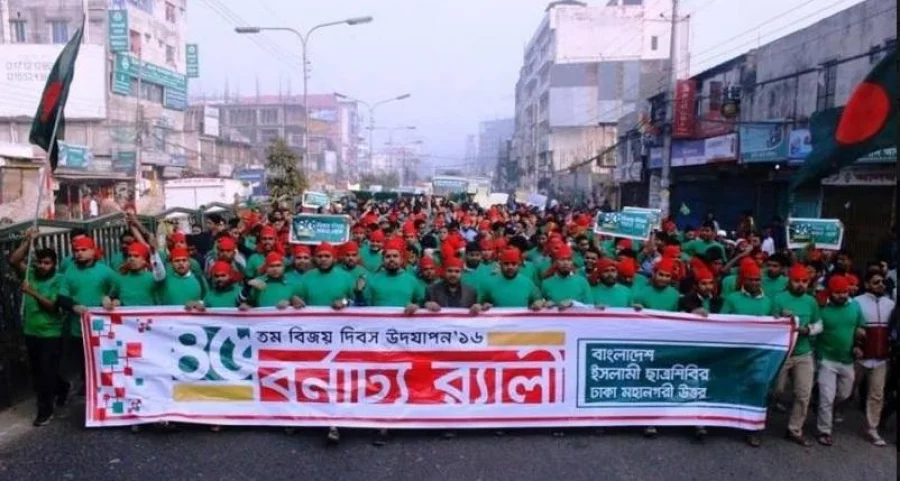
Dhaka north unit Islami Chhatra Shibir brings out a procession on Victory Day on Friday
Demands for the banning of Jamaat and its violent student wing Islami Chhatra Shibir, especially after the party violently demonstrated against guilty verdicts handed down against its leaders including Delawar Hossain Sayedee in 2013, have been renewed.
Jamaat and Shibir have been running a campaign of dissemblance to legitimise themselves since the government initiated war crimes trials in 2010.
Shibir leaders and supporters brought out four processions on Victory Day in Dhaka, in one wearing green T-shirts and red bandanas. Similar processions took place in Gazipur, Sylhet, Pabna and Rajshahi.
The parades were not barred by authorities.
Jamaat’s Dhaka city (north) unit organised a discussion on Wednesday to mark the Martyred Intellectuals Day. Chief of the unit Md Selim Uddin condemned the murder of eminent intellectuals of the country days before liberation.
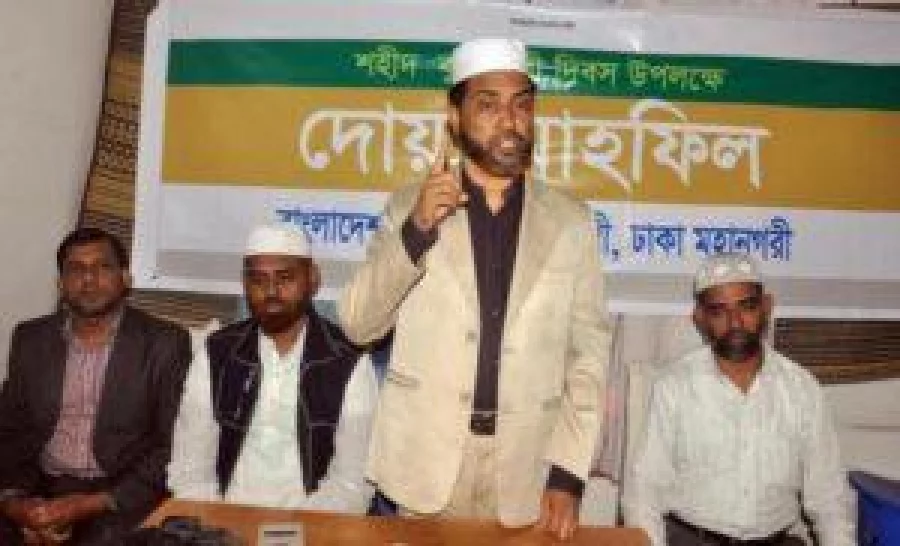
Jamaat's Dhaka city (north) unit Ameer Md Selim Uddin speaks at a discussion
“Intellectuals are the most precious resources of a country. Conspirators killed the intellectuals brutally only two days before independence to intellectually cripple the nation,” said the former president of Chhatra Shibir.
According to historians and war crimes tribunal verdicts, the targeted killing of over 1,100 intellectuals in Dhaka and elsewhere was planned by the Pakistan Army and implemented by al-Badr, a notorious militia force formed with the members of Islami Chhatra Sangha (now Chhatra Shibir).
Former Jamaat chiefs Ghulam Azam and Motiur Rahman Nizami, and secretary general Ali Ahsan Mohammad Mujahid led al-Badr, headquartered at the Physical Training Institute in Mohammadpur. Chowdhury Mueen Uddin and Syed Ashrafuzzaman Khan were the two other top leaders of al-Badr.
All were convicted of crimes against humanity and all but Ghulam Azam sentenced to death for the war-time crimes. Ghulam Azam died while serving a prison term while Nizami and Mujahid were executed. Mueen Uddin and Ashrafuzzaman, who live overseas, were tried in absentia.
The government recently executed Chittagong al-Badr commander Mir Quasem Ali, the
first chief of Chhatra Shibir (1977-78), and Muhammad Kamaruzzaman of Sherpur al-Badr, the second president of Chhatra Shibir (1978-79).
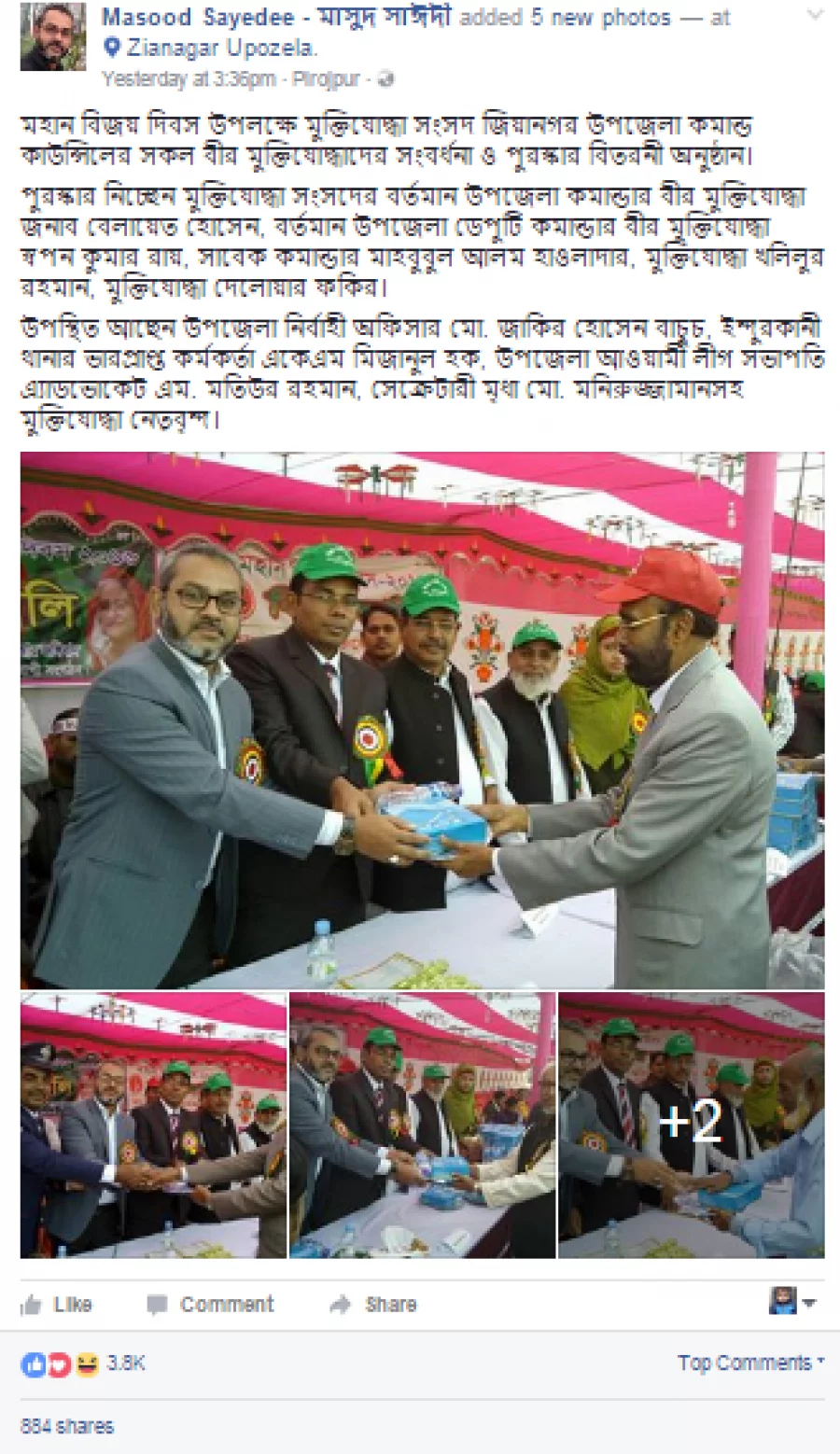
Convicted war criminal and Islamic preacher Sayedee’s son Masood Sayedee, also chairman of Zianagar Upazila in Pirojpur, created outrage online when he posted a Victory Day-special profile picture on Facebook with his father, who has been jailed for life, and other photos celebrating the day.
On Friday, he attended a procession, received a parade and distributed awards among local freedom fighters including Mahbubul Alam Hawlader, who filed the case against Sayedee and testified in the case as the first prosecution witness.
Zianagar UNO Zakir Hossain Bachchu, Indurkani police chief AKM Mizanul Haque, and leaders of local Awami League and Jatiya Party also took part in the events.
On October 28, 2013, some 200 Jamaat-Shibir supporters ransacked and looted the house of Mahbubul, also the upazila Muktijoddha Sangsad commander. Another witness, Mostafa Hawlader, was killed allegedly by Jamaat-Shibir men on December 10 the same year. Investigation into the cases has not yielded any results.
On Friday, Masood also received a crest from the upazila administration he leads.
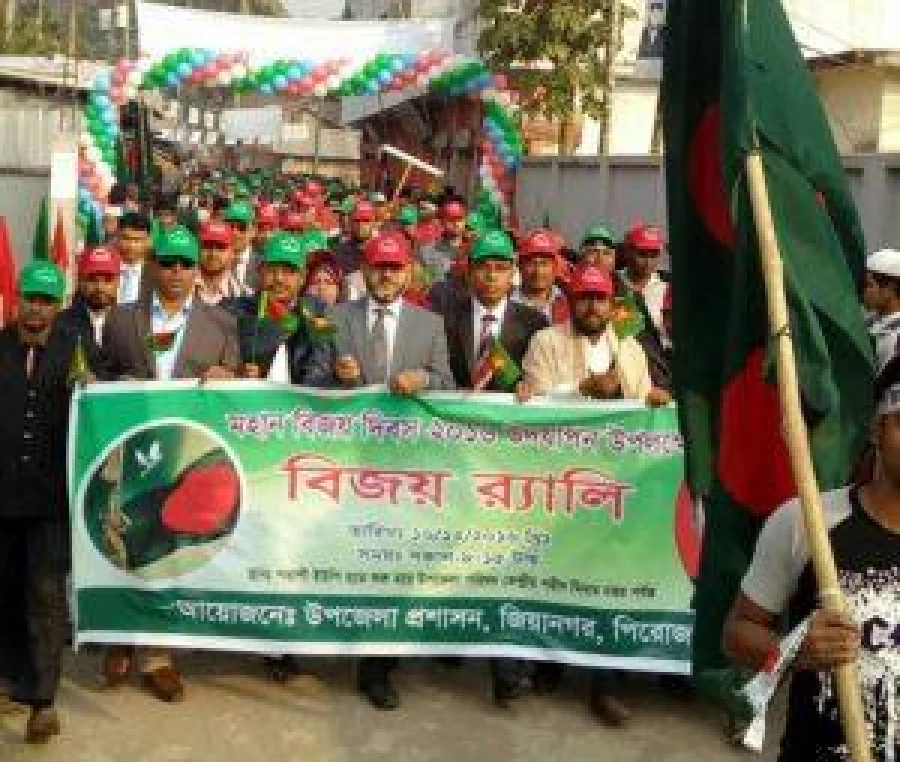
Masood Sayedee leads a Victory Day procession at Zianagar, Pirojpur
Masood shared photos of the events on his Facebook page and personal profile, irking war crimes trial campaigners who heavily criticised the government for delaying the banning of Jamaat-Shibir, confiscating their property and scrapping their family members' citizenship.
They also demanded a fair probe into allegations of war crimes against newly-elected Jamaat chief Maqbul Ahmad, who lived in Dagonbhuiyan in Feni during the war.
Local freedom fighters alleged that Maqbul had been involved with the murder of freedom fighters and Hindus in the area during the war. Jamaat denies the allegations.




 Dhaka north unit Islami Chhatra Shibir brings out a procession on Victory Day on Friday
Demands for the banning of Jamaat and its violent student wing Islami Chhatra Shibir, especially after the party violently demonstrated against guilty verdicts handed down against its leaders including Delawar Hossain Sayedee in 2013, have been renewed.
Jamaat and Shibir have been running a campaign of dissemblance to legitimise themselves since the government initiated war crimes trials in 2010.
Shibir leaders and supporters brought out four processions on Victory Day in Dhaka, in one wearing green T-shirts and red bandanas. Similar processions took place in Gazipur, Sylhet, Pabna and Rajshahi.
The parades were not barred by authorities.
Jamaat’s Dhaka city (north) unit organised a discussion on Wednesday to mark the Martyred Intellectuals Day. Chief of the unit Md Selim Uddin condemned the murder of eminent intellectuals of the country days before liberation.
Dhaka north unit Islami Chhatra Shibir brings out a procession on Victory Day on Friday
Demands for the banning of Jamaat and its violent student wing Islami Chhatra Shibir, especially after the party violently demonstrated against guilty verdicts handed down against its leaders including Delawar Hossain Sayedee in 2013, have been renewed.
Jamaat and Shibir have been running a campaign of dissemblance to legitimise themselves since the government initiated war crimes trials in 2010.
Shibir leaders and supporters brought out four processions on Victory Day in Dhaka, in one wearing green T-shirts and red bandanas. Similar processions took place in Gazipur, Sylhet, Pabna and Rajshahi.
The parades were not barred by authorities.
Jamaat’s Dhaka city (north) unit organised a discussion on Wednesday to mark the Martyred Intellectuals Day. Chief of the unit Md Selim Uddin condemned the murder of eminent intellectuals of the country days before liberation. Jamaat's Dhaka city (north) unit Ameer Md Selim Uddin speaks at a discussion
“Intellectuals are the most precious resources of a country. Conspirators killed the intellectuals brutally only two days before independence to intellectually cripple the nation,” said the former president of Chhatra Shibir.
According to historians and war crimes tribunal verdicts, the targeted killing of over 1,100 intellectuals in Dhaka and elsewhere was planned by the Pakistan Army and implemented by al-Badr, a notorious militia force formed with the members of Islami Chhatra Sangha (now Chhatra Shibir).
Former Jamaat chiefs Ghulam Azam and Motiur Rahman Nizami, and secretary general Ali Ahsan Mohammad Mujahid led al-Badr, headquartered at the Physical Training Institute in Mohammadpur. Chowdhury Mueen Uddin and Syed Ashrafuzzaman Khan were the two other top leaders of al-Badr.
All were convicted of crimes against humanity and all but Ghulam Azam sentenced to death for the war-time crimes. Ghulam Azam died while serving a prison term while Nizami and Mujahid were executed. Mueen Uddin and Ashrafuzzaman, who live overseas, were tried in absentia.
The government recently executed Chittagong al-Badr commander Mir Quasem Ali, the
Jamaat's Dhaka city (north) unit Ameer Md Selim Uddin speaks at a discussion
“Intellectuals are the most precious resources of a country. Conspirators killed the intellectuals brutally only two days before independence to intellectually cripple the nation,” said the former president of Chhatra Shibir.
According to historians and war crimes tribunal verdicts, the targeted killing of over 1,100 intellectuals in Dhaka and elsewhere was planned by the Pakistan Army and implemented by al-Badr, a notorious militia force formed with the members of Islami Chhatra Sangha (now Chhatra Shibir).
Former Jamaat chiefs Ghulam Azam and Motiur Rahman Nizami, and secretary general Ali Ahsan Mohammad Mujahid led al-Badr, headquartered at the Physical Training Institute in Mohammadpur. Chowdhury Mueen Uddin and Syed Ashrafuzzaman Khan were the two other top leaders of al-Badr.
All were convicted of crimes against humanity and all but Ghulam Azam sentenced to death for the war-time crimes. Ghulam Azam died while serving a prison term while Nizami and Mujahid were executed. Mueen Uddin and Ashrafuzzaman, who live overseas, were tried in absentia.
The government recently executed Chittagong al-Badr commander Mir Quasem Ali, the  first chief of Chhatra Shibir (1977-78), and Muhammad Kamaruzzaman of Sherpur al-Badr, the second president of Chhatra Shibir (1978-79).
Convicted war criminal and Islamic preacher Sayedee’s son Masood Sayedee, also chairman of Zianagar Upazila in Pirojpur, created outrage online when he posted a Victory Day-special profile picture on Facebook with his father, who has been jailed for life, and other photos celebrating the day.
On Friday, he attended a procession, received a parade and distributed awards among local freedom fighters including Mahbubul Alam Hawlader, who filed the case against Sayedee and testified in the case as the first prosecution witness.
Zianagar UNO Zakir Hossain Bachchu, Indurkani police chief AKM Mizanul Haque, and leaders of local Awami League and Jatiya Party also took part in the events.
On October 28, 2013, some 200 Jamaat-Shibir supporters ransacked and looted the house of Mahbubul, also the upazila Muktijoddha Sangsad commander. Another witness, Mostafa Hawlader, was killed allegedly by Jamaat-Shibir men on December 10 the same year. Investigation into the cases has not yielded any results.
On Friday, Masood also received a crest from the upazila administration he leads.
first chief of Chhatra Shibir (1977-78), and Muhammad Kamaruzzaman of Sherpur al-Badr, the second president of Chhatra Shibir (1978-79).
Convicted war criminal and Islamic preacher Sayedee’s son Masood Sayedee, also chairman of Zianagar Upazila in Pirojpur, created outrage online when he posted a Victory Day-special profile picture on Facebook with his father, who has been jailed for life, and other photos celebrating the day.
On Friday, he attended a procession, received a parade and distributed awards among local freedom fighters including Mahbubul Alam Hawlader, who filed the case against Sayedee and testified in the case as the first prosecution witness.
Zianagar UNO Zakir Hossain Bachchu, Indurkani police chief AKM Mizanul Haque, and leaders of local Awami League and Jatiya Party also took part in the events.
On October 28, 2013, some 200 Jamaat-Shibir supporters ransacked and looted the house of Mahbubul, also the upazila Muktijoddha Sangsad commander. Another witness, Mostafa Hawlader, was killed allegedly by Jamaat-Shibir men on December 10 the same year. Investigation into the cases has not yielded any results.
On Friday, Masood also received a crest from the upazila administration he leads. Masood Sayedee leads a Victory Day procession at Zianagar, Pirojpur
Masood shared photos of the events on his Facebook page and personal profile, irking war crimes trial campaigners who heavily criticised the government for delaying the banning of Jamaat-Shibir, confiscating their property and scrapping their family members' citizenship.
They also demanded a fair probe into allegations of war crimes against newly-elected Jamaat chief Maqbul Ahmad, who lived in Dagonbhuiyan in Feni during the war.
Local freedom fighters alleged that Maqbul had been involved with the murder of freedom fighters and Hindus in the area during the war. Jamaat denies the allegations.
Masood Sayedee leads a Victory Day procession at Zianagar, Pirojpur
Masood shared photos of the events on his Facebook page and personal profile, irking war crimes trial campaigners who heavily criticised the government for delaying the banning of Jamaat-Shibir, confiscating their property and scrapping their family members' citizenship.
They also demanded a fair probe into allegations of war crimes against newly-elected Jamaat chief Maqbul Ahmad, who lived in Dagonbhuiyan in Feni during the war.
Local freedom fighters alleged that Maqbul had been involved with the murder of freedom fighters and Hindus in the area during the war. Jamaat denies the allegations.