




Twenty-year-old Murshida Akter gave birth to her second child on May 3. Early that morning, she left home on a motorcycle with her husband and grandmother, crossing rough roads, canals and bushes in the remote char area before reaching a small health centre around 8:30am. There, she safely delivered her baby naturally.
“This is my second child. During my first pregnancy, I had to travel to Shahjadpur for checkups. It was extremely difficult as I had to change boats, motorcycles and CNGs several times. This time, at least, I did not have to travel that far,” she said.
Murshida said she was also surprised that the delivery cost only Tk400, although the listed charge was Tk800.
She added that health workers from the centre regularly visited her home during pregnancy, conducted checkups and provided medicines and advice.
“They provide these services to all pregnant women here, not just me,” she said.
For residents of Char Ghorjan in the middle of the Jamuna River, the Brac health centre has become a symbol of hope for safe motherhood.
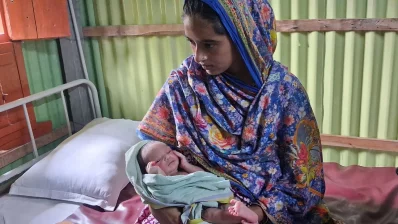
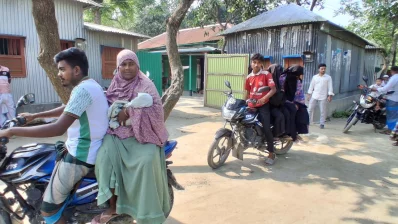
Murshida returned home the same afternoon on a motorcycle, while relatives carried the newborn separately.
Her grandmother said that before the health centre was established, pregnant women had to travel to Shahjadpur for delivery services using boats, trawlers, motorcycles and CNGs.
“The journey itself was dangerous for both mother and child. Many women died while trying to cross these remote routes or during childbirth,” she said.
Asma Akhter from Chauhali upazila also chose the Brac Sushastha Primary Healthcare Centre in Ghorjan Union for childbirth.
Although she lives in Dhaka with her husband, she came to her parents’ home before delivery after hearing about the facility.
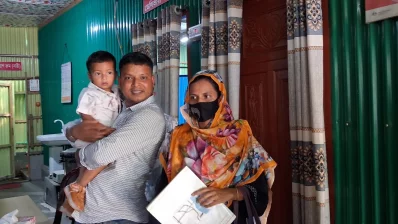
“There was no such healthcare service here before,” she said.
The char region remains largely isolated from the mainland. More than half a million people live across Sonatani in Shahjadpur and Ghorjan Union in Chauhali, yet there are no government hospitals or healthcare centres nearby.
Residents often have to travel to Shahjadpur, Enayetpur, Nagarpur in Tangail or Bera in Pabna for treatment. However, transportation remains one of the biggest challenges.
Previously, childbirth in the area largely depended on traditional birth attendants, informal treatment and luck. When complications arose, families rushed patients through muddy roads, rivers and remote routes by motorcycle and boat.
According to a UN report, Bangladesh records 123 maternal deaths per 100,000 live births.
To improve maternal healthcare in the region, Brac CHARMs (Char Health and Resilience for Mothers and Society) established the primary healthcare centre on November 19, 2025. Around 30,000 people currently depend on the facility.
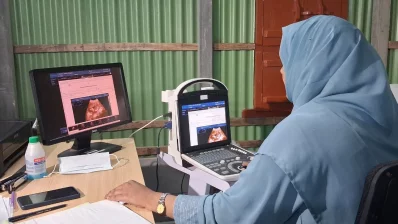
The centre now provides antenatal care, general treatment, telemedicine, ultrasonography, vaccinations and normal delivery services.
A medical officer visits once a week, while telemedicine services connect patients with doctors in Dhaka on other days.
The facility remains open 24 hours a day and is staffed by trained midwives, medical assistants and health workers.
Currently, 360 pregnant women are receiving regular services from the centre, which has already conducted 70 normal deliveries.
Brac CHARMs Project Manager Mahfuzur Rahman said the initiative targeted areas where thousands of people live without effective healthcare services.
“We identified these chars through field-level assessments,” he said.
Boat driver Al Amin said he had personally witnessed women giving birth while being transported to hospitals in emergencies.
“I have seen women suffering terribly while crossing rivers to reach Shahjadpur. Now, many mothers can safely deliver babies at the local health centre,” he said.
Motorcycle rider Russell Rana recalled the difficulties his wife faced during her first pregnancy.
“We had to travel to Shahjadpur during heavy rain. The roads were slippery and flooded. Later, doctors said our daughter had complications. My wife had not received proper prenatal care then,” he said.
His wife is now six months pregnant, and this time she has been receiving regular treatment at the health centre.
Russell also recalled an incident two years ago when a woman went into labour before reaching the riverside and had to give birth in nearby bushes.
Midwife Tahrima Khatun said most pregnant women visiting the centre were victims of child marriage and were between 16 and 18 years old, making them more vulnerable to complications.
“Many mothers suffer from malnutrition and have little awareness about prenatal nutrition, folic acid or essential medicines. Our field workers visit homes regularly to encourage women to seek care,” she said.
She added that most deliveries at the centre are completed normally, while complicated cases are referred to urban hospitals.
Dr Jannatul Piya, a physician at the Brac Health Centre, said travelling long distances by motorcycle or horse cart during pregnancy is highly risky.
“Previously, many women did not even know the position of the baby or the expected delivery date. Now, with ultrasonography and regular checkups, both mothers and babies are healthier, and normal deliveries are increasing,” she said.
Sirajganj Civil Surgeon Dr Md Nurul Amin said healthcare access in char areas remains limited due to geographic isolation.
“Providing hospital-based healthcare in such remote regions remains a major challenge. However, initiatives have been taken to expand services in the future,” he said.
He added that proposals had already been submitted to establish sub-centres in each union to provide primary healthcare services in remote char areas.
