



Before dawn breaks over the Bay of Bengal, ten-year-old Masum wakes to the sound of waves crashing against Sonadia Island. He picks up his schoolbooks and prepares for another day at Sonadia Government Primary School, fully aware that his education has a fixed end point.
Masum is a fourth-grade student. He knows that once he completes grade five, there will be nowhere left for him to study.
“I want to study further,” he says quietly. “But there is no school here for us.”
Like the sea that surrounds his home, Masum’s dreams rise and fall repeatedly - cut short by geography, poverty and the absence of basic educational infrastructure.
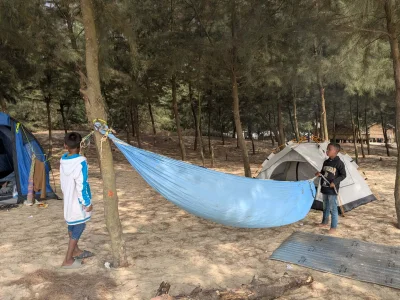
Education ends at grade five
Such stories are common on Sonadia Island, a remote landmass of about nine square kilometres off Maheshkhali in Cox’s Bazar, surrounded entirely by the sea.
Life here is shaped by tides, saline water and constant hardship.
Houses made of bamboo and polythene reflect the island’s fragile living conditions.
Despite this, nearly every family wants their children to receive an education. Yet formal schooling on the island ends at grade five.
Sonadia has only one government primary school, where around 220 to 250 students are currently enrolled.
Each year, an average of 25 to 30 students pass grade five, after which most are forced to drop out.
There is no secondary school on the island.
Travelling to the upazila town for education is costly, risky and often impossible.
Boat services are limited and unsafe, and during rough weather, communication with the mainland almost entirely breaks down.
Reaching Sonadia from Cox’s Bazar jetty requires crossing open sea routes.
Parents say that even if they wish to send their children elsewhere to study, the lack of reliable transport makes it unrealistic.
Fragile teaching system
The school has six to seven teachers, but none reside on the island.
As they commute from distant locations, classes are frequently disrupted.
Teacher shortages and communication barriers have left the education system fragile.
Tanvir, who passed grade five last year, is no longer studying.
“There is no high school here,” he says. “After grade five, studying is not possible.” He speaks positively about his teachers but sees no path forward.
Current students are also aware that grade five marks the end of their education.
Still, many dream of becoming doctors, teachers or government officials. For most, those dreams remain unreachable.
From classrooms to labour
Once schooling ends, children typically join family work.
Some accompany their fathers to sea fishing, while others help with salt farming or dried fish production.
Agriculture is nearly impossible due to saline soil, leaving fishing and tourism as the main livelihoods.
As tourism expands on the island, child labour has become increasingly visible.
Children who drop out of school are often seen working at resorts, guesthouses and small shops - carrying luggage, cleaning rooms or helping in kitchens.
Twelve-year-old Rashed (pseudonym) passed grade five but could not continue his studies.
He now works at a resort from morning until evening.
“I wanted to go to school,” he says. “But there is no high school here. If I don’t work, my family cannot survive.”
Local residents warn that easy access to low-paid work is pulling children away from classrooms and into labour at an early age.
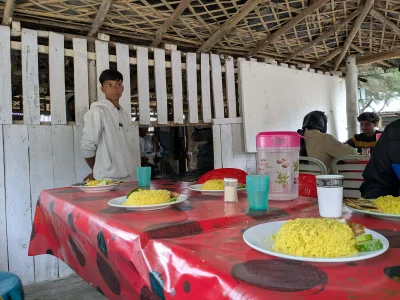
Parents trapped by poverty, isolation
Parents say they are powerless.
“Even if we want to send our children outside the island, we cannot afford food and accommodation costs,” said Asma, a mother of two.
Teachers share similar concerns.
Mohammad Moktar, a teacher at Sonadia Government Primary School, said instruction continues under severe limitations.
“There is no lack of effort from teachers,” he said.
“But without a high school, students cannot move forward. Only a few families can afford to send their children to the upazila town.”
Maheshkhali Upazila Executive Officer Imran Mahmud Dalim said there is a school up to grade eight in Gutibhanga, which Sonadia students are advised to attend.
However, he acknowledged that very few can do so due to poverty and distance.
“Sonadia is a backward area,” he said. “Most families depend on fishing, and many children join work immediately after grade five.”
A wider national problem
The crisis on Sonadia reflects a broader national challenge.
According to the Bangladesh Bureau of Statistics, around 1.77 million children in Bangladesh are engaged in child labour, largely in risky and informal sectors.
The International Labour Organization (ILO) and Unicef identify poverty, limited access to education and weak enforcement as key drivers of child labour - problems that are especially acute in coastal and remote regions.
Professor Abrar Hossain of the University of Dhaka said legal frameworks alone cannot solve the issue.
“Without quality education and reliable communication in remote areas, children will continue to drop out,” he said.
Beauty masking crisis
Sonadia Island is known for its natural beauty - sea beaches, keora forests, mangroves, dried fish hubs and even the prospect of a deep-sea port.
Yet beneath this scenic surface lies a silent education crisis.
Local residents say the solution is clear: establish a secondary school on the island or ensure safe, affordable transport to the mainland.
Without urgent intervention, they warn, the dreams of children like Masum will continue to disappear - lost to the waves long before they reach the shore of opportunity.
