Médecins Sans Frontières (Doctors without Borders) has served as a blessing for both locals and Rohingyas during the last several years in Cox’s Bazar, as they have provided patients with medical treatment free of cost.
Originally, the international medical humanitarian organization started their mission in Cox's Bazar in 2009, but the physicians have recently increased their efforts to provide the best medical services possible since the beginning of the Rohingya crisis last year, said MSF Bangladesh's Field Communications Manager Sara Creta.
"MSF provides medical care to everyone regardless of their ethnicity, political beliefs, or allegiances," she said. "We treat both the locals and refugee communities equally."
MSF provides services in the two upazilas of Cox's Bazar, where the population comprises two million people, including both locals and Rohingyas.
Alongside refugees, locals use the health facilities provided by MSF extensively, said Ukhiya resident Mosammat Shahana Begum.
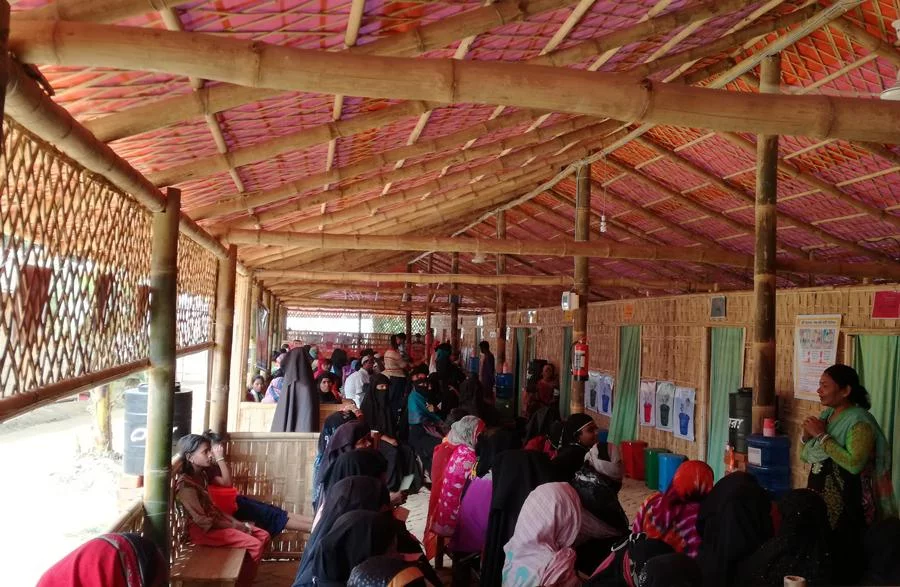
More than 200,000 patients have been treated at MSF health points in the last six months |
Tarek Mahmud/Dhaka Tribune"I heard about the facilities of MSF from my next door neighbours," said Shahana, as she prepared to make her way to the MSF Kutupalong Clinic. "Most of the villagers go there for quick and better services."
More than 200,000 patients have been treated at MSF health points in the last six months.
While visiting the Kutupalong Health Clinic, the biggest among similar operations in Cox's Bazar, this correspondent discovered that the organization has managed to bring high-class medical facilities which cannot otherwise be found in the remote locality.
MSF's Communication Officer Md Sazzad Hossain told the Dhaka Tribune: "More than 547,000 refugees currently live inside makeshift settlements in the Kutupalong and Balukhali camps, as well as in the expansion sites. We try to provide treatment to as many as we can."
Apart from the clinic, the MSF has also built three health posts in the Kutupalong makeshift expansion area, and plans to increase the number of beds and improve the overall infrastructure inside the clinic to meet the needs of the growing population, said Dr Tarikul Islam, coordinator of physicians inside the clinic. Moreover, while the patients wait in line for consultations with doctors, they are given advice on different medical problems to raise awareness.
Several Rohingya patients – their names undisclosed to protect their privacy – told the Dhaka Tribune that they are happy with the MSF's smooth and fast medical services.
Elizabeth Kavourise, expat medical team leader of the clinic, said: "Our patients mainly come with ailments such as respiratory tract infections and diarrhoeal diseases, which can be directly related to the poor living, water, and sanitary facilities inside the settlements. Diphtheria and measles are the most common diseases here."
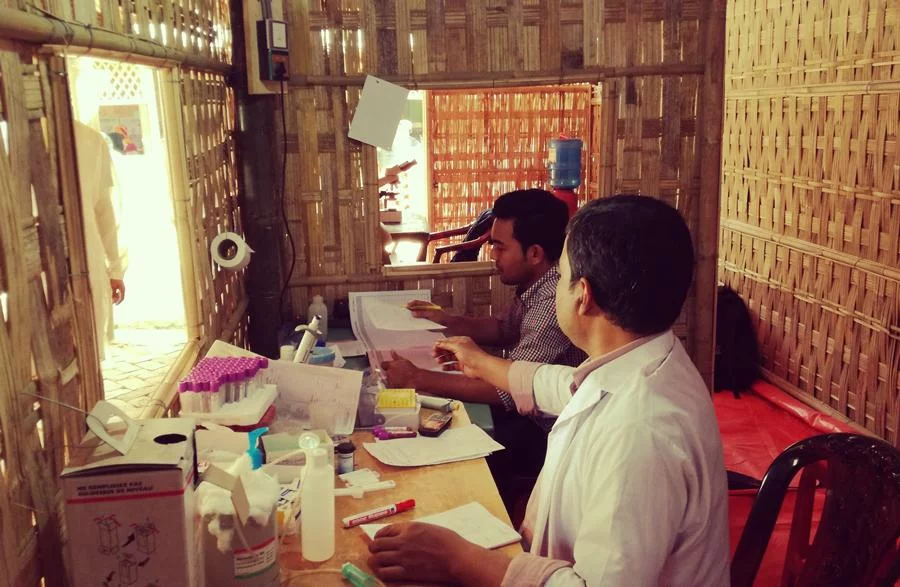
On average, 300 patients are treated per day inside the Kutupalong Health Clinic |
Tarek Mahmud/Dhaka TribuneApart from the Kutupalong Health Clinic, there are health posts and dedicated treatment centres for diphtheria in Rubber Garden, near Kutupalong makeshift settlement, Balukhali, Balukhali 2, Tasnimarkhola, Unchiprang, Jamtoli, Hakimpara, Moynarghona, and Teknaf's Sabrang area.
After Myanmar army's crackdown on Rakhine on August 25, 2017, nearly 700,000 displaced Rohingyas had entered into the country at Ukhiya and Teknaf areas of Cox's Bazar, joining several generations of Rohingyas that had already been living there.
Medical facilities provided by MSF
* Medical treatments are provided through 2 categories of medical institutions- health posts and in-patient health facilities. Currently, there are 10 health posts and 5 in-patient health facilities, including one in Rubber Garden which has an isolation capacity for 150 patients affected by contagious diseases, mainly diphtheria
* A total of 2,000 national and international staff including physicians provide services in the two upazilas of Cox's Bazar where nearly two million people, comprising both locals and Rohingyas, currently reside
* On average, 300 patients are treated per day inside the Kutupalong Health Clinic, which falls under the in-patient health facility category and is built on about an acre of land
* Kutupalong Health Clinic has separate and specialized sections on the basis of diseases
* It also has a 24-hour emergency room, an outpatient department, an in-patient department which includes a pediatric and neo-natal ward, isolation beds, a diarrhoea treatment ward, sexual and reproductive healthcare services, mental health departments and basic laboratory services
* Since August 25 last year, the in-patient department has expanded from 50 to 79 beds. The isolation capacity has also been increased to deal with the outbreak of communicable diseases
* A network of MSF outreach teams focus on hygiene, health promotion, and health monitoring




 More than 200,000 patients have been treated at MSF health points in the last six months | Tarek Mahmud/Dhaka Tribune"I heard about the facilities of MSF from my next door neighbours," said Shahana, as she prepared to make her way to the MSF Kutupalong Clinic. "Most of the villagers go there for quick and better services."
More than 200,000 patients have been treated at MSF health points in the last six months.
While visiting the Kutupalong Health Clinic, the biggest among similar operations in Cox's Bazar, this correspondent discovered that the organization has managed to bring high-class medical facilities which cannot otherwise be found in the remote locality.
MSF's Communication Officer Md Sazzad Hossain told the Dhaka Tribune: "More than 547,000 refugees currently live inside makeshift settlements in the Kutupalong and Balukhali camps, as well as in the expansion sites. We try to provide treatment to as many as we can."
Apart from the clinic, the MSF has also built three health posts in the Kutupalong makeshift expansion area, and plans to increase the number of beds and improve the overall infrastructure inside the clinic to meet the needs of the growing population, said Dr Tarikul Islam, coordinator of physicians inside the clinic. Moreover, while the patients wait in line for consultations with doctors, they are given advice on different medical problems to raise awareness.
Several Rohingya patients – their names undisclosed to protect their privacy – told the Dhaka Tribune that they are happy with the MSF's smooth and fast medical services.
Elizabeth Kavourise, expat medical team leader of the clinic, said: "Our patients mainly come with ailments such as respiratory tract infections and diarrhoeal diseases, which can be directly related to the poor living, water, and sanitary facilities inside the settlements. Diphtheria and measles are the most common diseases here."
More than 200,000 patients have been treated at MSF health points in the last six months | Tarek Mahmud/Dhaka Tribune"I heard about the facilities of MSF from my next door neighbours," said Shahana, as she prepared to make her way to the MSF Kutupalong Clinic. "Most of the villagers go there for quick and better services."
More than 200,000 patients have been treated at MSF health points in the last six months.
While visiting the Kutupalong Health Clinic, the biggest among similar operations in Cox's Bazar, this correspondent discovered that the organization has managed to bring high-class medical facilities which cannot otherwise be found in the remote locality.
MSF's Communication Officer Md Sazzad Hossain told the Dhaka Tribune: "More than 547,000 refugees currently live inside makeshift settlements in the Kutupalong and Balukhali camps, as well as in the expansion sites. We try to provide treatment to as many as we can."
Apart from the clinic, the MSF has also built three health posts in the Kutupalong makeshift expansion area, and plans to increase the number of beds and improve the overall infrastructure inside the clinic to meet the needs of the growing population, said Dr Tarikul Islam, coordinator of physicians inside the clinic. Moreover, while the patients wait in line for consultations with doctors, they are given advice on different medical problems to raise awareness.
Several Rohingya patients – their names undisclosed to protect their privacy – told the Dhaka Tribune that they are happy with the MSF's smooth and fast medical services.
Elizabeth Kavourise, expat medical team leader of the clinic, said: "Our patients mainly come with ailments such as respiratory tract infections and diarrhoeal diseases, which can be directly related to the poor living, water, and sanitary facilities inside the settlements. Diphtheria and measles are the most common diseases here." On average, 300 patients are treated per day inside the Kutupalong Health Clinic | Tarek Mahmud/Dhaka TribuneApart from the Kutupalong Health Clinic, there are health posts and dedicated treatment centres for diphtheria in Rubber Garden, near Kutupalong makeshift settlement, Balukhali, Balukhali 2, Tasnimarkhola, Unchiprang, Jamtoli, Hakimpara, Moynarghona, and Teknaf's Sabrang area.
After Myanmar army's crackdown on Rakhine on August 25, 2017, nearly 700,000 displaced Rohingyas had entered into the country at Ukhiya and Teknaf areas of Cox's Bazar, joining several generations of Rohingyas that had already been living there.
On average, 300 patients are treated per day inside the Kutupalong Health Clinic | Tarek Mahmud/Dhaka TribuneApart from the Kutupalong Health Clinic, there are health posts and dedicated treatment centres for diphtheria in Rubber Garden, near Kutupalong makeshift settlement, Balukhali, Balukhali 2, Tasnimarkhola, Unchiprang, Jamtoli, Hakimpara, Moynarghona, and Teknaf's Sabrang area.
After Myanmar army's crackdown on Rakhine on August 25, 2017, nearly 700,000 displaced Rohingyas had entered into the country at Ukhiya and Teknaf areas of Cox's Bazar, joining several generations of Rohingyas that had already been living there.