



Also Read- UN, diplomats find unimaginable suffering in Rakhine on visit
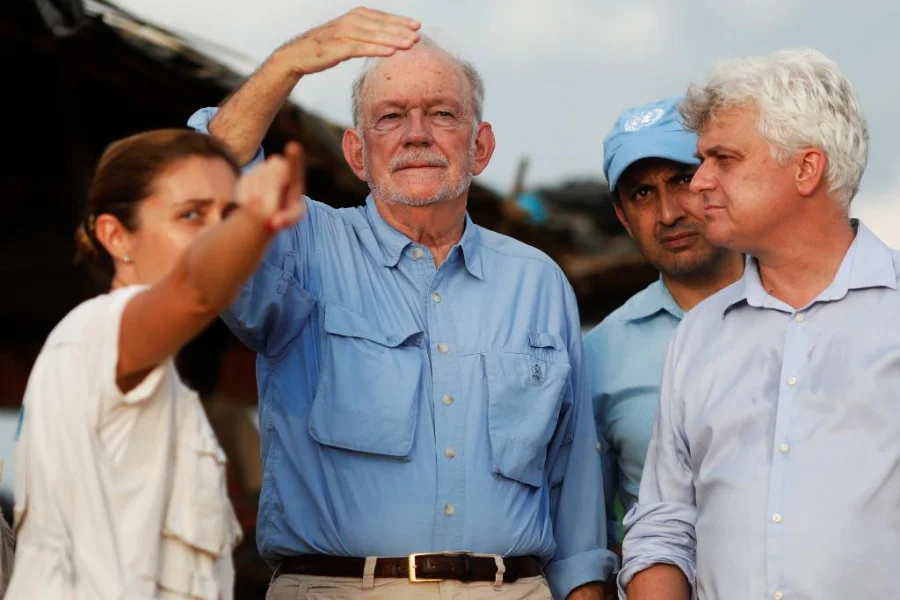
Unicef Executive Director Anthony Lake (C) visits Kutupalong refugee camp for Rohingya in Cox's Bazar, Bangladesh on October 2, 2017 | Reuters
Unicef Executive Director Anthony Lake highlighted the vulnerable condition of children and women that are fleeing the military persecution on the Rohingya in Rakhine. According to the UN, over half of the gender-based violence cases that have been reported by Rohingya refugees in Cox’s Bazar are sexual assaults. More than half of the refugees living in the camps still have no access to healthcare; at least 4,790 cases of diarrhoea have been reported, and at least 150,000 Rohingya women and children need immediate support to prevent and treat malnutrition, Lake said. Emphasising the importance of peaceful resolution of the crisis, the UN Under-Secretary-General Lowcock said: “The United Nations has been clear that the solution to this crisis needs to involve the refugees being able to return where they came from. But they need to be able to do that in a way which is safe and voluntary and secure, and to an environment where they feel they can make a decent life and they won’t be subject to the kinds of things that forced them to flee. “There are more people still crossing the border which tells us that this crisis is not over. That the underlying reasons why people are fleeing from Myanmar are still happening. “What we want to do is to make sure that the tragedy of the Rohingya is not magnified and amplified by a human catastrophe, a health catastrophe and we will only ensure that doesn't happen if we are successful in seeking support from the international community,” he added.
