




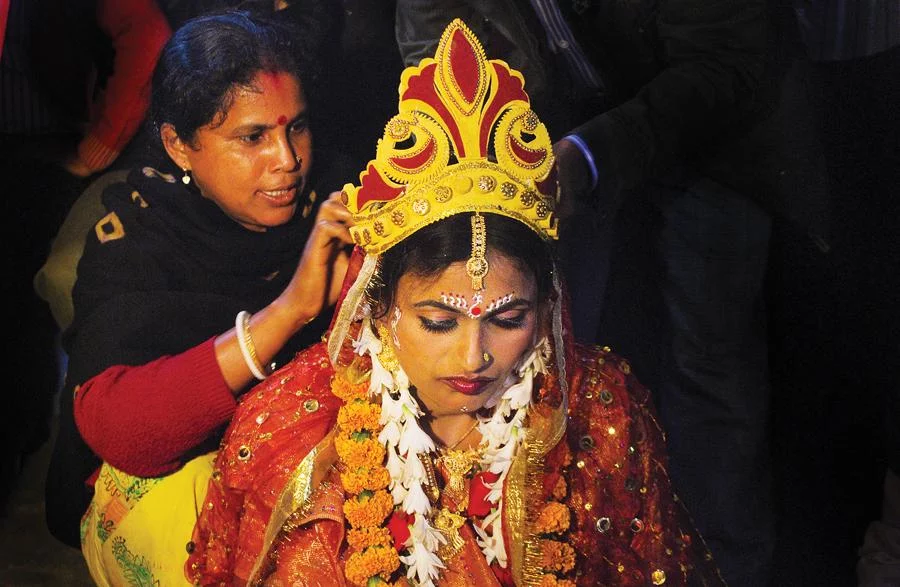
 Photo: Rajib Dhar/Dhaka TribuneA Hindu widow will need special permission from a court to sell her husband’s property, usually for reasons such as bearing funeral costs and raising her children.
“The Muslim succession law, called Faraiz, is also quite complicated. A Muslim woman only receives one-eighth of their father’s property, while a son receives half of the property divided in eight portions,” Barua said.
He stated that many humanitarian and human rights organizations have been demanding amendment of the existing succession laws for decades, but the clerics are against any changes.
“The equality of men and women is now well established in the society, and it is also a part of our constitution. However, we have to ensure gender equality in many sectors of the state,” added Barua.
Speaking on the matter, Advocate Salma Ali, executive director of Bangladesh National Women Lawyers´ Association (BNWLA), said: “Women do not get equal share of their father’s property, but men do. In case of only two daughters, two-third of the property will go to other relatives, unless their father fails to make special arrangements.
“Whenever we attend a meeting of Committee on the Elimination of Discrimination against Women (CEDAW), we call upon the government to approve CEDAW Provisions 2 and 16-1. The government has yet to respond,” she added.
Mentioning that Muslim women get a portion of their father’s property, but Hindu women get nothing, Salma said: “Many concerned parents, in an attempt to ensure equal distribution, distribute their property among their children before passing away.
“If more and more parents start to use the method, the government will be forced to amend the succession act.”
Dr Afroza Khanom Rumu, a specialist at the Cancer Hospital, said: “The existing succession act is disrupting family planning in the country. Many parents keep having children, so that they can have a son.”
This article was first published on banglatribune.com
Photo: Rajib Dhar/Dhaka TribuneA Hindu widow will need special permission from a court to sell her husband’s property, usually for reasons such as bearing funeral costs and raising her children.
“The Muslim succession law, called Faraiz, is also quite complicated. A Muslim woman only receives one-eighth of their father’s property, while a son receives half of the property divided in eight portions,” Barua said.
He stated that many humanitarian and human rights organizations have been demanding amendment of the existing succession laws for decades, but the clerics are against any changes.
“The equality of men and women is now well established in the society, and it is also a part of our constitution. However, we have to ensure gender equality in many sectors of the state,” added Barua.
Speaking on the matter, Advocate Salma Ali, executive director of Bangladesh National Women Lawyers´ Association (BNWLA), said: “Women do not get equal share of their father’s property, but men do. In case of only two daughters, two-third of the property will go to other relatives, unless their father fails to make special arrangements.
“Whenever we attend a meeting of Committee on the Elimination of Discrimination against Women (CEDAW), we call upon the government to approve CEDAW Provisions 2 and 16-1. The government has yet to respond,” she added.
Mentioning that Muslim women get a portion of their father’s property, but Hindu women get nothing, Salma said: “Many concerned parents, in an attempt to ensure equal distribution, distribute their property among their children before passing away.
“If more and more parents start to use the method, the government will be forced to amend the succession act.”
Dr Afroza Khanom Rumu, a specialist at the Cancer Hospital, said: “The existing succession act is disrupting family planning in the country. Many parents keep having children, so that they can have a son.”
This article was first published on banglatribune.comBipul Chandra Biswas is a BCS General Education Cadre, who lives in Farmgate area of Dhaka. He has two children: a girl and a boy with an eight-year age difference.
“If only my first son was a boy, I would not have to take another child. My relatives kept recommending that I would need a son to help me look after my property in the future. Thanks to the Almighty, I had a son,” Bipul told the Dhaka Tribune.
Another city dweller, Mansur Ahmed, is a father of three daughters. He works at a private firm and lives in Azimpur. He did not have a child for 12 years, following the birth of his first daughter.
However, his relatives pressured him into having two more children, with the sole aim of having a son that could look after his property.
“My relatives are still pressuring me, but I do not want to have any more children. The laws of succession do not favour girls,” he added.
Mina Rani (not her real name) is a school teacher. She was pressured by her husband to have four children, and all of them were girls. Mina’s husband wanted yet another child, so she was forced to leave her husband.
Mina’s husband is now married to another woman, in the hope of having a son.
Addressing the issue, Bipul said: “Women are facing a lot of pressure from husbands and in-laws for having more children in hopes of a son. The succession act favours sons over daughters for property distribution. This law should be amended.”
Commenting on the issue, Advocate Jyotirmoy Barua said: “In many countries, the succession act is a reflection of religious guidelines, and Bangladesh is no different. The Muslim succession law was slightly amended during the Ayub Khan era.
“Similarly, Hindu succession act is being used to distribute property of Hindu, Buddhist and Christian families. Despite major differences among their religious ideologies, the same succession law is being used,” he added.
In the Hindu religion, women face complication over succession of property. Under the religious guidelines, a Hindu woman cannot inherit property from their father and husband, but can inherit a portion of her mother’s property.
A Hindu woman can take possession of her husband’s property after his death, but under general laws, she cannot sell or transfer the property to anyone. Photo: Rajib Dhar/Dhaka TribuneA Hindu widow will need special permission from a court to sell her husband’s property, usually for reasons such as bearing funeral costs and raising her children.
“The Muslim succession law, called Faraiz, is also quite complicated. A Muslim woman only receives one-eighth of their father’s property, while a son receives half of the property divided in eight portions,” Barua said.
He stated that many humanitarian and human rights organizations have been demanding amendment of the existing succession laws for decades, but the clerics are against any changes.
“The equality of men and women is now well established in the society, and it is also a part of our constitution. However, we have to ensure gender equality in many sectors of the state,” added Barua.
Speaking on the matter, Advocate Salma Ali, executive director of Bangladesh National Women Lawyers´ Association (BNWLA), said: “Women do not get equal share of their father’s property, but men do. In case of only two daughters, two-third of the property will go to other relatives, unless their father fails to make special arrangements.
“Whenever we attend a meeting of Committee on the Elimination of Discrimination against Women (CEDAW), we call upon the government to approve CEDAW Provisions 2 and 16-1. The government has yet to respond,” she added.
Mentioning that Muslim women get a portion of their father’s property, but Hindu women get nothing, Salma said: “Many concerned parents, in an attempt to ensure equal distribution, distribute their property among their children before passing away.
“If more and more parents start to use the method, the government will be forced to amend the succession act.”
Dr Afroza Khanom Rumu, a specialist at the Cancer Hospital, said: “The existing succession act is disrupting family planning in the country. Many parents keep having children, so that they can have a son.”
This article was first published on banglatribune.com
Photo: Rajib Dhar/Dhaka TribuneA Hindu widow will need special permission from a court to sell her husband’s property, usually for reasons such as bearing funeral costs and raising her children.
“The Muslim succession law, called Faraiz, is also quite complicated. A Muslim woman only receives one-eighth of their father’s property, while a son receives half of the property divided in eight portions,” Barua said.
He stated that many humanitarian and human rights organizations have been demanding amendment of the existing succession laws for decades, but the clerics are against any changes.
“The equality of men and women is now well established in the society, and it is also a part of our constitution. However, we have to ensure gender equality in many sectors of the state,” added Barua.
Speaking on the matter, Advocate Salma Ali, executive director of Bangladesh National Women Lawyers´ Association (BNWLA), said: “Women do not get equal share of their father’s property, but men do. In case of only two daughters, two-third of the property will go to other relatives, unless their father fails to make special arrangements.
“Whenever we attend a meeting of Committee on the Elimination of Discrimination against Women (CEDAW), we call upon the government to approve CEDAW Provisions 2 and 16-1. The government has yet to respond,” she added.
Mentioning that Muslim women get a portion of their father’s property, but Hindu women get nothing, Salma said: “Many concerned parents, in an attempt to ensure equal distribution, distribute their property among their children before passing away.
“If more and more parents start to use the method, the government will be forced to amend the succession act.”
Dr Afroza Khanom Rumu, a specialist at the Cancer Hospital, said: “The existing succession act is disrupting family planning in the country. Many parents keep having children, so that they can have a son.”
This article was first published on banglatribune.com
Photo: Rajib Dhar/Dhaka TribuneA Hindu widow will need special permission from a court to sell her husband’s property, usually for reasons such as bearing funeral costs and raising her children.
“The Muslim succession law, called Faraiz, is also quite complicated. A Muslim woman only receives one-eighth of their father’s property, while a son receives half of the property divided in eight portions,” Barua said.
He stated that many humanitarian and human rights organizations have been demanding amendment of the existing succession laws for decades, but the clerics are against any changes.
“The equality of men and women is now well established in the society, and it is also a part of our constitution. However, we have to ensure gender equality in many sectors of the state,” added Barua.
Speaking on the matter, Advocate Salma Ali, executive director of Bangladesh National Women Lawyers´ Association (BNWLA), said: “Women do not get equal share of their father’s property, but men do. In case of only two daughters, two-third of the property will go to other relatives, unless their father fails to make special arrangements.
“Whenever we attend a meeting of Committee on the Elimination of Discrimination against Women (CEDAW), we call upon the government to approve CEDAW Provisions 2 and 16-1. The government has yet to respond,” she added.
Mentioning that Muslim women get a portion of their father’s property, but Hindu women get nothing, Salma said: “Many concerned parents, in an attempt to ensure equal distribution, distribute their property among their children before passing away.
“If more and more parents start to use the method, the government will be forced to amend the succession act.”
Dr Afroza Khanom Rumu, a specialist at the Cancer Hospital, said: “The existing succession act is disrupting family planning in the country. Many parents keep having children, so that they can have a son.”
This article was first published on banglatribune.com