The khatib of Sholakia Eidgah, Maulana Fariduddin Masuud, joined a meeting of the top Qawmi madrasa education boards held in Chittagong Saturday to discuss the government’s move to recognise Qawmi certificates.
Principal of Darul Uloom Mueenul Islam or Hathazari Madrasa Shah Ahamed Shafi presided over the meeting held on the madrasa premises in the morning.
Also the chief of radical Islamist group Hefazat-e-Islam, Shafi is the president of Befaqul Madarisil Arabia Bangladesh (Befaq) – the largest platform of Qawmi madrasa boards in the country.
In his opening speech, Press Secretary to the Befaq president Maulana Munir Ahmed read out the six-page letter sent by Shafi to the prime minister.
Representatives of Ittehadul Madaris Bangladesh, Azad Dini Edaraye Talim Bangladesh, Tanzeem UL Madaris Ad-dinia Bangladesh, Gowhordanga Befaqul Madarisil Qawmia Bangladesh and National Dini Madrasa Education Board took part in the meeting.
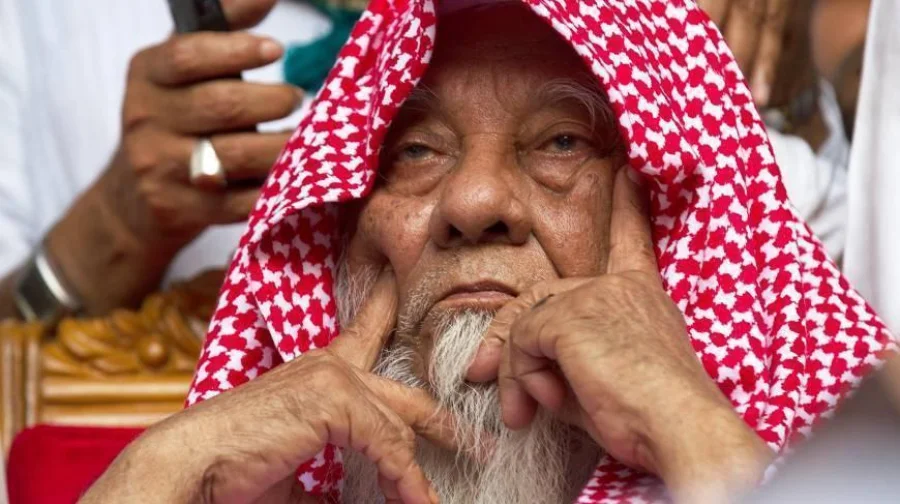 Hefazat chief and Befaq President Ahamed Shafi
Dhaka Tribune
Hefazat and its components linked to the BNP-led 20-party alliance have been boycotting Masuud since 2013 for supporting the Shahbagh movement – launched demanding capital punishment for all war criminals. They also rejected a fatwa Masuud had initiated against militancy.
At a meeting on August 11, Islamic scholars in presence of Masuud urged the government to recognise the Qawmi certificates. Prime Minister Sheikh Hasina then assured them of implementing the demand if every Qawmi education board agreed on the matter. Befaq and Hefazat leaders discussed the prime minister’s assurance on August 22.
On September 27, the government formed a committee with Masuud as its chairman and Gowhordanga Madrasa Director General Mufti Ruhul Amin as the member secretary to give recommendations on the draft of “Bangladesh Qawmi Madrasa Education Commission.”
Hefazat leaders sat on September 29 to discuss the matter and rejected the committee led by Masuud. They also formed a seven-strong liaison committee led by Shafi raise their demands during meetings with the Education Ministry officials and later the prime minister.
The commission was formed several years ago with Shafi as its chairman to recommend education levels, curriculum, evaluation process, certification and other guidelines for the development of Qwami education. Masuud, also the secretary general of Jamiat-e-Ulema, was the co-chairman of the commission.
 Fariduddin Masuud, Ahamed Shafi and other Qawmi leaders at Saturday's meeting
Bangla Tribune
But Shafi and most of its members resigned keeping the task incomplete.
Shafi on Saturday said that they would not accept if the government tried to take control over the Qawmi madrasas in the name of recognising its certificates. “If it wants, the government can recognise Qawmi certificates without any commission, guidelines or control.
“If the government does not agree to let the Qawmi madrasas operate like Darul Uloom Deoband, India, then the local madrasas will continue their activities like before – with the help and support of the people.”
Shafi claimed that there was no space to control an education system in democracy “where every citizen has the freedom of performing religious rituals, learning as well as teaching. The state cannot interfere in this freedom.”




 Hefazat chief and Befaq President Ahamed Shafi Dhaka Tribune
Hefazat and its components linked to the BNP-led 20-party alliance have been boycotting Masuud since 2013 for supporting the Shahbagh movement – launched demanding capital punishment for all war criminals. They also rejected a fatwa Masuud had initiated against militancy.
At a meeting on August 11, Islamic scholars in presence of Masuud urged the government to recognise the Qawmi certificates. Prime Minister Sheikh Hasina then assured them of implementing the demand if every Qawmi education board agreed on the matter. Befaq and Hefazat leaders discussed the prime minister’s assurance on August 22.
On September 27, the government formed a committee with Masuud as its chairman and Gowhordanga Madrasa Director General Mufti Ruhul Amin as the member secretary to give recommendations on the draft of “Bangladesh Qawmi Madrasa Education Commission.”
Hefazat leaders sat on September 29 to discuss the matter and rejected the committee led by Masuud. They also formed a seven-strong liaison committee led by Shafi raise their demands during meetings with the Education Ministry officials and later the prime minister.
The commission was formed several years ago with Shafi as its chairman to recommend education levels, curriculum, evaluation process, certification and other guidelines for the development of Qwami education. Masuud, also the secretary general of Jamiat-e-Ulema, was the co-chairman of the commission.
 Fariduddin Masuud, Ahamed Shafi and other Qawmi leaders at Saturday's meeting Bangla Tribune
But Shafi and most of its members resigned keeping the task incomplete.
Shafi on Saturday said that they would not accept if the government tried to take control over the Qawmi madrasas in the name of recognising its certificates. “If it wants, the government can recognise Qawmi certificates without any commission, guidelines or control.
“If the government does not agree to let the Qawmi madrasas operate like Darul Uloom Deoband, India, then the local madrasas will continue their activities like before – with the help and support of the people.”
Shafi claimed that there was no space to control an education system in democracy “where every citizen has the freedom of performing religious rituals, learning as well as teaching. The state cannot interfere in this freedom.”
