



Nearly three years after approving an ambitious climate resilience blueprint to reduce flooding and restore wetlands, Rajuk has made little visible progress in implementing one of its flagship proposals -- a network of 14 eco-parks and 55 water parks -- leaving Dhaka increasingly exposed to monsoon flooding and rising temperatures.
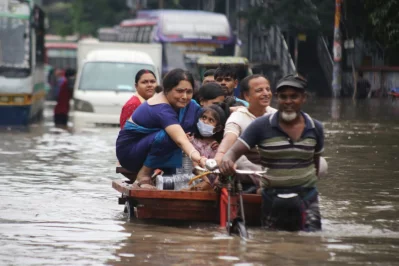
The lack of implementation has come under renewed scrutiny after recent heavy rainfall submerged large parts of the capital, disrupting transport and daily life and raising questions over why one of the city’s most significant long-term flood mitigation plans remains largely on paper.
Approved under the Detailed Area Plan (DAP) 2022-2035, the proposal envisioned a network of eco-parks and water parks across Dhaka, Gazipur and Narayanganj to preserve wetlands, restore natural drainage, retain stormwater and strengthen the capital’s resilience against climate change.
The plan identified these conservation areas as critical natural infrastructure capable of reducing waterlogging, recharging groundwater, moderating urban temperatures, protecting biodiversity and preventing further encroachment on remaining wetlands.
Among the proposed projects are the largest eco-park centred on Bhawal National Park in Gazipur and a 587-acre water park in the Goran-Chatbari area.
Additional conservation sites were planned in Uttarkhan, Nasirabad, Keraniganj, Rupganj and Narayanganj.
Urban planners say the projects are intended to reverse decades of wetland destruction that have severely weakened Dhaka’s natural drainage system.
Dr Adil Mohammed Khan, executive director of the Institute for Planning and Development (IPD), said repeated failures to implement urban planning recommendations have contributed directly to the city’s worsening environmental crisis.
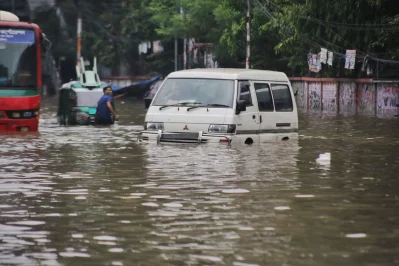
“Dhaka now goes under water after even a short spell of rain. Heat has become unbearable, while groundwater is declining. These are the cumulative consequences of ignoring planning decisions,” he said.
He warned that unless the proposed conservation areas are protected and developed soon, many could eventually be lost to residential and commercial expansion.
The recommendations are not new.
The Dhaka Metropolitan Development Plan (1995-2015) identified five permanent retention ponds as essential flood-control infrastructure, while the 2010 Detailed Area Plan proposed preserving major retention areas in Kallyanpur, Goran-Chatbari, Nasirabad, Beraid and Uttarkhan.
Many of those areas have since been partially encroached upon or filled despite remaining designated as retention zones in both the current DAP and Dhaka Wasa’s Drainage Master Plan.
Planning experts say the latest DAP goes beyond conventional retention ponds by allowing wetlands to function as natural flood buffers while preserving their ecological role.
Rajuk Chief Town Planner Md Ashraful Islam acknowledged that implementation has yet to become visible despite the importance of the projects.
“There is no alternative to developing these eco-parks and water parks if Dhaka is to become more livable,” he said.
He said Rajuk has initiated work on a park in Motijheel and taken a policy decision to develop another in Ghatarchar, but admitted that the broader program requires coordinated action involving Rajuk, the Ministry of Housing and Public Works, Dhaka North and South city corporations, Dhaka Wasa, the Department of Environment, the Bangladesh Water Development Board and the Ministry of Land.
Urban planners warn that as climate change brings more intense rainfall and rapid urbanization continues to replace wetlands with concrete, every year of delay leaves Dhaka more vulnerable to flooding, extreme heat and environmental degradation.
For them, the question is no longer whether the capital needs its planned eco-parks and water parks, but why one of Bangladesh’s most important climate adaptation strategies remains largely unimplemented three years after its approval.
