




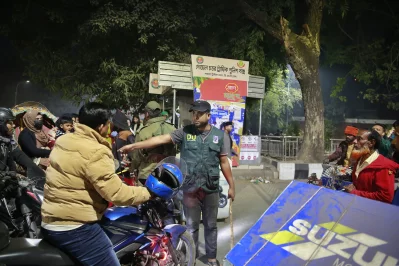
The recent decision by Dhaka University (DU) authorities to restrict vehicular movement within its campus has caused widespread inconvenience, forcing commuters to take lengthy detours through congested routes.
While the restrictions aim to create a more student-friendly environment, they have inadvertently disrupted office-goers, metro travelers, and others who rely on DU roads as vital thoroughfares.
Commuters arriving at the MRT station inside the DU campus face significant challenges. Without access to campus roads, they must navigate alternate routes, which greatly increases travel time.
Office workers traveling to areas like Shahbagh or Motijheel are particularly concerned about how this change will affect their daily routines.
Residents of nearby areas like Lalbagh, or Chankharpul, now have to take alternative routes, turning short trips into lengthy journeys.
Suraiya Afsana, a commuter, expressed frustration: “I wanted to visit a patient at Birdem Hospital, but the detour through Katabon added multiple traffic points to my journey.”
This inconvenience is expected to worsen when schools and offices resume after winter vacation. Akash, a commuter, said: “The real trouble will start when schools, colleges and universities reopen.”

Reaction on students
The new traffic restrictions have also caused difficulties for DU students.
Rejvi Ahmed, a Master's student at the Institute of Modern Languages, said: “We have classes on weekends, and the new restrictions make it difficult for us to return home. Rickshaw drivers are reluctant to leave the campus because they cannot re-enter without passengers. This forces us to take additional rickshaws or walk long distances, increasing expenses and inconvenience.”
On the other hand, some students see the decision as beneficial.
Anid Hassan, a student of Geology, said: “The campus feels more student-friendly without outsider interference. Introducing university shuttles or registered rickshaws could further streamline the system for students.”
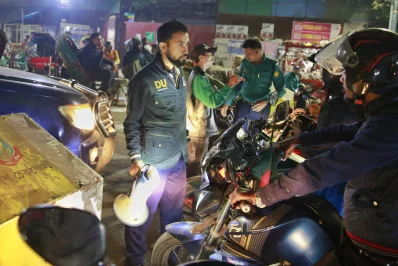
The there are reports of inconsistencies in implementation of the new entry rules at DU.
“Some students are facing challenges entering the campus because they forgot to bring their identity cards. Meanwhile, others, claiming to be students, are being allowed entry without proper verification, despite not appearing to be students,” alleged another student Ashraful Alam Naim.
Lack of commute
The authorities’ decision to restrict rickshaws inside the campus has created financial and operational difficulties for rickshaw pullers.
Shahriar Alam, a metro traveler, explained: “After getting off the metro, it’s hard to find a rickshaw. Those available charge higher fares, and we often have to switch rickshaws midway.”
When asked why rickshaw pullers are hesitant to leave the DU campus, Mohiuddin, a rickshaw puller, explained: “We’re not allowed back into the campus without passengers, so we wait for longer trips with higher fares. Short trips outside the campus waste time and don’t meet daily earnings.”
Helal Mia, another rickshaw puller, said: “If we are allowed to take students to designated points at Tk30 fixed fare and then return with passengers from those points, it would be more beneficial for us. This system would save time and ensure steady work for us.”

What authorities say?
When contacted, DU Proctor Associate Professor Saifuddin Ahmed told Dhaka Tribune: “We are monitoring the situation and allowing vehicles temporarily. The new rules prioritize student safety and preserving the academic environment.”
He urged everyone to cooperate, emphasizing that the rules are part of a broader plan to enhance the university’s infrastructure and environment.
The proctor said: “By next week, we plan to introduce DU-registered rickshaws, which will benefit both students and metro travelers by helping them reach key boundary points within the campus. From these points, they can access their desired modes of transportation."
He added: "Outside rickshaws will no longer be allowed to wait inside the campus, which is expected to reduce unnecessary congestion and streamline movement within the university premises."
What experts say?
Dr Mohammad Shakil Akther, professor in the Department of Urban and Regional Planning (URP) of Bangladesh University of Engineering and Technology (Buet), criticized the traffic measures as poorly planned.
“Traffic management requires data analysis and planning, not arbitrary actions. Restricting public roads without consultation exacerbates congestion on alternative routes,” he said.
He also questioned DU’s authority to block public roads and called for long-term solutions.
“Why should someone unrelated to DU be compelled to navigate more crowded roads due to these restrictions? Was this decision wise, especially given the traffic chaos Dhaka is already grappling with? If other students from different institutions begin imitating Dhaka University (DU) by blocking or restricting access to their campus roads, it could lead to significant disruptions across the city,” the former-chairman of the URP department said.
Dr Shakil Akther also highlighted the impact on alumni and visitors lacking ID cards, saying: “Excluding them from campus access raises serious concerns about inclusivity and practicality.”
He warned of a ripple effect if other institutions adopt similar restrictions, further worsening Dhaka’s traffic chaos.
Instead of blanket restrictions, he suggested DU focus on managing internal traffic efficiently and consulting experts to devise sustainable solutions. “DU must balance the needs of its students with those of the public to avoid adding to Dhaka’s already significant traffic issues.”
