




Passengers using the metro rail are raising concerns over being charged an additional Tk10 to use the toilets at stations, a fee that many feel is unnecessary after paying steep fares to escape Dhaka’s notorious traffic.
The Dhaka Mass Transit Company Limited (DMTCL) authorities claim that the fee is not an extra charge but a service fee to provide facilities.
According to DMTCL sources, 64 toilets across 16 stations are managed by four contracted companies to ensure cleanliness.
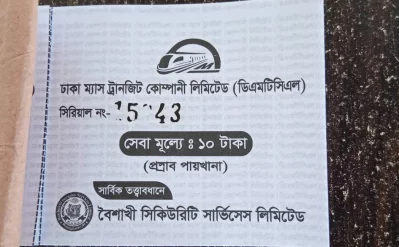
Different companies are responsible for various sections, such as Isort Trading managing from Motijheel to Dhaka University, and M/s Baishakhi Security Services Ltd managing from Agargaon to Mirpur-11.
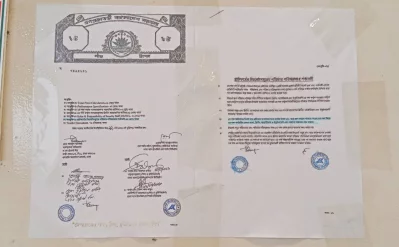
Each station has four cleaning staff, and the Tk10 charge was implemented three months after the metro line from Motijheel to Agargaon opened in December 2022.
Passengers frustrated
On Tuesday, reporters visited several metro stations, including at Bangladesh Secretariat, Shahbagh, Farmgate, Agargaon, Kazipara, Mirpur-11, Pallabi, and Uttara North, and spoke with 10-12 passengers who commute daily.
Most passengers voiced their frustration over the Tk10 fee for toilet use, while some expressed mixed reactions.
Sharmin Akhter Reema, a senior officer at a government bank, was waiting at the Bangladesh Secretariat metro station when she expressed her frustration.
She regularly commutes from the Secretariat to Mirpur Pallabi. She said: “The roads are blocked due to traffic, and we’re already paying double the fare to take the metro. Now, I have to pay an extra Tk10 just to use the toilet? As a passenger, why isn't the toilet free for me?”
Sharmin added that she often uses the toilet before or after work, not just for the usual reasons but also to fix her saree or adjust her attire.
She questioned why she has to pay Tk10 each time, even when children need to use the toilet.
“There’s already inequality in fare rates on the metro, and now this extra charge? As a passenger, I should get this service after paying the fare,” Sharmin added.
Mohammad Shahin, a regular metro passenger, echoed her sentiments, saying: "After paying the fare, I believe I deserve this basic service. Most of us are forced to use the metro, paying Tk25-30 instead of Tk15-20 for buses or other vehicles, just to avoid traffic. And now we also have to pay to use the toilet."
Farha Alam, a 10th-grade student at Viqarunnisa Noon School and College, had a mixed reaction.
She said: "The toilets are very clean, and perhaps the Tk10 charge is for maintaining cleanliness. But it's important to consider whether this is justified."
Muhammad Ibrahim Mojid, a student, recalled his experience in Chennai, India, where there was no separate charge for using the toilets on the metro, even though the fare was only five rupees.
Mohammad Mozammel Haque Chowdhury, secretary general of the Bangladesh Passengers Welfare Association, criticized the high fares and the additional toilet charge, calling it an injustice. He urged the interim government to eliminate these extra charges and ensure fair treatment of passengers.
What do station workers say?
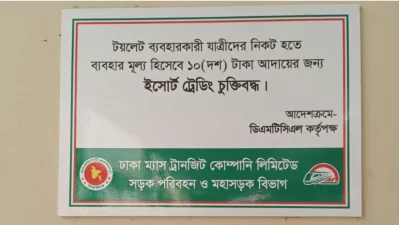
Mamun, in charge of ticketing for the northbound platform at Bangladesh Secretariat, said: "Since June, I’ve been responsible for collecting Tk10 per person. Many people argue with us about it, but we’ve posted a notice above explaining the fee. We have to do our job."
Not all staff agree with the policy. Requesting anonymity, a ticketing staff member at the northbound platform at Farmgate said: "Passengers already pay for the fare, so why charge extra for using the toilet? It seems unfair to me."
Fatema Khatun, in charge of ticketing at the Uttara-bound platform in Mirpur-11, said: "We provide handwash and tissue, which costs money, and the toilets are always clean. Around 60-70 people use the toilets daily, and although some people complain, those who understand the policy don’t mind paying."
What DMTCL says
When asked about the issue, DMTCL’s Deputy Project Director (Public Relations), Nazmul Islam Bhuiyan, said: "From the very beginning, we contracted four companies to maintain the toilets and handle all services, including handwash and tissue. We set the Tk10 service charge to cover these costs. The companies also pay the salaries of four employees per station, which adds up to a minimum of Tk50,000 per month."
Despite this, Bhuiyan acknowledged that only around 50-60 passengers use the toilets daily, leading to revenue shortfalls that may prompt a future review of the policy.
"We may need to rethink this approach," he said, adding that the metro is a business-oriented service and cannot operate at a loss.
