




At least 57 of the 75 wards under Dhaka South City Corporation (DSCC) have recorded Aedes mosquito density above the prescribed threshold, with 29 classified as high-risk areas, according to a recent survey conducted by the city corporation.
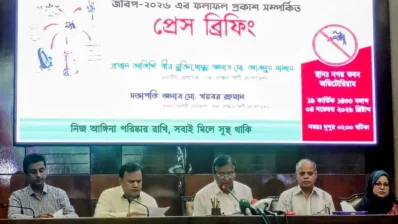
The findings were revealed on Wednesday at the publication of the results of the 2026 monsoon Aedes mosquito larvae survey at the Nagar Bhaban auditorium.
The 12-day survey was conducted between September 27 and October 8.
A total of 2,250 houses were randomly selected as samples, with 30 houses surveyed in each of DSCC’s 75 wards.
Thirty-six field workers from DSCC and the Communicable Disease Control (CDC) unit of the Directorate General of Health Services (DGHS) took part in the survey. The digital data collection platform KoboToolbox was used to ensure accuracy in gathering information.
According to the survey, Aedes mosquito larvae and pupae were found in 322 of the 2,250 houses inspected, meaning approximately 14.31% of the sampled houses showed evidence of Aedes mosquito breeding.
Among different types of buildings, single-unit houses recorded the highest proportion of larvae and pupae at 31.37%, closely followed by multistorey buildings at 31.06%.
The corresponding rates were 17.39% in semi-pucca houses, 13.04% in buildings under construction and 7.14% in vacant plots.
Plastic buckets were identified as the most common breeding sites, accounting for 14.21% of the larvae found during the survey. Other major breeding sites included plastic drums at 11.22%, stagnant water in basements at 9.98%, plastic mugs at 9.23% and flower pots at 5.99%.
The ward-wise risk assessment classified 29 wards as high-risk, 28 as medium-risk and 18 as general-risk areas. This means all 75 wards under the corporation fall into one of the three risk categories.
The survey assessed mosquito density and breeding conditions using four indicators: the Breteau Index (BI), House Index (HI), Container Index (CI) and Pupal Index (PI). These indices were used to evaluate potential dengue hotspots.
The 29 high-risk wards are distributed across eight administrative zones.
In Zone 1, wards 15, 16, 19, 20 and 21 were identified as high-risk. In Zone 2, the list includes wards 1, 2, 9, 11, 12 and 13.
In Zone 3, wards 14, 22, 24, 25, 26, 27, 55 and 56 were classified as high-risk, while ward 31 in Zone 4 and wards 43 and 44 in Zone 5 also made the list.
Ward 71 in Zone 7, wards 62 and 65 in Zone 9, and wards 58, 59, 60 and 61 in Zone 10 were also identified as high-risk areas.
Speaking at the event, DSCC Administrator Abdus Salam said the corporation was working to ensure zero dengue-related deaths in Dhaka South this year.
“We do not want even a single person to die of dengue,” he said, adding that the special Aedes mosquito larvae survey was conducted for the first time in Dhaka to achieve this goal.
He said the survey had provided important information that would help make mosquito control activities more effective. He expressed hope that these efforts would further reduce the number of dengue cases.
Emphasising the importance of public awareness, the administrator said that although the city corporation had taken various initiatives, residents needed to become more proactive in preventing dengue.
He claimed that removing stagnant water from individual homes could reduce dengue prevalence by up to 80%.
He urged residents to ensure that water did not accumulate on rooftops, in flower pots, beneath refrigerators or in nearby drains.
Regarding cleanliness in government buildings, Salam said regular cleaning of premises, including areas behind government offices, had been undertaken following the prime minister's directive. He noted that these areas had remained neglected for a long time.
He also announced that special cleanliness drives and awareness programmes would be conducted every Saturday at all primary schools under Dhaka South as part of the dengue prevention campaign.
