




"When I was taken to the hospital two days after Pakistani forces shot my father in the neck and back, he optimistically told me, 'I guess I will survive. What do you say? There are many doctors and nurses here.' However, the atmosphere turned sombre when the doctor called my mother and prepared her for any situation. It became evident that the news was not promising. Despite the agony, my father continued interacting with everyone, wearing a smile. The day before his demise, my father unexpectedly called me and said, 'Don't cry if I die.' Sadly, that marked the last conversation I had with him. To this day, we haven't located my father's body, and the details of his final moments remain unclear. Some suggest he was cremated in Postogola, while others claim he was buried within the Dhaka Medical compound."
These were the words of Dr Meghna Guhathakurta, who bravely shares the harrowing details of his father's final days and the agonizing aftermath in a powerful testament to her father's sacrifice in 1971.
Her father, Prof Dr Jyotirmoy Guhathakurta, an intellectual and a martyr, served as a resident teacher in Dhaka University's Jagannath Hall. In the quarter, he resided there with his wife, Basanti Guhathakurta, and their only child, Meghna Guhathakurta.
As Operation Searchlight unfolded in the early hours of March 25, a group of Pakistani soldiers forcibly took Professor Jyotirmoy Guthakurta from the English Department and Professor Muniruzzaman from the Statistics Department from the university teachers' quarters (number 34/A). They were shot in front of the quarters, resulting in Professor Muniruzzaman's immediate death, while Prof Jyotirmoy sustained fatal injuries in the neck and hip.
He succumbed to his wounds at Dhaka Medical College Hospital on March 30, five days after the brutal incident. Unfortunately, his family could not locate his body afterward.
Recalling the night of March 25, his daughter, Dr Meghna Guhathakurta, said: "I was around 15-16 years old when my father passed away. That night, the sounds of gunfire were particularly intense. My father called me as the gunshots grew louder, advising that we sleep on the floor in my mother's room. We lay there together as the noise escalated. The emphasized the need to stay in one place amid the gunfire. Suddenly, the screeching sound of a car caught our attention. Army jeeps stopped near the main gate, and soldiers rushed into our compound. Mother wanted to go and check, but I insisted she stay."
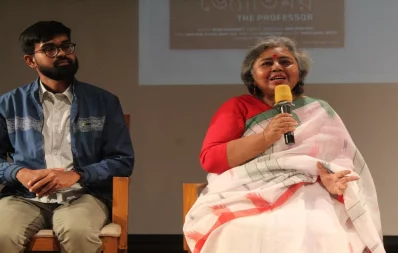
Describing the tragic event, she continued: "They were forcefully entering every door in the flat. Three Pakistani soldiers stood in the garden, knocking on a small door near our kitchen. A goldsmith who worked in our house opened the door and was dragged out. Mother asked what they wanted, and they replied, 'Where is the professor?' After some exchange, they took my father, who was later found lying paralyzed from gunshot wounds. His last words to us were about the harrowing encounter with the soldiers."
Reflecting on the desperate circumstances after the shooting, Dr Meghna Guhathakurta shared: "We had no opportunity to go to the hospital as everything was closed. Two days later, some Muslim strangers who had been trapped while praying in a mosque in Bakshibazar learned about my father's situation and came to our home. They offered to take my father to the hospital. Reluctantly, my mother entrusted them to my father on a mattress. They admitted him to the medical college, where we later joined them.
One day, Meghna Guthakurta's mother told her that her father wanted to talk to her.
Recounting that moment, she said: "I went to my father, asking what to say. He replied, 'Look, Dola, if I die, you will not cry.' I hugged him, reassuring him that he would be fine. My father smiled gently, and that became our last conversation. He didn't say anything else that day, creating a painful memory for me."
Abdul Gani Hazari, who visited Professor Dr Jyotirmoy Guhathakurta in the hospital, reminisced about that time, saying that the professor used to sing the song 'Aami Jene Shune Korechhi Bishpan'.
Regarding the search for her father's body, Dr Meghna Guhathakurta said: "I came from Abdul Gani Hazari's house in Azimpur on March 30 and heard that my father had breathed his last. Baba most likely breathed his last on March 30 around 9am. Suddenly, I heard the soldiers coming. Meanwhile, Dr T Hussain said that he would take his father's body into his ambulance. But before his ambulance could enter, two army jeeps came and blocked it. Then, we understood that the hospital would also be raided. Then, we were forced to leave my father's body in the hospital and take shelter at the residence of a secretary of the mother's school. Then, when my mother was in the hospital morgue, we could not find the body anywhere.
"Two types of stories are heard: an employee of the hall said that his body was buried in the medical college compound. Later, another person said that he had paid for the cost of the wood, and Baba was cremated in Postogola. This is how we did not find the body of the father. Mother said it doesn't matter that we did not find the body; we got Shaheed Minar. We will go there and pray."
Speaking about her father's legacy, Meghna Guhathakurta expressed: "My father was not just a father; he was my friend. I am the only child of my father, and I have no children of my own. I want my father's sacrifice not to be forgotten by me. May the next generation know about my father and let this country recognize him for his sacrifice."
