


The International Republic Institute surveys of public perceptions in Bangladesh on issues of politics, development, and governance are longitudinal and conducted over eight rounds since September 2014. The timing of each survey round is around elections, which makes it very interesting. This allows for some very intriguing reading of the narrative of changes and shifts in the trends of perceptions.
Examining trends of responses is interesting and often the focus of most analyses. In this piece, I focus on the trend of silence and nonresponse. The nonresponse on the IRI surveys clubs together “don’t know” and/or “refused to answer” — two very different things saying very different stories. It would have been great if the two were unbundled, but even with that limitation, the story of how silence has changed over time can be interesting and may say much more than what responses do.
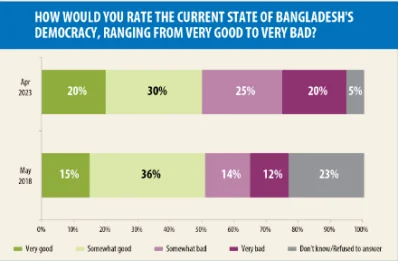
The nonresponse to the question on how democracy in Bangladesh is doing in the May 2018 survey was 23%, as compared to only 5% in the April 2023 survey.
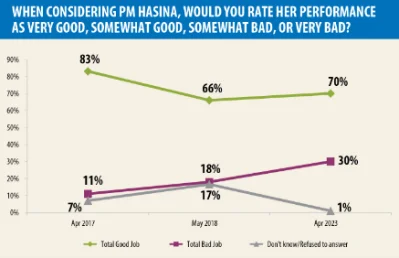
The nonresponse on how the current prime minister is doing has seen a nosedive — from 17% in 2018 to just 1% in the 2023 survey. The sharp rise in the perception that the prime minister is doing a “very bad job” over time can be largely explained by the big drop in the nonresponse to this question in the previous survey round.
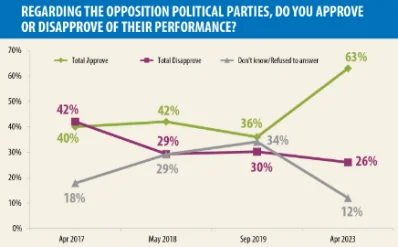
The approval perception of the opposition also shows similar trends in nonresponse — from 34% in 2018 to just 12% in 2023. Again, the sharp rise in the approval rate of the opposition can also be explained largely by the steep drop in nonresponse from the previous surveys.
Regarding satisfaction with current political parties or the desire to see new ones, the nonresponse halved — from 14% in 2018 to 7% in 2023.
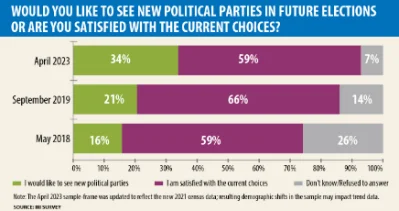
What seems to be happening is a shift from nonresponse to a more negative response. Given the sharp drop in nonresponse over time, it seems the nonresponse was more a refusal to respond rather than a case of “don’t know.” This shift from silence and nonresponse to voice needs a deeper analysis and understanding to listen well to policy, politics, and action.
