History contains in itself many narratives – our history of war is not any different. The third generation of Bangladesh is left with narratives of the Liberation War that they have not experienced. It is through stories, songs, photographs, books, videos, letters, relics of the war, etc that we try to go back to that time of great suffering that finally gave birth to Bangladesh.
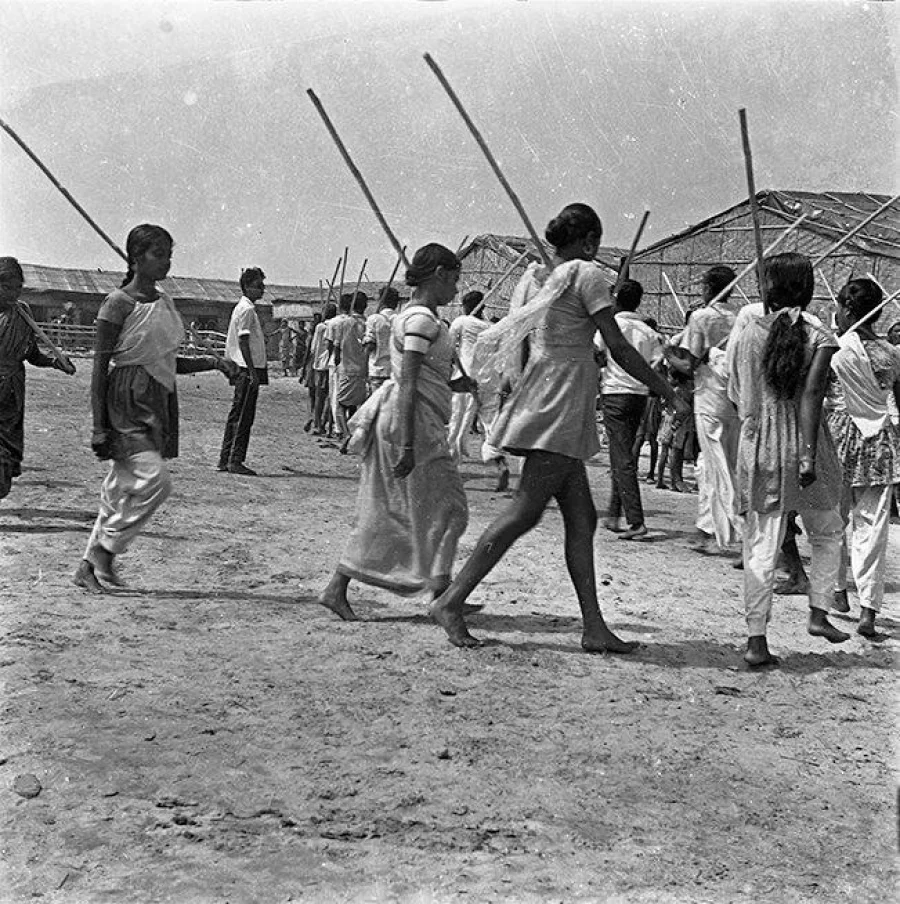
Volunteers in training in Calcutta’s Salt Lake Refugee Camp where 5lakh refugees took shelter. This was taken in September, 1971/Photo- Abdul Hamid Rayhan
Abdul Hamid Rayhan, now aged 84, is a war photographer. He was in his late thirties during 1971. He always had a fascination for photography as a young boy. Later, he bought a Yashica 635 and took up photography seriously in 1969. It is with this camera that he had first captured the political movement of the time and later the Liberation War.
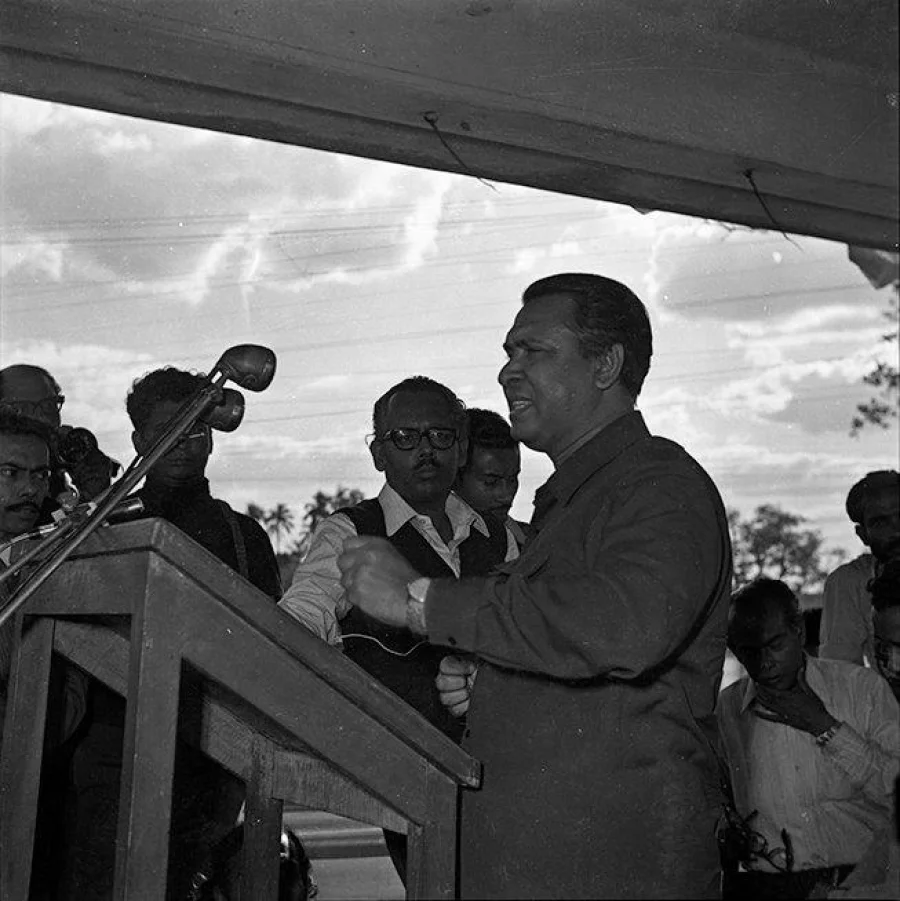
Tajuddin Ahmed giving a speech in Jessore Public Library playground. Behind him stood MR Akhter Mukul (wearing glasses) of Shadhin Bangla Betar Kendra who aired the programme “Chorompotro”, Indian Radio Station Broadcast agent Upen Tarafdar, and writer and film director Zahir Raihan who went missing after the independence. This was taken on December 12, 1971 after Jessore was freed/ Photo- Abdul Hamid Rayhan
When the war started, Rayhan put aside photography and joined one of the youth camps in Karimpur village, Kushtia as a camp in-charge in May. He left his family in Jamsherpur village. Later, on September 15 he was asked by National Assembly member barrister Amir-Ul Islam to join Bangladesh Volunteer Service Core as a photographer.

The patrol of freedom fighters on a gunboat in Satkhira’s Kaliganj river/Photo- Abdul Hamid Rayhan
According to Rayhan, he had taken around 2,000 war photos. But he could only preserve 500 negatives. He washed many of these photos in Kolkata’s Bourne & Shepherd Studio several of which were sent abroad to newspapers and institutions through Bangladesh Volunteer Service Core to spread the images of war and expose the truth to the world.
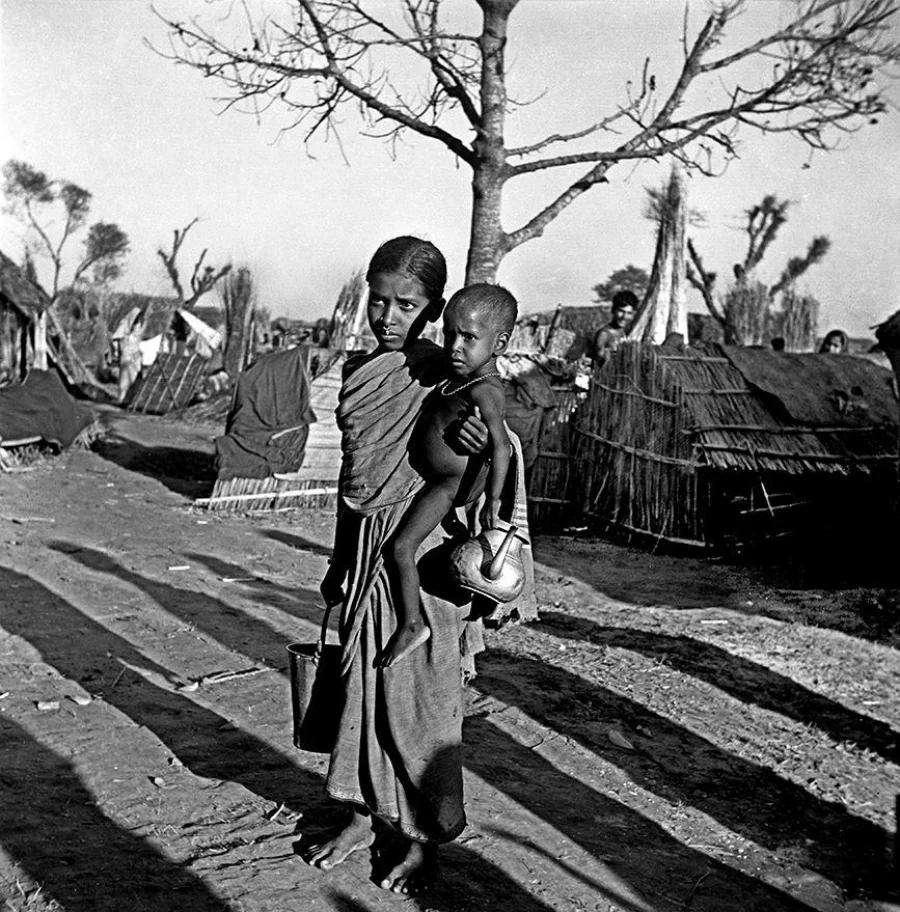
Jolongi Refugee Camp. This was taken in September, 1971/Photo- Abdul Hamid Rayhan
Rayhan’s photos have been taken and used by many newspapers and magazines without due credit. However, when you ask Rayhan, he looks back and says: “I am glad I could carry my equipment and capture the different aspects of war. I always thought, these historical moments should not be compromised. So I tried to preserve as many negatives as I could.”

Jolongi Refugee Camp. This was taken in September, 1971/Photo- Abdul Hamid Rayhan
In 1995, he gifted the Liberation War Museum with 290 war photos. His photo was included in Drik’s photo collection “The Birth Pangs of a Nation” that was printed to celebrate 40 years of liberation.




 Volunteers in training in Calcutta’s Salt Lake Refugee Camp where 5lakh refugees took shelter. This was taken in September, 1971/Photo- Abdul Hamid Rayhan
Abdul Hamid Rayhan, now aged 84, is a war photographer. He was in his late thirties during 1971. He always had a fascination for photography as a young boy. Later, he bought a Yashica 635 and took up photography seriously in 1969. It is with this camera that he had first captured the political movement of the time and later the Liberation War.
 Tajuddin Ahmed giving a speech in Jessore Public Library playground. Behind him stood MR Akhter Mukul (wearing glasses) of Shadhin Bangla Betar Kendra who aired the programme “Chorompotro”, Indian Radio Station Broadcast agent Upen Tarafdar, and writer and film director Zahir Raihan who went missing after the independence. This was taken on December 12, 1971 after Jessore was freed/ Photo- Abdul Hamid Rayhan
When the war started, Rayhan put aside photography and joined one of the youth camps in Karimpur village, Kushtia as a camp in-charge in May. He left his family in Jamsherpur village. Later, on September 15 he was asked by National Assembly member barrister Amir-Ul Islam to join Bangladesh Volunteer Service Core as a photographer.
 The patrol of freedom fighters on a gunboat in Satkhira’s Kaliganj river/Photo- Abdul Hamid Rayhan
According to Rayhan, he had taken around 2,000 war photos. But he could only preserve 500 negatives. He washed many of these photos in Kolkata’s Bourne & Shepherd Studio several of which were sent abroad to newspapers and institutions through Bangladesh Volunteer Service Core to spread the images of war and expose the truth to the world.
 Jolongi Refugee Camp. This was taken in September, 1971/Photo- Abdul Hamid Rayhan
Rayhan’s photos have been taken and used by many newspapers and magazines without due credit. However, when you ask Rayhan, he looks back and says: “I am glad I could carry my equipment and capture the different aspects of war. I always thought, these historical moments should not be compromised. So I tried to preserve as many negatives as I could.”
 Jolongi Refugee Camp. This was taken in September, 1971/Photo- Abdul Hamid Rayhan
In 1995, he gifted the Liberation War Museum with 290 war photos. His photo was included in Drik’s photo collection “The Birth Pangs of a Nation” that was printed to celebrate 40 years of liberation.
