Bangladesh is set to celebrate Pohela Boishakh, the first day of Bengali New Year-1430, on Friday upholding the rich cultural values and rituals of the Bangalees.
The Bangla Noboborsho festival is also going to be celebrated at its traditional venue Ramna Batamul in Dhaka.
This year, the first day of the Bangla calendar, will be celebrated following its all rituals at the venue along with bringing out the traditional Mongol Shobhajatra (procession) organized by the Fine Arts Faculty of Dhaka University.
But, due to the ongoing holy month of Ramadan, it will be celebrated on a limited scale.
People are expected to join the Noboborsho festivities across the country, particularly in the capital city.
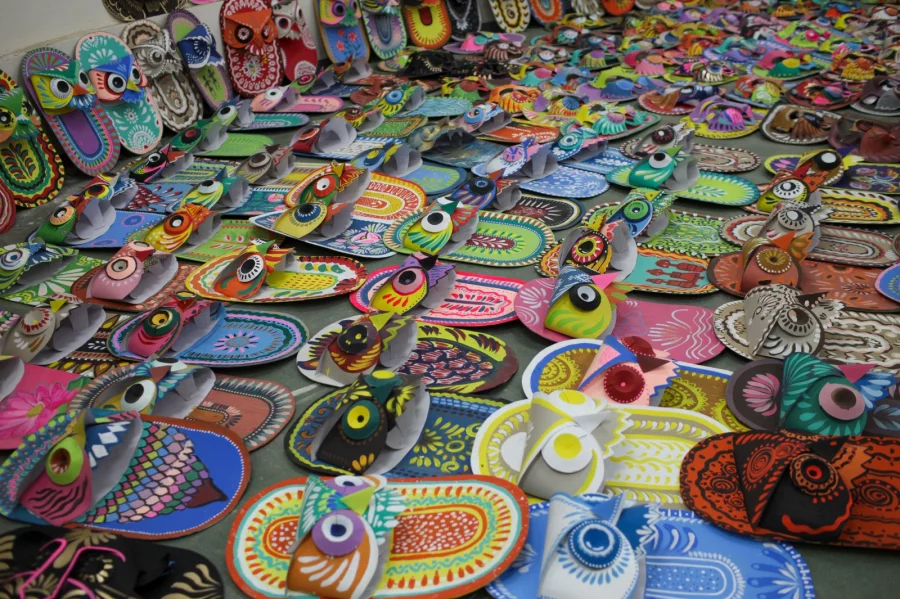
Pohela Boishakh is one of the most colourful festivals through which the Bangalees bid farewell to the old year and welcome the New Year.
On this occasion, people from all walks of life wear traditional Bengali dresses
 UNB
UNB Young women wear white sarees with red borders and adorn themselves with bangles, flowers, and tips, while men wear white pyjamas and panjabi or kurta.
The government has drawn up an elaborate program. The Mongol Shobhajatra will be brought out at divisional, district and upazila levels to reach the traditional program to the grassroots as it has earned international recognition.
However, business communities, especially in the rural areas, are ready to open their traditional Halkhata, new account books. On the day traders also offer sweets to customers.
President Abdul Hamid and Prime Minister Sheikh Hasina are expected to issue separate messages greeting the countrymen on the eve of the Pohela Boishakh.
All secondary schools and colleges of the country are asked to celebrate Pohela Boishakh, the first day of the Bangla calendar.
"The educational institutions across the country must organise student rallies in the morning as part of celebration of Pohela Boishakh," said the Directorate of Secondary and Higher Education (DSHE) on Wednesday.
DSHE Director Prof Shahedul Kabir said that DSHE sent an order to all schools and colleges on Tuesday regarding Pohela Boishakh celebration following a directive of the Ministry of Education.
DSHE directed that the students must sing the national anthem, as well as "Esho He Boishakh," a popular song by Rabindranath Tagore, to welcome the Bangla New Year on that day as part of the celebrations.
 File photo of Pohela Boishakh celebrations Dhaka Tribune
About Mongol Shobhajatra, the DSHE also asked the authorities concerned to publicise the Mongol Shobhajatra, which was declared an "intangible cultural heritage" by Unesco in 2016.
Bangladesh Awami League, one of the country's oldest political parties, has drawn up programs to celebrate the Pohela Boishakh.
To observe the day, Dhaka South City unit of AL will bring out a colorful procession in the city on Friday.
The procession will start from Bahadur Shah Park in the capital on Friday at 7am where AL central leaders including the party's General Secretary and Road Transport and Bridges Minister Obaidul Quader will participate.
The procession will parade different areas of the city and end at AL's central office on Bangabandhu Avenue.
Besides, a discussion will also be held in front of Bahadur Shah Park in Old Dhaka at 7 am on the same day.
Dhaka South City Awami League Acting President Nurul Amin Ruhul, MP, will preside over the discussion while Dhaka South City unit of Awami League General Secretary Humayun Kabir will conduct it.
Different government and non-government organizations, socio-cultural platforms, including Bangladesh Shilpakala Academy, Bangladesh Shishu Academy, Bangla Academy, Department of Public Libraries, the National Museum, Kabi Nazrul Institute, Copyright Office, National Book Centre, Bangladesh Small and Cottage Industries Corporation (BSCIC), the Department of Archives and Library and Dhaka University will hold various programmes along with seminars, exhibitions and quiz, essay and art compositions to observe the day.
As part of the Bengali New Year celebrations, Baishakhi rallies will be organized in all districts, upazilas and unions of the country.
Besides, local administration will organize quiz competitions, cultural programmes and folk fairs.
The programmes of the day usually begin in the city with the musical soiree of Chhayanat, a leading cultural organization of the country, at Ramna Batamul at dawn.
Bangladesh Television, Bangladesh Betar and private television channels will live broadcast the programs.
 Mahmud Hossain Opu/Dhaka Tribune
The city people usually start the day with the traditional breakfast of panta bhat (soaked rice), green chili, onion and fried fish at Ramna Park, Suhrawardy Uddyan, Dhaka University Campus, Rabindra Sarobor at Dhanmondi and other amusement places. But, on the month of Ramadan, this traditional way of celebrating Pahela Baishahk might not widely be followed.
Graffiti are expected to be painted in the walls signifying the arts, culture and heritage of the country.
On the occasion, all museum and archaeological sites will remain open for all while children, students, people with disabilities and autism will be allowed to visit the museum free of cost.
Improved traditional food will be distributed to jail inmates, patients in hospitals and orphanages on the occasion.
Bangladesh missions abroad will also organise different programs to welcome the New Year.
The law enforcement agencies will take extensive security measures across the country so that people could celebrate the day.
The day is a public holiday.
Different national dailies will publish colourful supplements while Bangladesh Television, Bangladesh Betar and other private TV and radio channels will air special programmes highlighting the significance of Pohela Boishakh.
Some historians attribute the Bengali calendar to the 7th century king Shashanka, which was later modified by Mughal emperor Akbar for the purpose of tax collection.
During the Mughal rule, land taxes were collected from Bengali people according to the Islamic Hijri calendar. This calendar was a lunar calendar, and its new year did not coincide with the solar agricultural cycles.
Akbar asked the royal astronomer Fathullah Shirazi to create a new calendar by combining the lunar Islamic calendar and solar Hindu calendar already in use, and this was known as Fasholi shan (harvest calendar).