



As Bangladesh prepares to observe the National and International Day of Persons with Disabilities on December 3 — under this year’s theme “Let’s build a disability-inclusive society, let’s accelerate social progress” — a critical question resurfaces: How accessible are the country’s public transport systems for persons with disabilities?
Interviews with commuters, transport workers, traffic police, disability activists and urban experts suggest that despite policy commitments and the Disability Rights and Protection Act 2013, accessibility remains largely inadequate and inconsistent
Current situation: Accessibility still 'mostly symbolic'
Across Dhaka, Chittagong, Rajshahi and other major cities, most buses continue to lack basic accessibility features such as ramps, low-floor entry, designated seating, proper handrails and wheelchair space. Transport workers also rarely receive disability-sensitivity training, leading to frequent instances of neglect or refusal.
Mozammel Haque Chowdhury, general secretary of Bangladesh Jatri Kalyan Samity, told Dhaka Tribune: “Accessibility in our transport system is mostly symbolic. A few buses have priority-seating stickers, but in practice, persons with disabilities struggle even to get inside.”
Bus services: 'Boarding is the first barrier'
For many persons with disabilities, buses remain the least accessible mode of public transport. Common barriers include:
- High steps
- Buses stopping far from footpaths
- No audio or visual announcements
- Overcrowding
- Lack of staff training
A Mirpur–Jatrabari bus driver said: “The steps are so high that someone in a wheelchair simply cannot get on. If we try to help, other vehicles pile up behind us and passengers get angry. Low-floor buses would benefit everyone.” He also acknowledged never receiving disability-awareness training.
Rashed, a helper on a Gulistan-bound bus, added: “We try to help, but buses have neither ramps nor space. Many drivers and helpers don’t even know how to support a passenger with disabilities.”
A student’s perspective: ‘It wasn’t designed for people like me’
Pushpita Chowdhury, a wheelchair user and student of Women and Gender Studies at the University of Dhaka, said her daily commute often feels like a battle for safety and dignity.
“As a wheelchair user, I often feel our transport system was never designed for people like me. Most buses don’t stop close to the footpath, and the wide gaps make boarding unsafe and humiliating. What hurts most is the attitude — people behave as if we are slowing them down. Accessible transport isn’t a favor; it’s our right, and without it, moving through the city never feels safe or dignified.”
Her experience reflects what many young commuters with disabilities face across the capital.
Kabery Sultana’s ordeal: "If you have a problem, that’s not my concern."
A recent incident illustrates how accessibility failures can escalate into humiliation and danger.
Kabery Sultana, a young woman with Cerebral Palsy, was boarding a Neelachal bus at Bishmail Gate near Jahangirnagar University. She repeatedly requested the driver not to move the bus abruptly due to her mobility difficulties.
Despite her pleas, the driver started moving, allegedly replying: “If you have a problem, that’s not my concern,” before telling the helper, “Why are you letting these people on the bus?”
Her companion, Easmin Akter, had to board the still-moving bus to ensure her safety.
Kabery later notified police, who detained the bus.
“I only want proper punishment under the law so that no one else is treated this way,” she said.
Metro rail: Better, but not fully inclusive
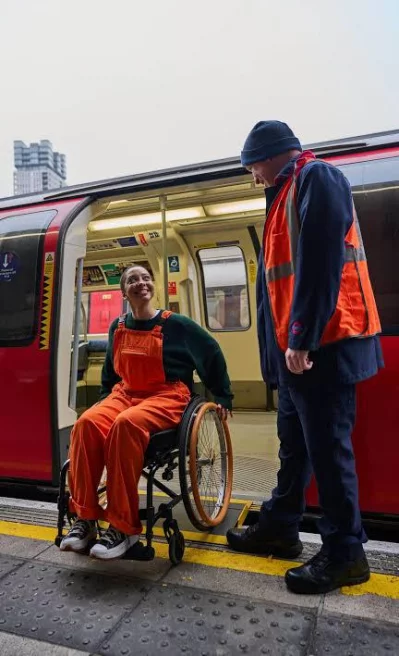
Dhaka Metro Rail currently offers the country’s best accessibility features, including elevators, tactile guiding blocks, accessible toilets and safer station design.
However, users point out continuing limitations.
Visually impaired commuter Saiful Islam said: “Metro Rail is accessible, but there is no separate ticket counter for us… so we have to stand in long queues like everyone else.”
Railway stations an intercity trains: Uneven progress
Stations such as Airport and Kamalapur have made improvements, but nationwide consistency remains weak. Persistent problems include:
- Broken or overly steep ramps
- No wheelchair space inside coaches
- Lack of accessible toilets
- Uneven platform heights
Visually impaired passenger Alif Hossain said: “Bangladesh Railway gives a 50% discount for persons with disabilities, but you must buy the ticket at the counter. You don’t get this benefit when purchasing online.”
He added that the online ticketing website is not screen-reader-friendly:
“The website is not accessible at all, so I need help from others to buy tickets online.”
His experience reflects how digital inaccessibility continues to exclude many disabled commuters despite expanded digitalization.
Footpaths, bus stops and terminals: The urban barrier
Transport accessibility depends heavily on urban infrastructure. Many commuters encounter:
- Broken or encroached footpaths
- Bus stops without ramps
- Terminals lacking tactile paths
- Non-functional accessible toilets
- Walkways blocked by vendors and motorcycles
A traffic sergeant at Mirpur-10 said: “Buses are supposed to stop at designated places, but in reality most don’t. This makes it even harder for passengers with disabilities to board. We give instructions repeatedly, but formal training and monitoring for transport workers are essential.”
He added: “Accessible footpaths, crossings and bus stops would make our job easier too. There is a lack of coordination at every level.”
Expert insight: ‘No transport system designed for them’
Public transport accessibility experts say the problem is systemic. Saidur Rahman, executive director of Road Safety Foundation, told Dhaka Tribune: “Bangladesh’s public transport is still not accessible for persons with disabilities. None of the systems — road, rail, or water — are designed to meet their needs. Not only the vehicles, but the infrastructure of bus stands, railway stations and ferry terminals is also not disability-friendly. Even the roads and footpaths are not built in a way that allows persons with disabilities to move safely and comfortably.”
Policy vs reality
Bangladesh has strong policy foundations:
- Disability Rights and Protection Act 2013
- National Accessibility Action Plan
- RAJUK Accessibility Guidelines
- SDG commitments for inclusive cities
But experts say the gap lies in implementation, not policy.
A transport expert noted: “The gap is not in policy — it’s in enforcement and mindset.”
Positive examples: Small but meaningful
There are a few signs of progress:
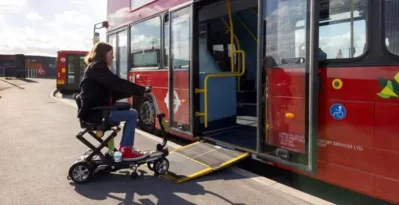
- Limited low-floor BRTC buses
- Metro Rail’s inclusive design
- Ramps in several major railway stations
- DNCC’s pilot wheelchair-friendly bus stops
However, these remain isolated rather than standard practice.
What needs to change
Experts recommend:
- Mandatory accessibility certification for all new buses
- Regular training for drivers, conductors and station staff
- Enforcement of DRPA 2013 with penalties
- Accessibility audits with disability groups
- Widespread adoption of low-floor buses
- Accessible footpaths, crossings and terminals
- Dedicated support personnel at metro and railway stations
The bottom line
As Bangladesh marks December 3, a hard truth remains: millions of citizens with disabilities are still excluded from safe, dignified mobility.
Unless accessibility becomes a mainstream priority — rather than an afterthought — persons with disabilities will continue to face discrimination, danger and daily challenges across the country’s transport systems.
