Located on the bank of the Brahmaputra, about 120km north of Dhaka, Mymensingh is a land of culture and heritage as well as a major financial centre and educational hub of north-central Bangladesh.
Among the many establishments of the district, one of the most well-known is Alexandra Castle.
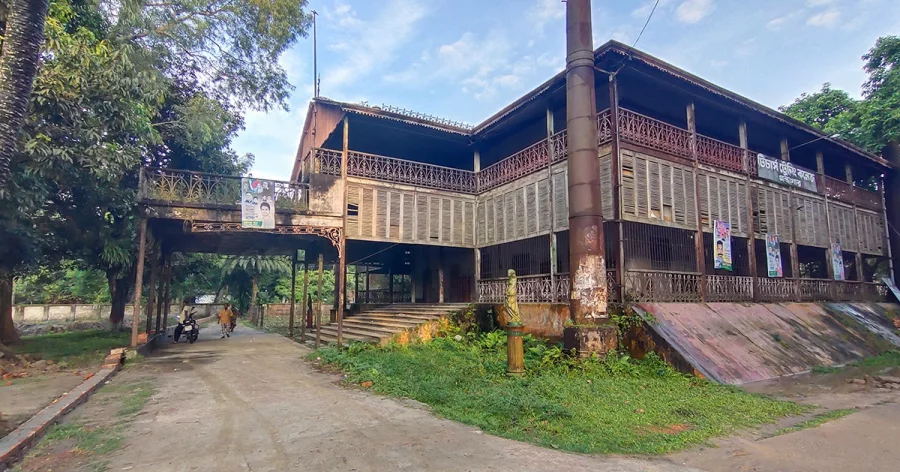 Dhaka Tribune
The British East India Company constituted the city of Mymensingh in 1787.
Suryakant Acharya Chowdhury, a zamindar, built Alexandra Castle in 1889 – which cost him Tk45,000 at the time – to mark the centenary of the district.
According to most, Suryakant named the villa after Alexandra, the wife of then-British ruler Edward VII, while some say the name came from NS Alexandra, who served as district collector back then.
The two-storey structure, whose ground floor is currently used as the library of Mymensingh’s Govt Teachers Training College, is also known as Lohar Kuthi due to iron having been used prominently for its construction.
 Dhaka Tribune
Many famous personalities have stayed at the villa at different times.
Suryakant’s foreign guests used to stay at the villa when they came to Mymensingh. Nobel Laureate Rabindranath Tagore stayed there for four days during his visit to the district in 1926. Mahatma Gandhi, the primary leader of India's independence movement, also occupied the house in the same year. Apart from these two, many other famous personalities, including Lord Curzon, Chittaranjan Das and Subhas Chandra Bose, stayed there at different times as well.
 Dhaka Tribune
“It was built using teak wood from Myanmar by craftsmen from China. The villa was air-conditioned with mica brought from India,” archaeologist and writer Swapan Dhar recently told Dhaka Tribune.
The 133-year-old structure, visited by many locals as well as outsiders every day, is now in need of extensive repairs.
Deputy Commissioner Md Enamul Huq said Tk3 lakh had been allocated to restore Alexandra Castle.
The district administration was working on renovating and preserving all structures of historical importance, he added.