Eighteen years after one of the most heinous attacks on political opponents in the history of the country, the time for justice to be meted out to its perpetrators is nearly at hand.
The chief law officer of the state yesterday expressed the firm resolve to move to the High Court soon to exhaust hearings of all appeals and death references on the August 21 grenade attack cases.
At least 24 people were killed and around 300 were injured in the grisly attack on an Awami League rally in the capital on August 21, 2004. Prime Minister Sheikh Hasina, at the time leader of the opposition in parliament, narrowly escaped the attack with an ear injury.
Dhaka Speedy Trial Tribunal-1 Judge Shahed Nur Uddin delivered the verdict in the cases on October 10, 2018. A total 19 people, including former state minister Lutfozzaman Babar and former deputy minister Abdus Salam Pintu, were sentenced to death.
A further 19 people, including BNP acting chairman Tarique Rahman, were sentenced to life imprisonment, while 11 others were given various jail terms.
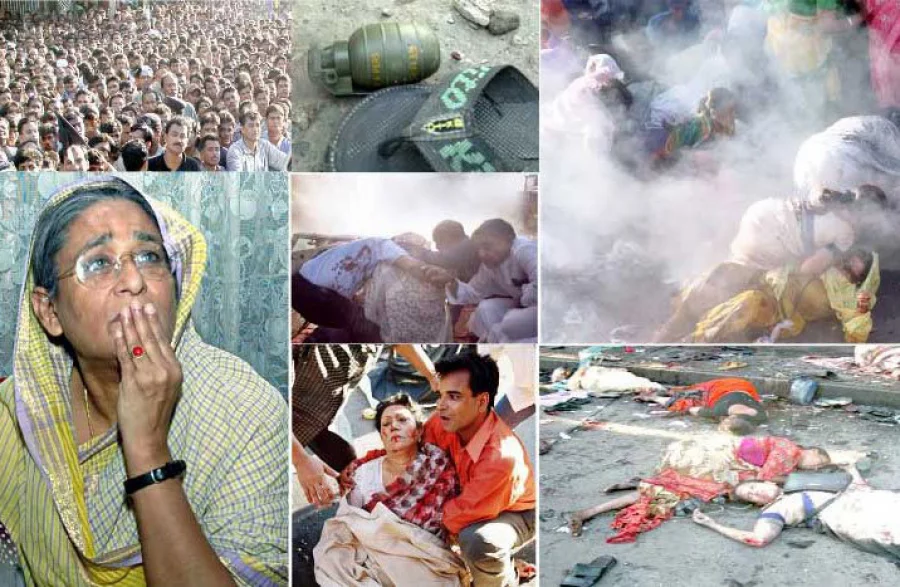 Collected
Although the verdict has been delivered, hearings on the appeals and death references of the convicts in the High Court are still pending.
Supreme Court sources said the main reason for the delay in the appeal and death reference hearings was the lengthy closures of courts and offices during the Covid-19 pandemic. The closures severely hampered the preparation and examination of paper books in the cases.
A paper book, which contains all the details of a case, is necessary for the High Court to hear and dispose of a death reference or an appeal. The murder case filed over the August 21 grenade attack has 585 paper books containing around 10,500 pages in 13 volumes, while the case filed under the Explosives Substances Act has 495 paper books containing around 10,000 pages in 11 volumes.
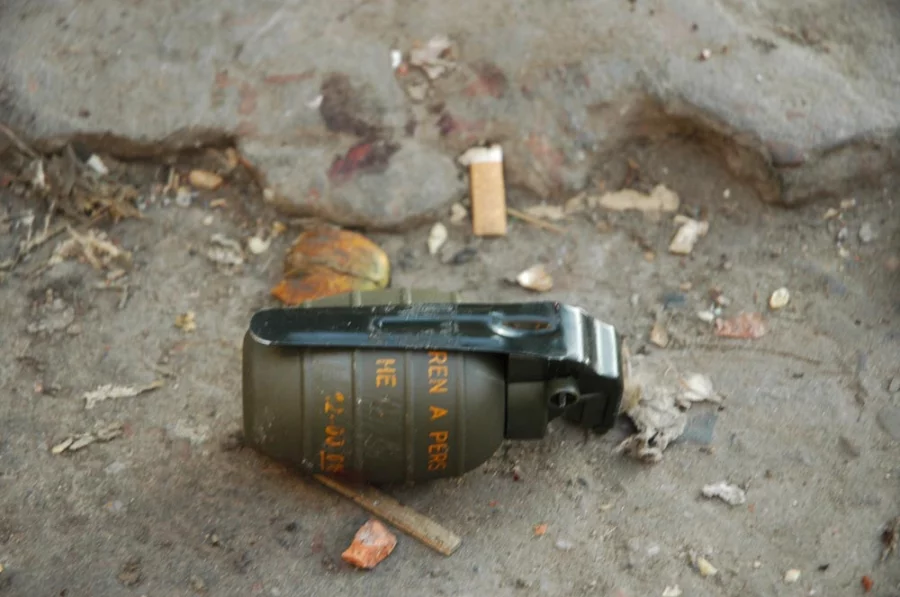 File photo: An unexploded grenade on Bangabandhu Avenue after the attack on August 21, 2004 Courtesy
The paper books finally reached the High Court on August 16, 2020.
Attorney General AM Amin Uddin told Dhaka Tribune: “As the paper books are ready, we will move an application before the HC to start the hearing on the appeals and death references in the cases after the High Court vacation in September.”
“It cannot be said at the moment how much time will be needed for a final disposal of the cases in the High Court, but we will try our level best to complete the hearings by this year,” said the chief state lawyer.
In the murder case, a total of 22 appeals have been filed by the convicts independently, while 12 appeals have been filed by convicts through the jail authorities. In the case filed under the Explosives Substances Act, 17 appeals have been filed independently and 12 through the jail authorities.
While delivering the verdict, Judge Shahed Nuruddin said parties in power must apply a liberal policy towards the opposition in a democratic state.
“A ruling party's attempt to reap political benefits by killing opposition leaders cannot be a manifestation of democratic thoughts,” the judge said.
“In politics, there will inevitably be myriad disputes between the ruling party and the opposition, but trying to eliminate leaders of the opposition is not acceptable. The general people don't want such politics," he observed.
The court also observed that the grenade attack was meant to eliminate top Awami League leaders from politics, with local militants actively participating in the attacks.
The two cases over the attack were filed on August 22, 2004, and the trial commenced on September 29, 2008. The trial began anew on July 3, 2012, after the Criminal Investigation Department (CID) submitted a supplementary charge sheet against 52 people.
Three of the accused - top Huji leader Mufti Abdul Hannan, Sharif Shahedul Bipul and Jamaat-e-Islami secretary general Ali Ahsan Mohammad Mujaheed - were dropped from the case as they were executed in other cases.
Altogether 31 accused faced trial in person while 18, including BNP leader Tarique Rahman, were tried in absentia.