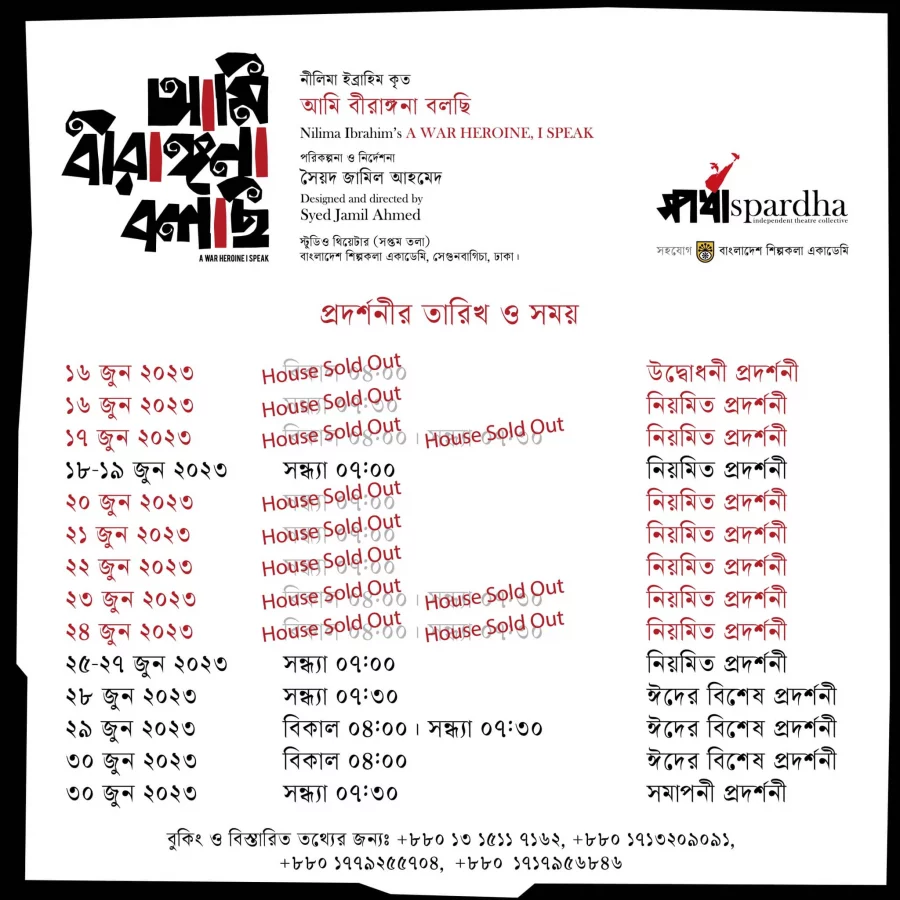
Syed Jamil Ahmed has been a deity for some time now in the world of contemporary Bangladeshi theatre. I'm not a theatre connoisseur, but no one misses a show by his troupe, Spardha, in the independent film community. Their latest production, “Ami Birangana Bolchi” (A War Heroine, I Speak), was no different. The play is running at the Studio Theatre Hall at Shilpakala from June 16-30, providing a portal into a contemplative universe, lightyears away from the trashy Eid films/dramas lined up to litter our screens during the upcoming holidays.
Earlier this month, when singer/songwriter Armeen Musa invited me to the press show, I assumed it was to see Ghaashphoring Choir perform the background score of this play. But surprisingly, the Grammy nominee was one of the central cast members with a noticeable flare for acting. The preconceived idea was to see Nilima Ibrahim's 1994 book by the same name come to life, the real accounts of 7 Biranganas portrayed by seasoned thespians, how surviving rape and torture in 1971 changed the trajectory of their lives forever, not quite expecting the accounts to be so relatable and relevant. It was modern, yet ancient; specific, yet universal.
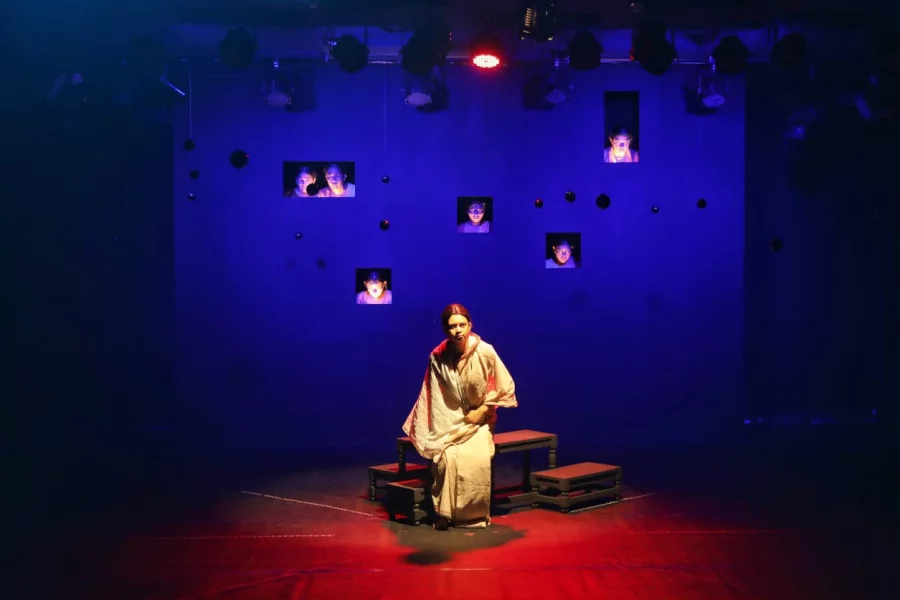
Spardha took 2 of the 7 stories, spliced with philosophical reflections from the remaining 5 whenever pertinent. The structure allocated majority of the stage time to the second story, the one of Meherjan played by Mohsina Akhter, the troupe's recurring star. The play was easy to follow, not elitist at the least. Except for the definition of “Barangana,” nothing escaped my ADHD brain that day.
The previous productions by Spardha, “Jibon O Rajnoitik Bastobota” and “Montash,” had larger than life visual treats. This one toned down on the extravaganza; there was no never-before-see giant or levitation on stage, just the bare minimum props with the director's signature- loud narration blending into dialogues, Ghaashphoring Choir adding to the grim ambience.
During the show, the relentless misfortunes of the Biranganas will rupture your soul. I was so engrossed in the experience that I ordered the book that night and read it the next day. Some of the stories had a happy ending; all of them were inspirationally resilient.
The conversation after the play among the audience revolved around why we were so late in giving them their due respect. Some wondered whether their fates would be any different if the war happened now. Have we as a society progressed or regressed when it comes to dealing with survivors of rape and other forms of abuse?
Mohsina said it with effortless eloquence: “I've heard many say my father is a Muktijoddha. I never heard anyone say my mother is a Birangana.” While we celebrate 71's freedom fighters as we should, we tuck away our Biranganas in abject “shame,” coercing them to spend their lives trapped for eternity in a silent scream.