I consider myself privileged as I grew up with books such as Takkuramar Jhuli, Sindbad, The Tales of the Grimm Brothers, etc. No internet, no smartphone in sight -- but that didn't hold back our imagination. Fighting against an army of monsters, diving in the depths of the sea to save the princess, or reading about the giant rock bird that eats an elephant a day -- those were the days.
But these stories are just fantasy. Then come the stories of Rabindranath, Bibhutibhushan, and Manik Bandapadhyay. Their children's stories weren't just stories; they were also introductions to the reality of the world, tackling topics like puberty, child marriage, abusive relationships, death, class division, etc. These stories really helped me see the world in a new light and make myself a better person.
But these stories were written about 100 years ago; they don't tackle modern problems like war, the refugee crisis, online bullying, etc.
And there hasn't been any notable literature in recent times that could introduce these things in an easy manner to children. especially the refugee crisis and the lives of the struggling class that are tormented by the weather, the war, and the politics of the world, until now.
I recently got my hands on six excellent children's books. written by various authors and published by Guba Books. The first reaction I had after getting my hands on these was the quality, which reminded me of now-lost Raduga publication. The color palette used in the covers, the hard binding finish, the thickness of the pages, and the illustrations were all proof of the love that was poured into making these books. For the stories, I'm going to review them individually.
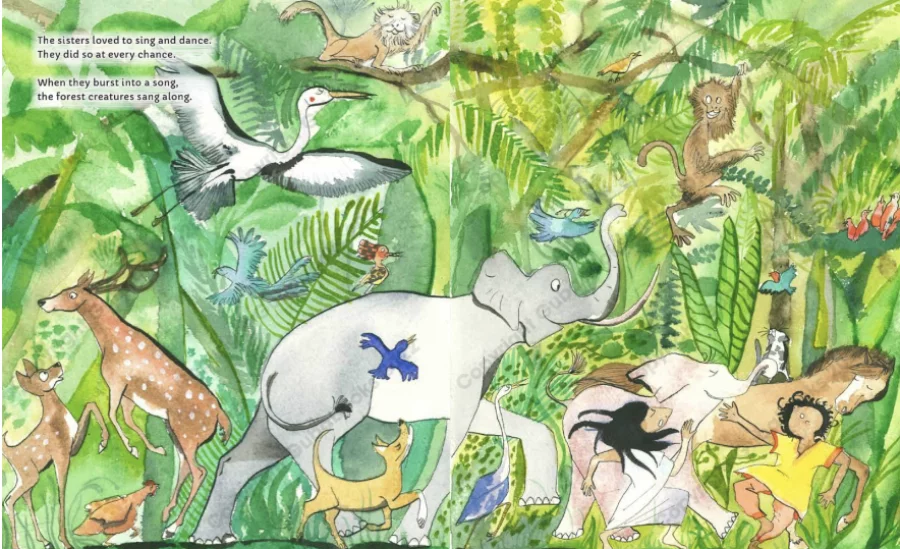
Sun Moon Secret written by Shazia Omar and illustrated by Sophie Cousinie:
This is the story of Surya and Chandra, two sisters with unique and mystic powers, and how their powers affect everybody around them. Surya has the power of the sun, and Chandra holds the power of the moon. It's really a story about accepting our positive and negative sides, accepting ourselves as we are, and trying to do better.
It also shows the struggle our farmers face; they fight against natural calamities, never losing hope, and thrive again with new energy. The illustrious illustrations by Sophie Cousinie are a treat for the eyes, and the watercolor palette and the simplistic character design elevate the story even more.
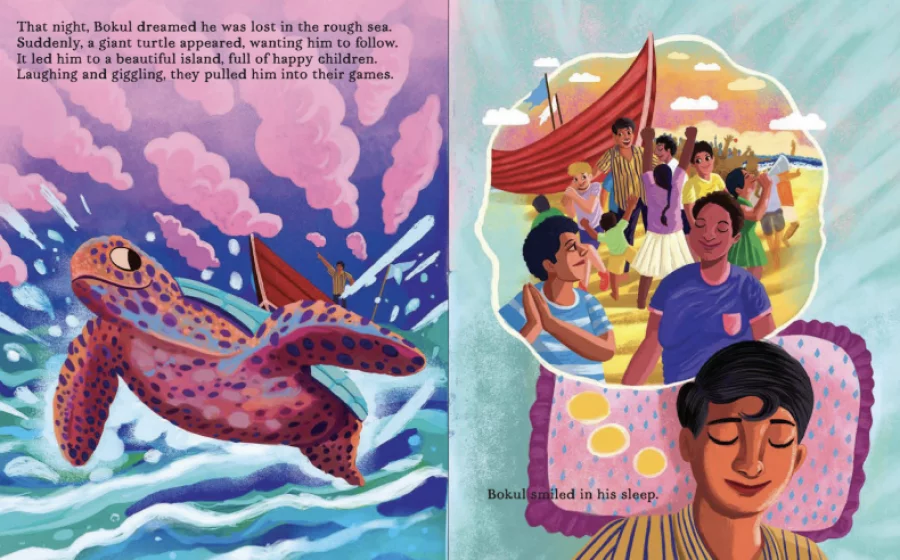
I am Bokul written by Asma Ul Husna Sanchita and illustrated by Sayan Mukherjee:
Here's the protagonist, a boy named Bokul. Working at a tea shop, he gets his hands on a camera and tries to capture the world around him through its lens. He lives near the refugee camp for Rohingyas. Like many others, he feels that the Rohingyas are taking advantage of their resources and leeching them, but as time goes on, he discovers how alike we are through history.
This story really touched my heart. We sometimes forget our own history and the horrors we faced during the independence war. The way it shows how we are from the same earth and love its beauty in the same way, transcending borders; the way it introduces the concept of empathy for children is quite brilliant; and the illustrations by Sayan Mukherjee are just beautiful. The emotions pop throughout the pages, and it'll certainly hold the audiences' attention that it's targeting.
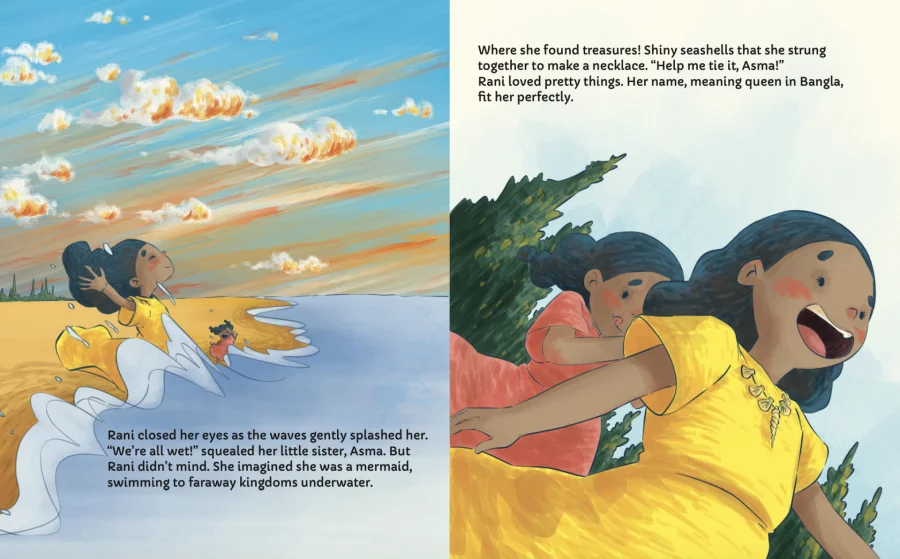
Rani's Seashell Necklace, written by Shazia Omar and Raya Rahman, and illustrated by Sayeef Mahmud:
This story revolves around Rani, an exuberant girl, and her family. She spends her days with her sister Asma, helping her mother with chores, and listening to songs and stories from her father.
She loves to go to school. But these days come to an end as the cost of living goes higher and higher and she has to help her father sell fish in the refugee camp market. There she meets a refugee girl named Fatima who is around her age.
A heart-touching story of innocence and realization about a small girl facing the hardships of the world and how she overcomes them. It's a story about sharing your happiness, showing empathy, and understanding the struggles of the people of the coastal area. The illustrations by Sayeef Mahmud are treats for the eye. The perspective of the art really amazed me; it gave the characters a sense of depth, and the simplistic designs with the mix of a soft but colorful environment really was the cherry on top. Another excellent read for the children.
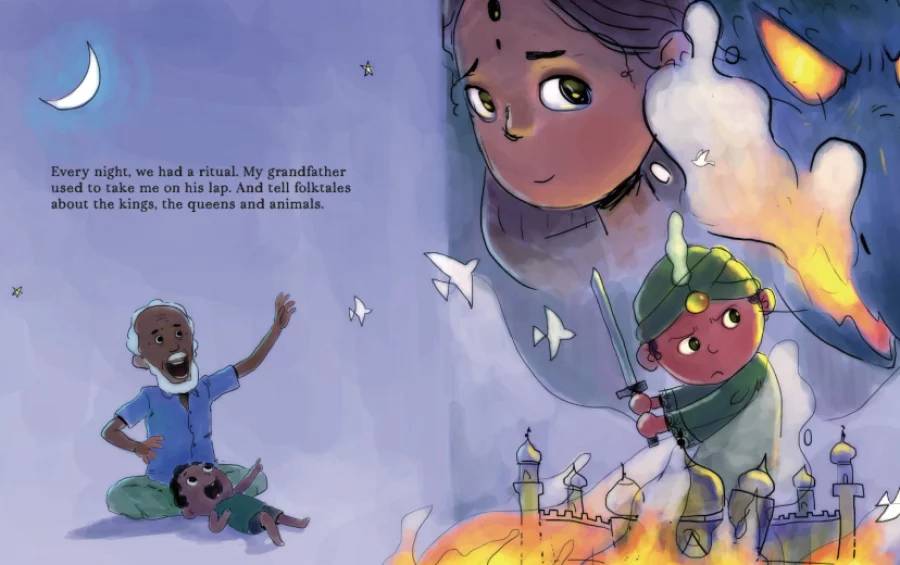
The White Elephant, written by Mayyu Ali and illustrated by Nabidur Rahman:
This story is a bit different: It does not use a central character, rather, it tells its story through us as the characters, unifying us all. It's a story about unity, about people living in harmony and peace despite their religion, gender, and nationality. It also tells how many people try to break this harmony for selfish gain and drive us out of our homeland or our soil.
The white elephant symbolizes our unity, and through the power of unity we can achieve peace, fight against any odds, and never lose hope. Though It's storytelling to me seems simple, but the meaning is extremely impactful. And Nabidur Rahman's illustration is gorgeous. The characters in the vast white backgrounds and the symbol of the white elephant all conveyed the words of the author in a soul-touching way, giving them more depth.
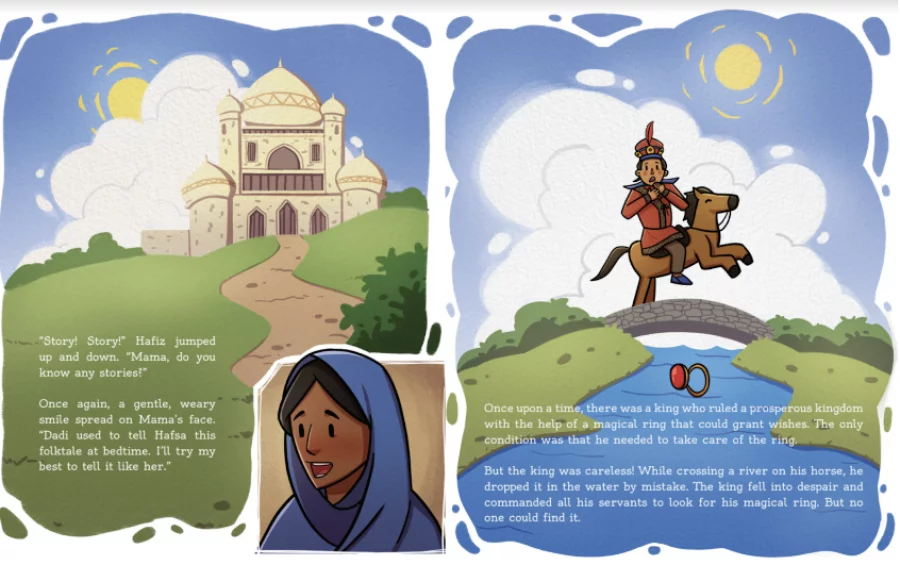
Hafsa and the Magical Ring, written by Yasmin Ullah and illustrated by Rafiuzzaman Rhythom:
It's a story about two brother and sister, Hafsa and Hafiz, and their life at the refugee camp. Driven out of their homeland that was filled with memories and wonder, they had to live a harsh life, barely making ends meet. But Hafsa tries to be optimistic, finding joy in the clouds, in the food her mother cooks, and in the stories their mother tells. But it's really hard, and sometimes sadness can't be held back by such a small girl.
It's a story about hopefulness -- how we can stand back on our feet again, cherishing the ones we love and cherishing the memories of those who were once with us and live on. The story shows how hard the life of a refugee child is and how, with compassion and kindness, they can stand proud and be a part of greatness. You just have to dream bigger!
The illustrations done by Rafiuzzaman Rhythom complimented the story well.
And last but not least:
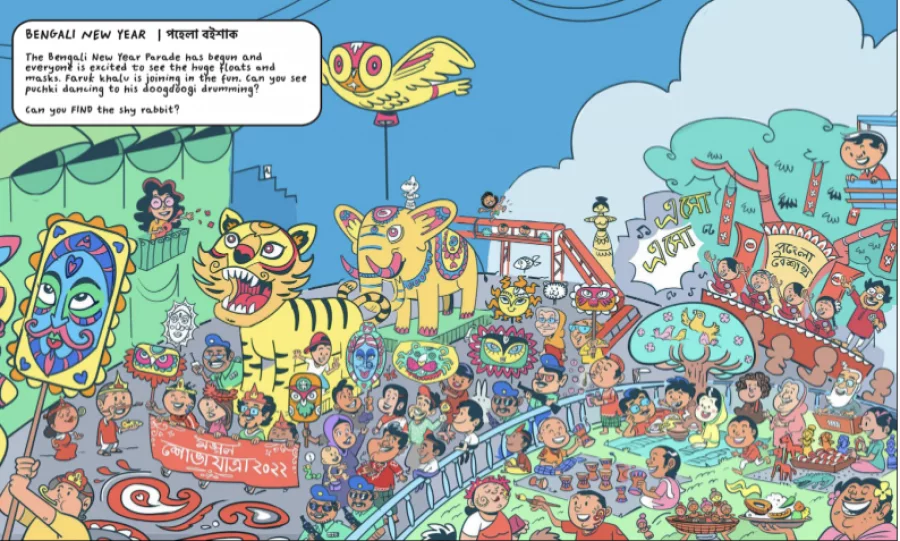
Where are the chonchols? designed by Inshra Kishwar Sakhawat Russell and illustrated by Syed Rashad Imam Tanmoy:
It's not part of the Gom Acho collection previously mentioned. The first reaction was, "Isn't this "Where's Wally?" the Bangladeshi version?" but it was so much more than that. You're on a mission to find the chonchol in many festivals that are held in our country. What a fun and adventurous way to learn about our own cultural festivals that are held throughout decades or centuries, learning through big double-page spreads and so many detailed illustrations depicting every small detail of the festivals. learning about different cultures and unity and how, despite differences in religion, we can celebrate as one. Though I'm an adult, I really had fun finding the chonchols, so the kids should have a blast.
In the era of the internet and copy-paste books of questionable quality, The Gom Acho Collection is a breath of fresh air. The story, the illustrations, and the quality of these books are absolutely amazing. If you have children or siblings old enough to read, these books are a great present not only for pleasure but also for learning about the current crises through simple yet beautiful and captivating storytelling.
Ata E Rabby Abdullah is a Freelance Contributor. The books are available at Aarong, Bookworm, and Guba Books' Facebook page.