December comes with memories of the fall of two military dictators. That is of course a coincidence. But, again, history is often a narrative of coincidences falling into place.
In December 1971, General Agha Mohammad Yahya Khan, having presided over a genocide in what had been Pakistan's eastern province and then lost the war over Bangladesh, was compelled to hand over power in a rump Pakistan to Zulfikar Ali Bhutto.

In December 1990, General Hussein Muhammad Ershad, having overthrown an elected president of Bangladesh and then clung on to authoritarian rule for close to nine years, finally succumbed to mass protests organized by the 15-party alliance and the seven-party combine. Justice Shahabuddin Ahmed took over as acting president.
Reflections on the fall of Yahya Khan and HM Ershad are, in terms of history, a journey back to all those moments in our part of the world when ambitious generals, without any provocation but with a whole lot of unbridled ambition, have overturned politics and set their countries on the road to disaster.
Yahya Khan had no business taking over from Field Marshal Mohammad Ayub Khan in March 1969, for there was Abdul Jabbar Khan, the speaker of the National Assembly who under the constitution was the individual to whom power should have flowed when Ayub resigned. Yahya would have none of it and made it clear to Ayub that his time was up, that the Pakistan army was ready for a second coup.
General Ershad shrewdly manoeuvred a situation where he could seize power from President Abdus Sattar when absolutely no reason existed for the army to move in. Sattar had been elected president in his own right in November 1981 following the assassination of General Ziaur Rahman in a putsch in May of the year.
Army commanders-in-chief and chiefs of staff are constitutionally obliged to exercise loyalty to their presidents and prime ministers. Neither Yahya nor Ershad would do that. Their actions, like those of Ayub Khan and Ziaur Rahman before them, gravely damaged the political fabric in Pakistan and Bangladesh, to a point where both countries have gone on paying the price for their sins.
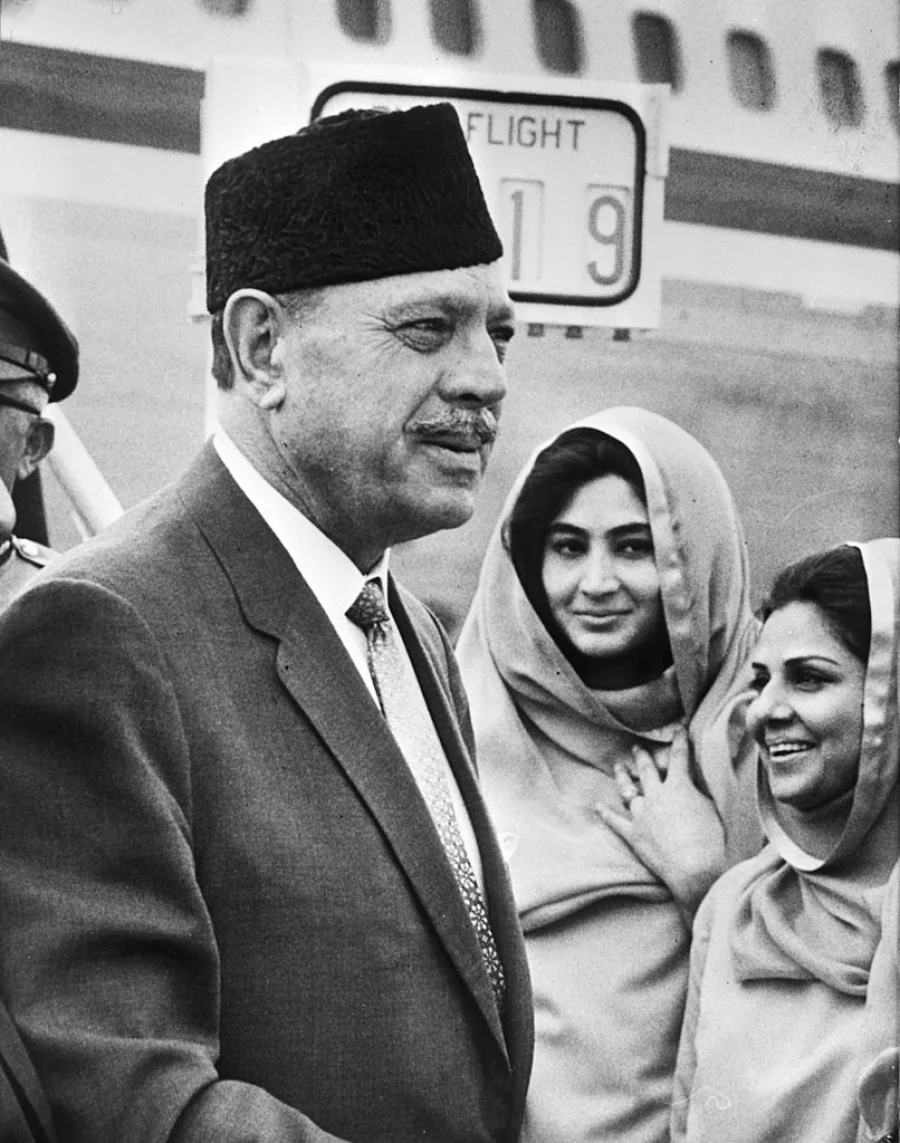
There is then the larger, sadder picture. A whole generation born in the 1950s in Pakistan and Bangladesh went from childhood to adulthood in the shadow of rule by generals psychologically unprepared to operate under the authority of civilian and therefore democratic government. These men, driven by an ugly lust for power, in a great many ways left a generation stunted in its awareness of the finer elements of statecraft. They conveyed a false picture of politics through being the embodiment of anti-politics.
Let's begin with Ayub Khan. We who are today in our late sixties were no older than babies when October 1958 happened in Pakistan. As the years progressed, the message went out from the regime and its loyalists and hangers-on that military rule was all, that politicians did not matter. In the 1965 war between India and Pakistan, the lesson was drilled into school children that a single Muslim was equal to ten Hindus in battlefield courage, that Lal Bahadur Shastri was small, literally and figuratively.
But, of course, that is what dictators do. Until we graduated from junior school to high school, we had no way of knowing that there was something called the political opposition. Those who linked up with the military ruler went around sounding the trumpet that Ayub Khan was Napoleon, that he was Pakistan's De Gaulle. These men had a repetitive message: Strengthen the hands of the president and so defeat the country's internal as well as external enemies.
And then came Yahya Khan -- gruff in voice, and deceptively purposeful in manner. That he should not have been there in power did not bother him. He would give the country a free and fair election, and he was as good as his word. He did not know that the day of the politicians had arrived, that if protesters on the streets could compel his predecessor to call it quits, they could do the same to him. He termed Bangabandhu Pakistan's incoming prime minister and then pounced on those who had voted for the Awami League.
Dictators do not see beyond their noses. Yahya was no exception. He went after the Bengalis, never imagining that those Bengalis would run him and his soldiers out of town. He presided over one of the worst instances of bloodletting in history and then moved on, to see his country break apart. We cheered when his army bit the dust, for the belief rose in us that in sovereign Bangladesh there would be no place for unruly generals to drive tanks and armoured vehicles down the streets, seize the state and silence the people.
Our happiness was all too brief. Our very own local dictator and only months before him a bunch of murderous uniformed assassins drove the dagger into the fabric of the state. Ziaur Rahman would stop at nothing to airbrush Bangladesh's heritage out of its history. He waged war in 1971 in the glorious light of Bangabandhu's leadership; and yet for more than five years he clamped a ban on the Father of the Nation, pushed the War of Liberation under the carpet and knifed out secularism and socialism from the nation's constitution. On his watch hundreds of soldiers and airmen were marched to the gallows.
Most of them did not know why the noose was being placed around their necks.
Zia, a Bengali, told us our nationalism was Bangladeshi. And we had just stepped into the corridors of university. The dark shadow of sinister men ruining our collective national life would not leave us. A searing pain gnawed at our souls. Here we were, learning about the universe at university and yet fearful in the presence of martial rule.
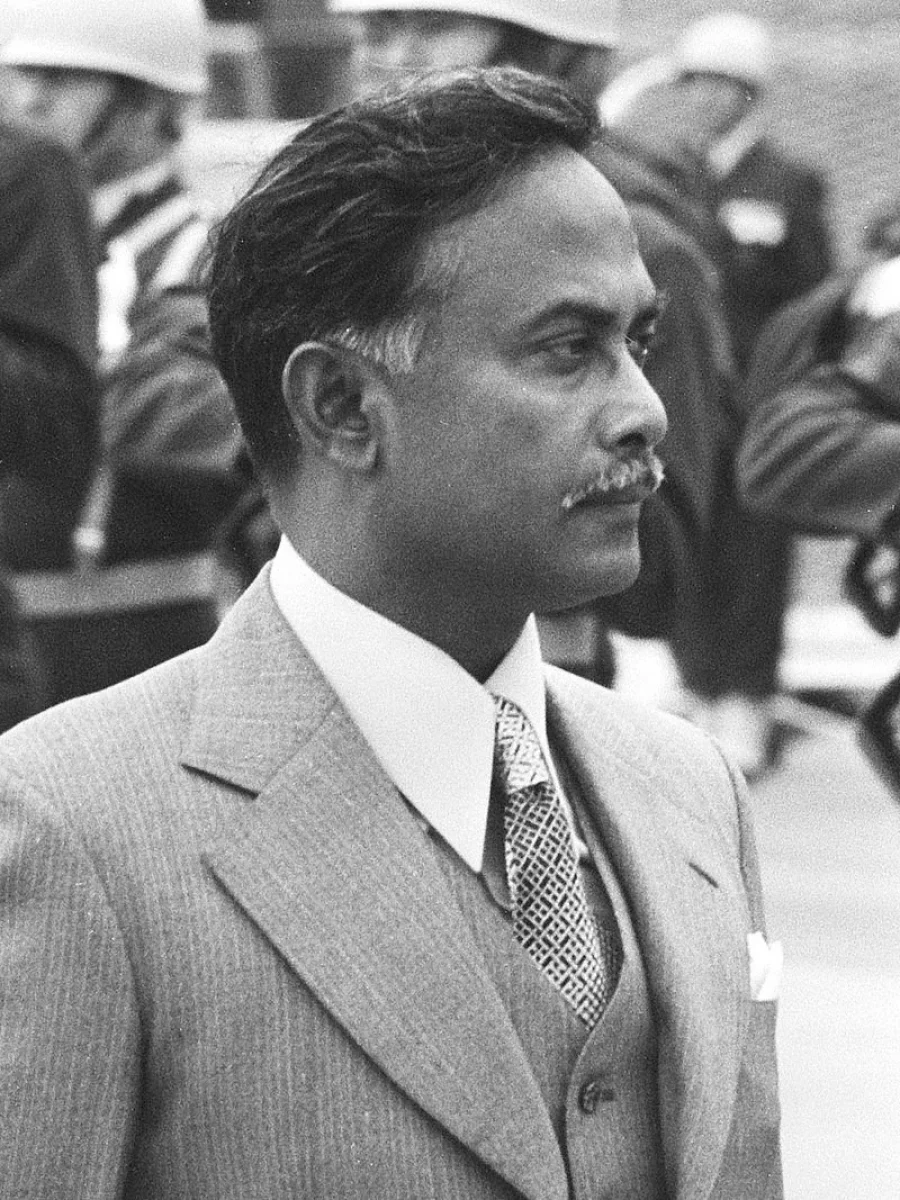
And then we went out into the job market, praying (now that the third dictator in our lives had been despatched to mortality) that the long shadow lurking around us would scuttle away into the deep, dark woods. The prayer did not help. A new general commandeered Bangladesh, sent the elected president packing and seized a hammer to wound the country in his own dark fashion.
General Ershad, in the manner of the three generals before him, spoke from on high, down to us. With unabashed hubris, he improved on Zia's anti-secular politics through decreeing a religion for the state. He tampered with the High Court. Like Ayub and Zia, he lured politicians of wobbly character into his tent. Like Zia, he told the ageing collaborators of the Yahya-Tikka-Niazi army that they were free to do politics in a Bangladesh redesigned to their specifications.
We glanced at ourselves in the mirror. Babies in nursery class when Ayub Khan humiliated Pakistan, in high school when Yahya Khan became the genocide man, university students when Ziaur Rahman turned historical distortion into macabre art, new to jobs earning for the family when HM Ershad took the country to be an exercise in plasticene, we spotted premature grey in our hair.
Syed Badrul Ahsan is a journalist and biographer.