Four years ago, when she joined a garment factory, Ruma Akhtar used to be nervous about operating a sewing machine but gave it her best shot. As she struggled to juggle work and family, Ruma kept her dreams aside.
Her life, though, changed dramatically with the Gender Equality and Returns (GEAR) program. Following the training and on-the-job experience, she was promoted to a supervisor at Tarasima Apparels.
“My salary has increased from Tk. 9,100 to Tk.19,000. It has made it possible for me to purchase a piece of land and better support my family. I hope to move further in my career and become line-chief next,” she says, full of new aspirations and with a big smile on her face.
Over the last two decades, the garment sector has played a key role in empowering more women in Bangladesh. Interestingly, while women comprise the majority of the industry’s workforce — around 80% of sewing line-operators — only around 5% of line-supervisors are women with little scope to move up the career ladder.
 Noorjahan Akhter is one of the 60% GEAR trainees who are promoted to the level of supervisor within weeks of completing the program Courtesy: KM Asad
GEAR, a partnership between IFC and the United Nations’ International Labour Organization is changing that since the program started in 2016.
Ruma is one of 523 female operators who now have better career opportunities in the country’s ready-made garment sector. By September 2022, GEAR will have trained over 700 female operators in 80 factories with over 289,000 workers — nearly 6.7% of the industry’s workforce in Bangladesh.
Already, the number of female supervisors has doubled — up from 6% to 12%. This is a big step.
When factories were enrolled in GEAR, about 25% of factories enrolling did not have a single female supervisor.
Today, on average, nearly 60% of the trainees are promoted to the level of supervisor within weeks of completing the program.
The training has given Noorjahan Akhter a new sense of freedom and confidence. Now a supervisor at Pearl Garments Company Limited, she’s managed to buy a pickup truck which she rents out. Also, the extra cash allows her to live with her husband independently. “Now I am in control of my own life,” she says with her eyes set on a brighter future.
Additionally, more than 70% of the factories that participate in GEAR reported improvements in at least two of the four productivity indicators — efficiency, absenteeism, turnover, and defect rates. Global apparel brands have recognized GEAR as an effective means to improve gender equality in supervisory roles and create career opportunities for women. Brands such as M&S, H&M, Ralph Lauren, Levi’s and VF became partners, enrolling some 50 of their supplier factories in the program.
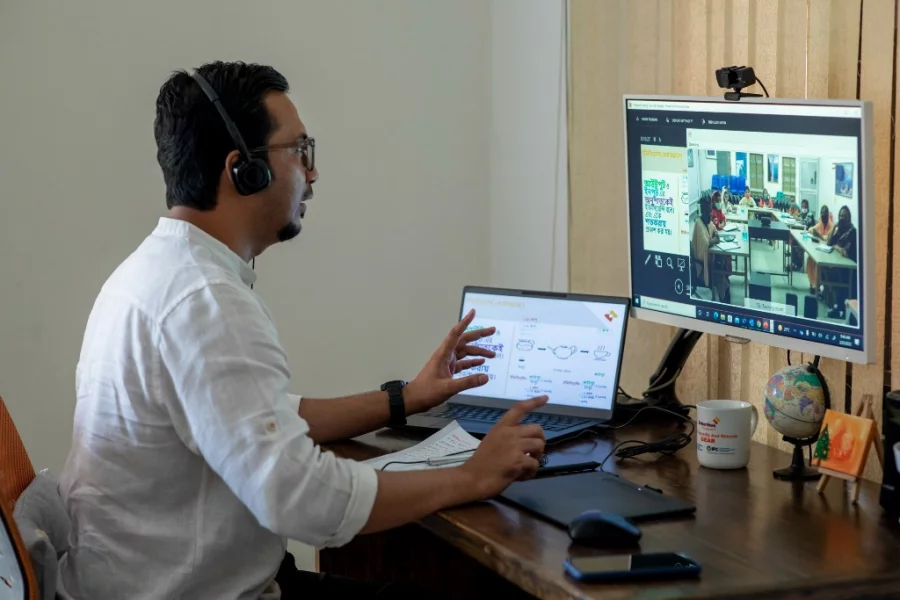 Following its success in Bangladesh, GEAR was piloted in Vietnam’s apparel sector in 2019. Sri Lanka may be next in line Courtesy: KM Asad
“We have a strong commitment to uphold women’s rights and support female career-progression opportunities in our supply chain. The GEAR program is very important to us and is one of our core programs aimed at achieving equality for women across our global business,” said Natalie Clark, vice-president, Asia Product Supply Apparel for VF Corporation.
Initially, when the program was piloted, IFC led the design to tackle gender imbalances on factory floors and improve productivity. Over the next six years, IFC expanded the program with ILO as Better Work training to prepare female operators for supervisory roles. The program now trains managers as well to bring about systemic changes that promote career-progression for women.
Though Covid-19 took a toll on the program, pausing all in-person training sessions, the GEAR team bounced back with a virtual training format with new monitoring tools to ensure high quality of remote training.“I never thought online training could be so useful. I feel proud to have attended it and learned so much from it. It has changed my life,” says Ruma from Tarasima Apparels.
Although there was a general preference for direct in-person delivery of training due to difficulties associated with internet connectivity and power disruptions initially, trainees soon found virtual training interesting and beneficial.
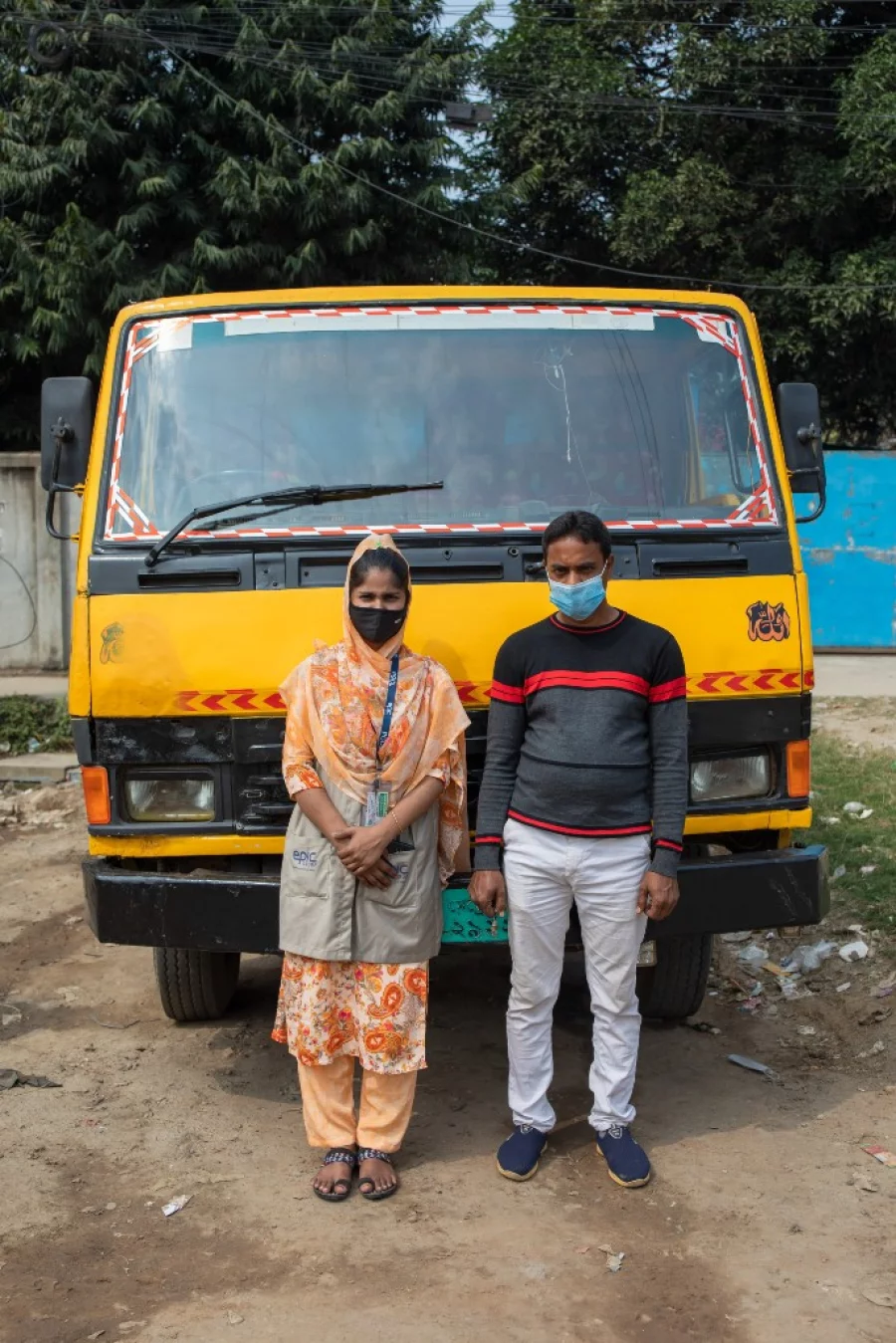 Noorjahan and her husband in front of the truck she helped purchase Courtesy: KM Asad
Low-literacy, limited experience of using technology, and other logistical issues made the shift to an online platform challenging. But in a pleasant surprise, the online format surpassed the pre-Covid results in some areas — participants achieved higher scores in post-training assessments compared to pre-pandemic times.
According to a study on the M&S supply chain, GEAR-trained workers were better prepared to face social and economic uncertainty triggered by the pandemic. They received higher wages, worked better hours, reported less food insecurity, showed a higher debt capacity, and reported joint decision-making within their households.
Following its success in Bangladesh, GEAR was piloted in Vietnam’s apparel sector in 2019. Sri Lanka may be next in line. Going forward, the program is ready to explore other industries. That way, more women can benefit from the initiative.
Meanwhile, as Noorjahan is able to repay her loan with the new promotion, Ruma is learning to dream again and working hard to become line-chief in the near future.
The author is the GEAR Bangladesh Lead for IFC. GEAR is funded by the European Union. The pilot phase and initial scale-up phases of GEAR were funded by Japan and Canada. From July 2022, IFC will hand over the implementation of GEAR to Better Work Bangladesh to fully integrate GEAR in Better Work Bangladesh’s training program.