The 21-year-old Shawana Adbiah is currently studying in Dhaka University as an English major, but she has another identity. She is a comic artist. Currently working on a series titled ‘Outcast’, Shawana has published the first two chapters on Webtoons, one of the biggest digital comics providers in the world with over 17 million monthly users. The site is owned by Naver, the biggest Internet company in Korea.
“The plot is basically about this half white and half brown boy named Orko and his life story, set in 1930s British Bengal,” said Shawana Adbiah.
But this is not Shawana’s first experience of being published. “I’ve actually drawn comics since my childhood but what got me going was this Digital Khichuri challenge. I was in the winning team. Our project was about comics and more specifically about Bangladeshi comics. This challenge was organized by the Affinis Labs back in November, 2016. There, I met Sir Wajahat Ali, Shahed Amanullah and Aruni. I realized the importance of the representation of our Bengali culture. That motivated me to write a story set in our part of the world,” she told Weekend Tribune.
Wajahat Ali is the well known author of The Domestic Crusaders and Shahed Amanullah is the co-founder and CTO of Affinis Labs. Shawana’s previous writing experience include her short story titled ‘Unmad’, which was rendered into comics by none other than Ahsan Habib, the celebrated Bangladeshi cartoonist.
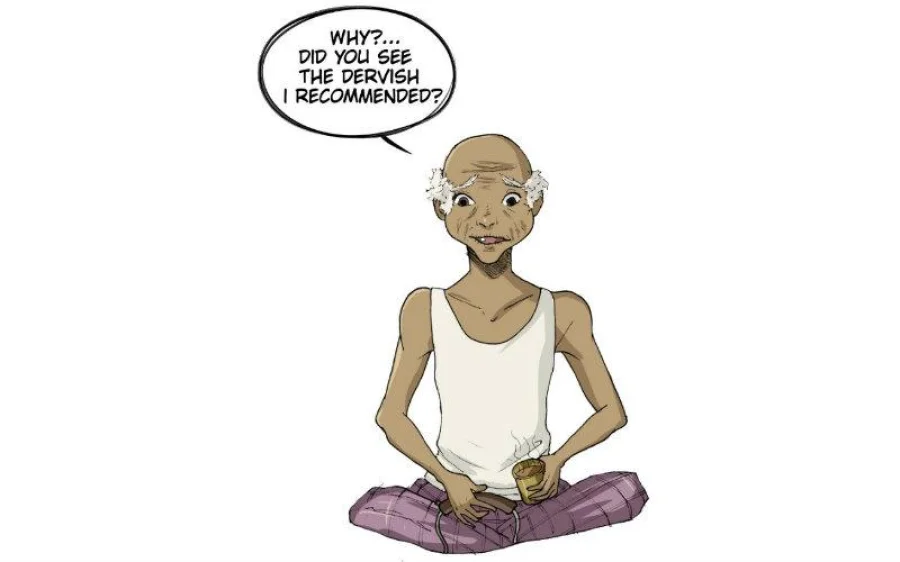
And it’s easy to see why she was able to work with one of the quintessential figures of Bangladeshi comics. Her drawings are immaculate. The ‘Prologue’ of Outcast provides a sinister foreshadowing with its black and white graphic. It immediately puts the reader in a grim mood and gives a serious tone to the comic. The following chapter, titled ‘Goni the Great’, is in colour, albeit maintaining a sense of foreboding with the use of dull colouring and atmospheric lightings.
The story begins with Orko as a little boy learning distressing information about his mother, which immediately causes him to cry in frustration and denial. The first chapter fast forwards to the future where Orko is portrayed as a careless college student who works at a newspaper printing press and meets his village’s famous Goni the Great.
Not much has been revealed to get a sense for where the story is going. The story nonetheless is engaging enough to keep the readers hooked with suspense. Shawana manages to arouse interest to discover more about the characters and the progression of the story. Orko’s character development is quite intriguing and all kinds of possibilities have opened up regarding where the story can go next or how Orko might change. But for that, the readers will have to wait until August when Shawana will start posting the rest of the story.