Sembcorp Industries (SGX: SCIL) dropped up to 12% yesterday as the authorities announced a form of price cap on wholesale electricity prices in the Singapore market. Some of that loss has been gained back today as more mature consideration of that price cap kicked in. The general belief is that while it will have an effect - yes, of course price caps do, otherwise why would anyone ever bother to have price caps? - that effect won't be all that large. Thus the initial gloom was somewhat overdone.
For example, an analysis from Citi: “In his note dated June 21, analyst Jame Osman says that Citi's fundamental view on Sembcorp remains “intact” despite concerns over the EMA's price cap, which resulted in the energy player's share price experiencing a 9% drop on June 20 — a “knee-jerk reaction” to EMA's announcement on the same day.” That is, an over-reaction followed by buying in at the newly lower price. We should perhaps say that this isn't unusual, stock prices over-reacting to a piece of news then settling a bit when further consideration happens.
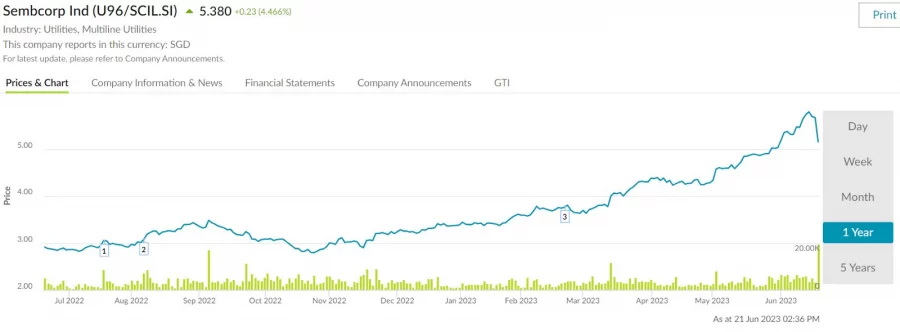
Sembcorp Industries share price from SGX
It's possible to view this in two different easy. One is the mechanics of the price cap itself: “Under the new policy, if the moving average price for 24 hours exceeds the threshold, TPC will be activated for at least 24 hours till the moving average price falls below the threshold again.” When that is then run through the historical data - of course the past is only a guide to the future - that looks as if it will only hit Sembcorp's margins by perhaps 4%. That price cap is really cutting off the very peaks of the market, not setting a price that impacts the bulk of generation.
It's also true that Sembcorp sells most of its production not through those spot markets, further reducing the impact upon revenues and margins.
It's also true that Sembcorp has done very well in recent months. So while that cap - temporary and not all that restrictive - might have its effects there are still those underlying issues driving the stock up. We have to admit that we're never happy with price caps - they're a distortion of the market. The hard - and low - price caps in the UK bankrupted many of the energy companies. But as here in Singapore, caps that only occasionally bite aren't so much of a problem. Thus the limited damage to Sembcorp.