Paladin Energy (ASX: PDN) (OTCQX: PALAF) has dropped 20% and then been suspended on the Australian stock exchange as there are mutterings from Namibia about resource nationalisation - possibly even the takeover of mines. Namibia has - until right now - been thought of as a stable legal jurisdiction in which to go mining. Unlike other parts of Africa where contracts don't always mean what's written on the piece of paper. Or at least, there's often a requirement to rewrite contracts upon changes in government so as to accommodate the interests of the new governors. It will depend upon how this all plays out of course but assuming that there's any truth at all to this - other than just rumours - then this is going to hit everyone who has been exploring or ramping up to production in Namibia.
The news, as it exists so far, is that: ““We are making a case that local ownership must start with the state, which holds ownership of our natural resources,” Mines and Energy Minister Tom Alweendo told lawmakers on Monday. “The proposed state ownership should take the form where the state owns a minimum equity percentage in all mining companies and petroleum production, for which it does not have to pay,” he said.” This is also known as theft of course. It's not even obvious that it can be done without violating contracts and treaties already signed. But even the risk that this would be brought in is clearly going to damage the share prices of anyone actually mining there.
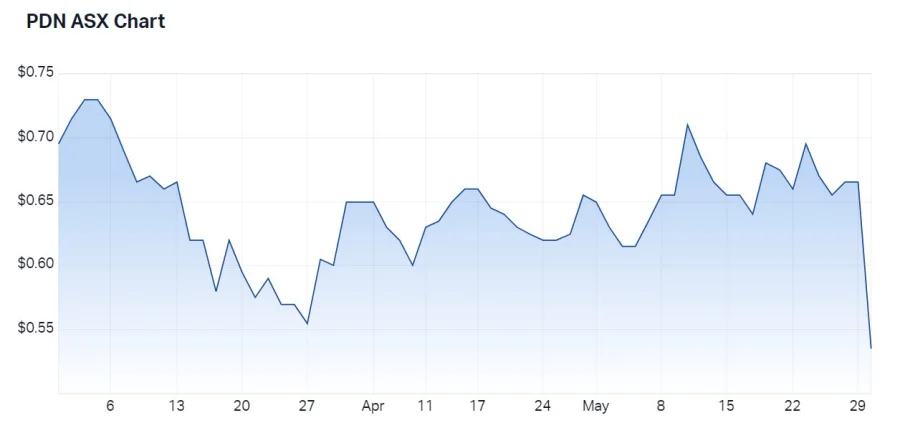
Paladin Energy share price from ASX
Paladin Energy is ramping up to production the Langer Heinrich uranium mine. There's an agreement in place, as there always is, for royalties to be paid for the value of the minerals extracted. What the Minister is now saying is that the government wants to come back for another bite of the cherry. This is wildly counter-productive on the grander economic level.
Yes, it's true, mining is the ultimate business that is stuck in a particular jurisdiction. You can't move the mine to escape a rapacious government. So, extant mines, where the capital investment has already happened, often look like a tempting target for local governments. But the moment anyone repudiates previous agreements as to taxes, ownership and so on, then the next wave of investment simply will not happen. Because who will develop the next mine if the last one was stolen? This has happened again and again in varied African jurisdictions and most thought it wouldn't in Namibia.
Well, there's a surprise then. Expect slumping share prices for all those mining in Namibia, or even exploring there. You can't avoid politics in mining but what's going to happen is that mining will avoid Namibia.