Moho Resources (ASX: MOH) is up 50% this morning on the announcement of a clay - ionic clay - rare earths deposit. This is interesting for Moho shareholders, obviously, and there's no reason why such a deposit shouldn't, in the fullness of time, make money for said MOH shareholders. We can trade that possibility as we wish.
By far the more important issue for us as investors - that is, looking to the medium and long term futures, rather than trading on the issues of the day - is that this changes the whole world of that rare earth industry. We once thought that rare earths were rare - they never were of course - and that a specific type of deposit was rare and largely confined to China. That second assumption is turning out to be entirely untrue. That is a change in the entire industrial structure.
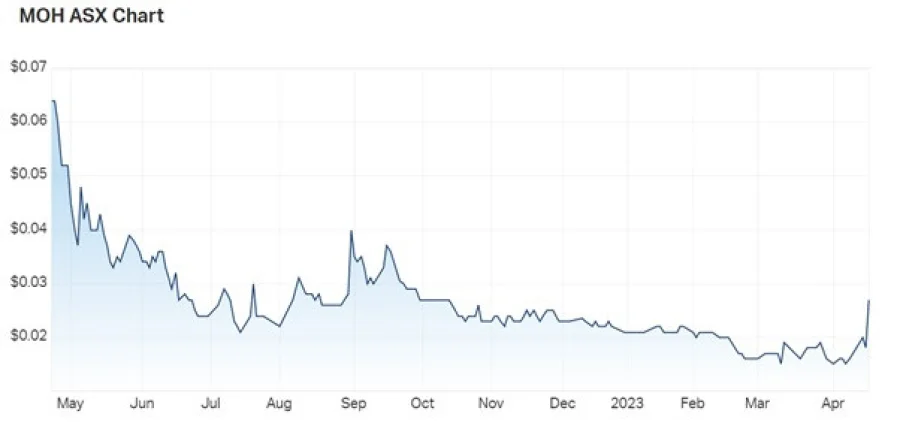
Moho Resources share price from ASX
The announcement itself is here. The nub of the announcement is that drilling has found a substantial rare earths deposit hosted in ionic clay. As with the other announcements in just this past couple of weeks - Larvotto, Australian Rare Earths, OD6 - this tells us something about geology that we didn't previously know.
Yes, we can get rare earths from monazite, xenotime, bastnaesite. They all have problems, some have high thorium levels for example. But the bigger one is that they all have more of the light rare earths - cerium and lanthanum - in them than we actually want to use. Tha means that we have surplus and money losing production of those two after we gain the magnet metals - Nd, Pr, Dy and Tb - that we actually desire. Ionic clays solve, at least partially, one of these two problems. They're much higher in the magnet metals, much lower in those lights.
However, until just a couple of years ago we - as a species this is - believed that ionic clays were only found in South China and the border areas of Burma. What we're seeing now - and these four revelations just in the past couple of weeks just from Australian miners are only part of it - is that such geology is actually common among granites weathered in subtropical climes.
That whole world of rare earths being rare is turning out to be untrue. That's an entire industry changing revelation and that's the one we've got to consider as investors.