UBS (NYSE: UBS) has just called back in its very recently issued bail-in notes. Or perhaps we should say has launched a tender offer for them. This is something that really doesn't happen with bonds that were issued only 5 days ago. The reason it is happening is because of the actions of the Swiss National Bank over the Credit Suisse (NYSE: CS) rescue performed, as we all know, by UBS.
The problem here is over that new thing we're all learning about, bail-in, or AT1, or contingent convertible, even co co, bonds. The SNB, in that CS rescue, just changed what we thought we all knew about such bonds and the capital structure of banks. This then changes the pricing and desirability of all such bonds in existence. UBS had just issued some of them and now thinks that buying them all back would be a really good idea.
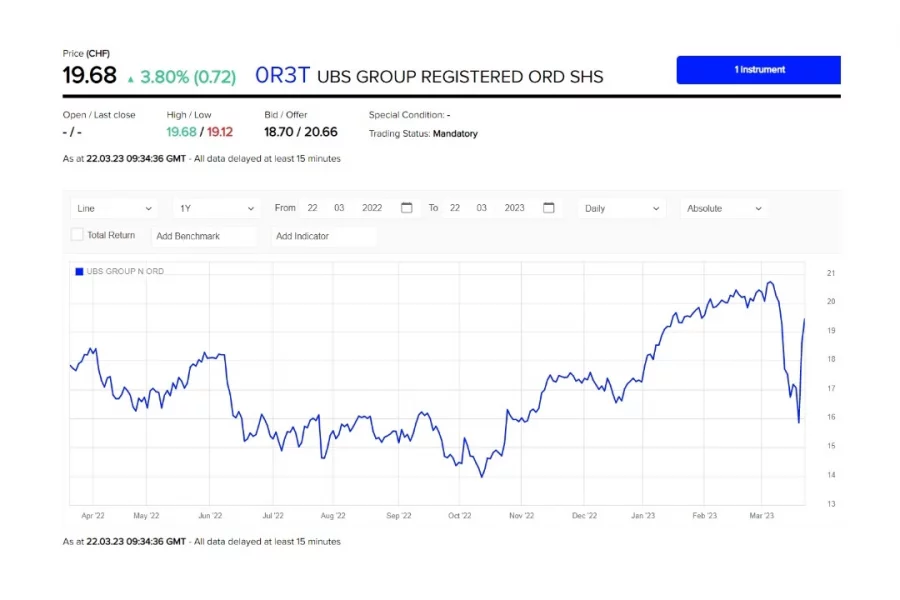
UBS share price from London Stock Exchange
As we can see, the market view of the CS takeover is positive for UBS equity. But co cos, A1T bonds. This is part of the changes made to the financial system after the 2008 crash. Banks can issue those contingent convertible bonds which now count as Tier 1 (thus the AT1 name) capital. But they're bonds and so don't dilute current shareholders. The contingency is that if the bank is going bust then the bonds convert to equity. Or, in the case of those CS ones, convert to nothing and the bank keeps the capital.
We've all known about these for a decade of course. But we did all think that conversion would only happen if the equity went to zero. Because that's the way priority in bankruptcy goes, bond holders only get hit after shareholders have lost everything. That UBS paid for the CS shares but the AT1, or co co, bonds went to zero, that was unexpected. This means that everything we thought we knew about bail-in bonds - at least under Swiss law - was wrong and reality is now different.
UBS issued some of these bonds only last week, on the 17 March. But events since then have changed their value and what everyone thought they were. So, they're calling them back in and will presumably reissue at a different price to reflect the new legal terms that we all understand. It's not one of those particularly important points for UBS equity, but it does show us how the SNB actions really have changed what we thought we knew about Swiss bank capital structures.